Showing posts with label Christmas. Show all posts

Tuesday, January 3, 2023

With Whom Is God Pleased

56. With Whom Is God Pleased? (3 January 2023)

A glimpse of Christmas joy in the
neighborhood, powered by
"ishtirak"
(30 Dec. 2022 - Geitawi, Beirut)

Holidays in Lebanon, especially in the winter, have fallen off my list of favorites, probably in no small part due to the lack of electricity we (and so many other Lebanese) experience at home. The offices where I work close, meaning that our building’s generator stays off. Our subscription for supplemental power covers only about half of the day, anyway, bringing inside temperatures close to what is outside. And municipal power supply continues to emulate Halley’s Comet in its rare appearances. Combining all the national holidays with the ones of various religious denominations, plus Armenian holidays, here in Lebanon we experience close to a month each year of these “off” days.

            But there is another layer of distaste. Holidays are too often turned into platforms for social and political assertiveness, rather than times of rest, reflection, redirection and rededication. Firecrackers (and bullets) fill the air over neighborhoods where a particular holiday is most observed. Not to forget the obligatory firecrackers and fireworks launched at important life events, such as funerals and weddings, or your World Cup football team scoring a goal. We were able to watch three games of this year’s football “Mondial” in early December since we were visiting Armenia for a week. There, games were broadcast on Armenian state television for anyone to view. Here was a different story, as is the case with so many things. The sounds of firecrackers and nearby fans yelling would prompt us to refresh the official website in order to see the latest scores — a somewhat anticlimactic method.

Constructing the "New Year's tree" at the
Yerevan train station
(30 Nov. 2022 - Yerevan, Armenia)

            In this particular season the biblical phrase, “Peace on earth, good will towards men,” is widely touted, or more commonly quoted simply as “Peace on earth”, without involving men (in the generic sense) or good will. The more intricate version of Luke 2.14, “Peace on earth among those with whom God is pleased,” is avoided, likely because it doesn’t fit neatly into 21st century greeting cards (i.e., social media platforms and posts), and likely also because it states that there is a God, also implying that this God makes judgments. About us. Also not fitting popular sensitivities in these oversensitive times.

A garden of Armenian letters seemingly
growing out of stones, hopefully an inspiration,
more than just a tourist attraction.
(29 Nov. 2022 - near Artashavan, Armenia)
            Whether or not it plays well in mass culture, a question sticks in my mind: With whom is God pleased these days? My immediate guess is “no one”, as evidenced by the lack of peace on earth. The lofty goal of peacemaking is left largely untouched, while nations allegedly aim for (but fail to reach) the lower goal of temporary cease-fires. Yet even where cease-fires are attained there are always those who find ways to continue their aggression.

            Since mid-December and continuing into the New Year, Azerbaijan-sponsored phony “environmental activists” have been blocking the only lifeline for food or medicine or transit that Artsakh Armenians have, the “Lachin corridor” linking it to Armenia. Add to this the Azeri government and industries that are driving all of this, entities that blithely cut off energy supplies to Artsakh in the cold of winter. Add to this the inaction of those charged with keeping the road open, allowing the situation to be created. And finally add to this the meaningless verbal bravado (and little more) of world powers, busying themselves with statements and resolutions condemning the blockade, but unwilling to intervene in a sovereign country. If all of this looks and sounds like world powers’ failure to prevent the Genocide in 1915, there’s a good reason for that. Summing it all up, it immolates the dove of peace over the flames of war.

A mural depicting Old Beirut, in a park where
an old Beirut building was torn down.
(8 Dec. 2022 - Geitawi, Beirut)
            Peacemaking can be torn apart in various ways: by individuals, societies, companies, governments, you name it. It does not have to be done in the obtuse ways that Armenia’s rapacious neighbors are so fond of. Sometimes it can be as subtle as tolerating inept (fill in the name of your favorite country) governance, or by making self-centeredness and self-indulgence a societal value, or in disdaining others in order to elevate yourself.

            Yet despite all attempts to kill it, peacemaking is alive, and peacemakers are at work. Whenever we hear about or witness a teacher who goes beyond the lesson plan and above the minimum requirements to help her class learn to relate with care for each other, there peace is being inculcated. Last week I was in a store in Bourj Hammoud when an older fellow in tattered clothes stood at the door with his hand raised in greeting - not for a handout. The Arab worker (who happens to speak Armenian) addressed him affectionately, giving and receiving words of blessing; this, too, is peace-building. When someone in the course of a conversation asks me to pray for him right there on the spot, God’s peace hovers over both of us and enables us to express more grace to others.

Christmas bazaar at the Zvartnots Center,
which brings hope and love to special needs
children.
(22 Dec. 2022 - Nor Sis, Bourj Hammoud)

            That message to the shepherds heralding “peace” at Christ’s birth is more of a challenge to self-absorbed humanity than a statement of present reality. The One whose appearance they announced made it his aim to establish peace through servanthood and a particular act of sacrifice. It grew more intense and pervasive as he grew “in stature and in God and man’s favor” . We might strain to see those around us who join him in this endeavor, but the thread that joins each instance together, shining with the angelic light seen outside ancient Bethlehem, is that of service.

            Serving others, motivated by love, produces peace. And only God himself can fill and refill that love.

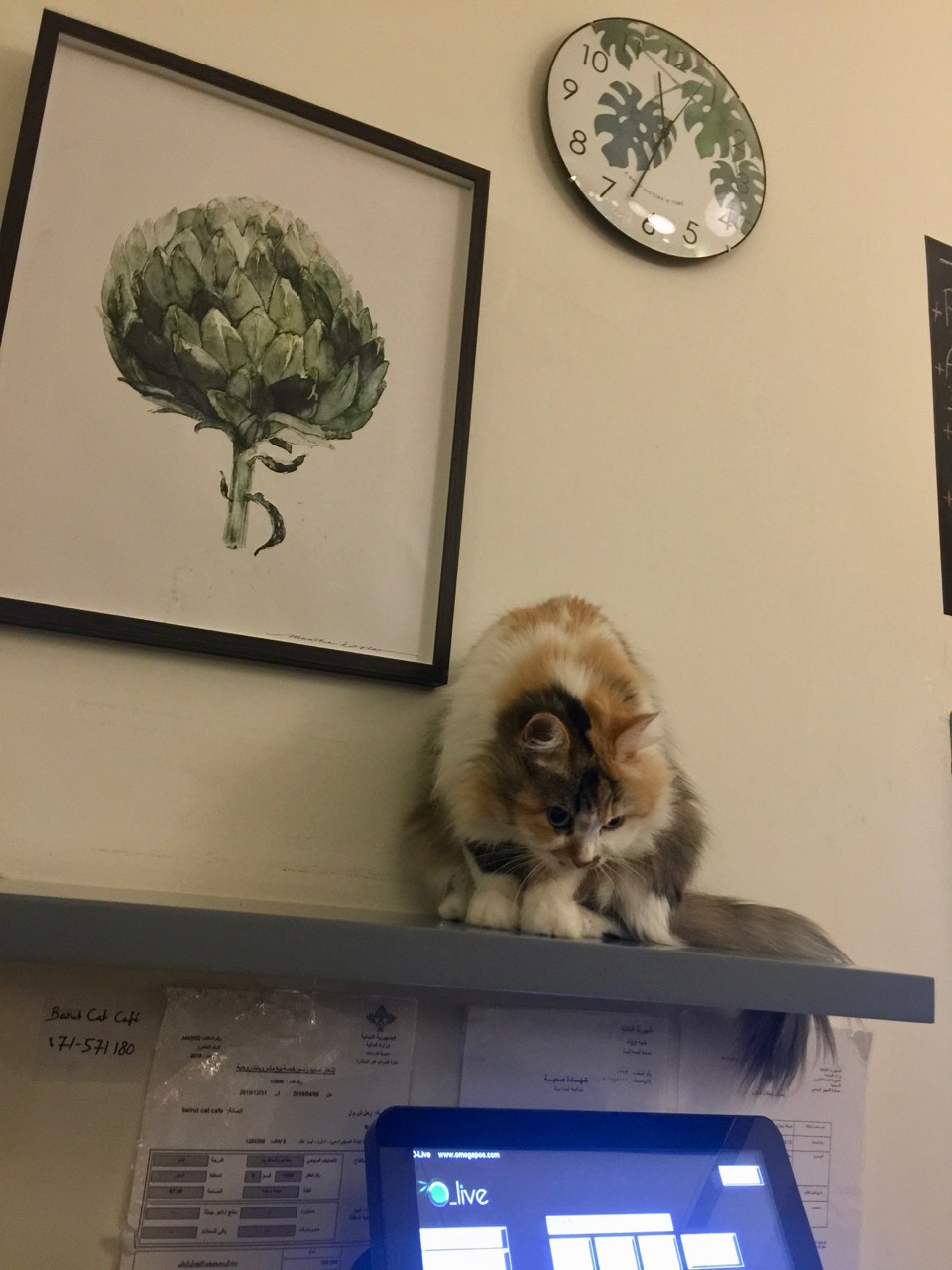
LebCat 56: Since the electric company isn't
using these anyway, I'll just settle in.
(30 Dec. 2022 - Mar Mikhael, Beirut)
            Since “Armenian Christmas” is but three days away, an Armenian greeting on the occasion and a wish for God-pleasing peacemaking: Christ is born and revealed; blessed is the revelation of Christ!*   [LNB]

*Քրիստոս ծնաւ եւ յայտնեցաւ. օրհնեա՛լ է յայտնութիւնն Քրիստոսի։

Sunday, January 31, 2021

Give Up Your Trash

42.Give Up Your Trash (31 January 2021)

Part of the nearly invisible "army" of children
subsisting on what they can scavenge from
Beirut's trash. (23 Dec. 2020 - Geitawi - Beirut)
There are large receptacles throughout the city streets of Beirut, where people take out their trash, and trucks come several times each day to empty them. It’s not an ideal system, but it is superior to the way things were done into the post-war period of the 90s, when any street corner was fair game for piling up household waste. Those whose windows faced these trash heaps, in order to combat the unappetizing smells and sights, resorted to constructing small shrines of saints, complete with statues, candles and greenery; for reasons of piety people would refrain from dumping trash in front of a shrine, and so would seek out other corners to pile up their refuse. The proliferation of makeshift shrines throughout the city is a testimony to those days.


Slowly but surely people got used to the “dumpsters” placed curbside every few blocks or so, even though it took some time for them to place their trash inside them, and not on the ground beside them. It also took some time for people to wait until after 5 pm to take out their garbage, so it would not rot and exude a stench under the hot Mediterranean sun. Over the three decades since the end of the war these lessons in urban coexistence have experienced deterioration whenever a crisis has overtaken Lebanon, especially in the interim between the ending of landfill contracts and the beginning of new landfill contracts.

A hopeful sign that winter snows will help avert
summer drought. (23 Jan. 2021 - Mt. Sannine)
            In the aftermath of the Beirut Port explosion in August, with one-fourth of the city turned into ruins and then into a construction zone, piles of discarded rubble accumulated once more, as they did in the early 1990s, when the downtown area was sacrificed on the altar of the newly-elected Prime Minister’s construction company. But this time the rubble, twisted metal and broken glass piled up both in as well as around the trash receptacles. In fact, so much refuse accumulated that the sanitation company was unable to keep up with the collection, and only until a month ago has the situation returned to “normal”. Yet to accept the current state of waste management as “normal”, one must quash any musings on where all this refuse is dumped after leaving your neighborhood.

            Recently I was taking our household trash to the receptacles a few steps outside the front door of our building, expecting to toss it into the bin, perhaps see a few cats jump out in fright at the airborne garbage bag, and then with a satisfied smile on my face for a job well done, turn on my heels and head back inside. Instead I came face-to-face with a young Syrian boy in grimy clothes, who extended his hand to take the trash bag from me so that he could rip it open and inspect it for saleable items. Obediently, I handed over the bag, turned and left uneasily. I wondered if I had better Arabic language skills, would I have engaged him in a conversation, no matter how brief? What could I have said to this refugee child, part of an army of unmasked children who scour the city’s trash bins, alone or in groups, to find recyclable or saleable objects and make a living?

Dusty roads can be swept, but what
about the children who live their
lives there? (26 Dec. 2020 - Bourj
Hammoud - Photo: Paul Haidostian)

           
These are not the only non-Lebanese children who have taken up permanent residence here. Some have become fixtures for us, begging at certain intersections – young mothers sitting on the sidewalk, holding infants or sending toddlers up to passersby to beg for money; young boys weaving in and out of traffic to sell a package of paper tissues; or other young girls, tapping on car windows, girls whose noticeable maturing will make them likely targets for a different kind of selling… and then young motherhood.

            In the midst of an economic meltdown, Lebanon has had one of the strictest lockdown programs in the world, possibly because it has few other ways of holding the coronavirus at bay. Its hospitals – minus about five that were ruined in the port blast – are almost at full capacity, mostly with coronavirus patients. Social services for the general public are notoriously few and far between. Financial assistance to needy families is non-existent, and agencies, such as the ones our church Union administers, do their best to reach those they know about. Donor organizations, such as the World Bank, have begun assistance programs to the poor, but they themselves will be handling the distributions of funds, not trusting governmental institutions to do the job properly. Public trust, essential for any society to avoid implosion (such as events witnessed in the American capital earlier this month), is on the wane wherever one turns.

Idle cranes at the port, in a country whose
lifeblood is imports. (21 Jan. 2021 -
Karantina - Beirut)

           
These stresses on society have erupted into frequent clashes with the state security services, most notably seen currently in the northern city of Tripoli. Tripoli is home to great numbers of poor as well as the hometown of some of the very wealthiest in the country. One can question the motives of some of the protestors in attacking state institutions, but they should not be the only ones to be questioned. There are the regional masters, who each have their following, both within the political structures as well as among many on the street. But it cannot be denied that the poverty quietly overtaking Lebanon is due to the questionable motives and actions of those in seats of power, both inside and outside “officialdom”. Any possible alleviation of the virus due to a vaccination program might bring and end to the lockdown and free those dependent on daily work to again find their daily bread for their families, but it will also bring the unaddressed social-economic-political crises back to the fore.

The new definition of "roadside café". Or
perhaps a return to the old. (13 Jan. 2021 -
Qobaiyat - Beirut)

           
Being in a 24-hour-a-day lockdown may sound like paradise to an introverted person like me, 
but there are limits to its appeal. Whereas previously I was able to have long, solitary walks to do errands, now I am required to apply for approval for any excursion (usually granted within minutes for things such as doctor’s appointments, trips to the pharmacy or bakery, etc.), and only within the immediate neighborhood. For things such as produce or grocery shopping we have to place orders by phone and have the seller deliver the items to our door. Language differences make this state of affairs all the more interesting. I send a voice memo to the grocer: “I’d like 1 kilo of apples.” “Red or yellow?” comes the voice message back. “Just yellow, please.” And when the delivery boy unloads his scooter and I lug the produce up to our apartment, and as Maria and I start unpacking them, of course the apples are red. Mind you, the conversation was in English, not Arabic.

            Ordering from the big-name supermarkets is another adventure. We get SMSs saying “Next day delivery!”, and that encourages us to give it a try. Seated at the computer, we go through page after page of items in no particular order. Sorting them yields less-than-satisfactory results, because we are not seeing things that we know the store stocks. As we scroll down the items start showing buttons such as “out of stock”. This is one of two labels visible on the pages, the other being “Made in Lebanon”. That’s fine, we are more than happy to “buy local” when possible.

LebCat 42: Junior, watch carefully how a pro
does it. (26 Jan. 2021 - Geitawi - Beirut)

           
But when we come to the “checkout” page, and enter our name, address and location pin, we are shown the available delivery times and days. Ten days from now? Really? Calling the help line is of little help, because it is apparent that live persons are not the ones in control. But we bite the bullet and go ahead with the order. But the next page doesn’t open. And there is no indication of what might be the problem. Back to the help line (an email chat, which may be answered right away, or if it’s evening, the next day). We are told to do the very same thing we just did. Meanwhile, the delivery slot gets delayed by a day. Are you using such-and-such browser? No, there is nothing that shows what browser we are required to use. These sorts of adventures continue, and we decide to remove whatever items we need quickly and only order things we can do without for ten days. Or is that now two weeks? Oh well. So we call our nearby mini-market, and get the staple items we need brought to our front steps… an hour after we call.

            These days are teaching us to center on the things – and the people – that truly matter. The situation is compelling us to give up quite a few things that we became accustomed to, some good and some not. But we haven’t given up everything. On Christmas Eve (Jan. 5) we were overjoyed when two church youth groups (3 persons each, but, arriving at almost the same time, became one 6-person group) stopped by our building for a moment of caroling, reminding us of the hope we have regardless of the circumstances in which we find ourselves this day, or this year.    [LNB]

Monday, January 6, 2020

Stormy Weather


31.Stormy Weather (5 Jan. 2020)
Stalled construction – for now – in the downtown area, center
of the protests that began on Oct. 17. (27 Dec. 2019 – Martyrs’
Square, Beirut)
It’s Christmas Eve. And it’s raining fairly steadily, as it has been for the past several weeks. Youth groups from the various Armenian Evangelical (and other Armenian) churches are preparing to spread out over the metropolitan region to visit homes and sing the good news of Christ’s revelation to mankind. Throughout the night until the early hours of the morning they will be climbing in and out of cars and vans, cramming into elevators or traipsing up flights of stairs to carol and share scripture, as well as to distribute a custom-made gift to each household. And they will enjoy the chocolates, candies and other goodies prepared by each household they visit. And get drenched to the bone. And create memories that will stay with them until their old age.
Our neighbors and we prepared snacks for the carolers to
recharge themselves before going on with their caroling.
(5 Jan. 2020 – Qobaiyat - Beirut)
            Today I found out from my son Sevag (in the U.S.) that in Aleppo this year the churches there will also be sending their youth out to carol and herald Christ’s birth. If this good news is sorely needed here in Lebanon (and it is very much needed), it is needed at least as much there. No surprise that the news went from the Middle East to the US back to the Middle East; it’s simply how the Armenian grapevine works.
Capitalizing on the tire-burning protest
movement. (21 Dec. 2019 – Nahr el Mawt)
            The season’s stormy weather seems to be the perfect analogy of what people are going through, and not just in Lebanon, but also in the region. People are teetering on the edge of a very deep cliff, and it seems certain that the country will be in freefall before too long. The dividing line between a liveable income and poverty is steadily rising, engulfing more and more people each week, and I expect that in a short while we will be seeing people focused on little else but how to get a some food on the table – if they haven’t sold the table by then. Banks are still limiting withdrawals of more than the equivalent of $300 per week, and they, as well as the exchange booths (an officially condoned, albeit black market, feature of the Lebanese economy for decades upon decades) continue to profit from the headlong fall of the Lebanese pound. Paper money (pounds, that is) is getting harder and harder to come by, and billions in local currency have steadily been relocated under the mattresses and in the coffee cans of homes throughout the country.
Some irony to chew on: poking fun at the
revolution with 22 karat gold gum.
(27 Dec. 2019 – Burj al Ghazal, Beirut)
            The other, uglier side of all of this is that for decades, politicians and businesspeople have embezzled and stolen and transferred billions in US currency out of the country, while the Central Bank has run banking affairs like an Amway franchise. Even after the uprising, when the writing was on the wall that this thievery was going to be stopped, those transfers to foreign banks did not stop. There is a reason why Lebanon has remained a “third-world” country for so long instead of developing into the jewel it has the potential to be: it’s called “greed”, described “to a T” in I Timothy 6.10.
            These unrelenting rainstorms (or snowstorms in the higher elevations) are laying bare the unkempt infrastructure of the country. Roads are being washed out, foundations are collapsing, more garbage is falling into the sea. The tourism and service industries (restaurants, etc.), which form such a great part of the (honest) income of Lebanese, have stopped dead due to the complete lack of foreign tourists and cautious spending of locals. These are not pleasant times for the country.
LebCat 30: On its usual perch, but appearing
more than a bit anxious. Cats can have
premonitions, right? (3 Jan. 2020 – Beirut Cat
Café, Mar Mikhael - Beirut)
            Last week a cemetery wall collapsed due to the hyper-saturation of the soil, toppling the deteriorating stone-and-cement construction onto the Damascus highway sidewalk in the Sodeco section of the city. The sadly ironic part is that it belonged to the old Beirut Jewish cemetery in a country that has almost no Jews left. Who will dare to take it upon himself to build a better retaining wall for that cemetery, I wonder? But if these storms continue, the outer wall of either the Anglo/Evangelical, French or Syriac cemeteries, all in a row, will be the next to fall. And then, maybe, the city will do a general reconstruction of all the walls – if there is any money left in their coffers.
            As business after business closes its doors, one in particular stands out for me: the Beirut Cat Café, in the Mar Mikhael area not far from us. I think of it as a “rent-a-cat” place, where for the price of a drink you can associate with willing felines for an hour or so and then leave; and if you are so inclined, you can apply to adopt one of them. Because of the impossibility of meeting their expenses in the declining Lebanese economy they are closing at the end of this month. What touches me the most about this particular place is that it represented a better side of humanity, where animals that are considered vermin can be seen in a different light. And that can have its positive effect on the way that people relate to the natural world as well as to each other. With its closing I feel that we are losing a part of our humanity, as ironic as that sounds. (Or a part of our felinity?) I hope it will open again some day soon, once these cruel storms have finished their destructive journey across the Middle East. 
LebCat 31: Blissfully unaware and uncaring at what is coming.
Probably better off that way. (3 Jan. 2020 – Beirut Cat Café,
Mar Mikhael - Beirut)
            No matter what, we will greet the coming day as we (Armenians) have always done: "Christ is born and revealed; great good news to us all!" (Krisdos dzenav yev haidnetsav; tzezi, mezi medz avedis!)    [LNB]

Wednesday, December 26, 2018

The Competition


21.The Competition (25 December 2018)

Only in Lebanon – a crèche alongside a mosque and a church, and
most of the visitors were non-Christians. (23 Dec. 2018 – Beirut)
            We finally made it back to the gym, after a two-month hiatus. And after almost getting t-boned in the first minute we were in the taxi, on our early-morning trip to the health club, our driver reassured us with a comment akin to what so many other drivers insist on: people in Lebanon, even at 6 a.m., don’t know how to drive properly. Yet every driver seems to say the same thing about every other driver. So, I’ve decided to look at the positive side: really, all of them want better behavior on the road. I can only hope that they’ll “be the solution” they’re looking for.
            Something else the driver said caught our attention. After complimenting Armenia on the amount of snow it gets (he was Arab), he expressed how happy he was for the rain here in Lebanon. Most people aren’t happy; they only complain about the inconvenience the rain brings to their daily routine, or their leaky roofs, or the country’s infrastructure. All real concerns, but not the only issues at play. When a rainstorm clears, or after days of rain, we look out our window in the hopes of seeing more snow on the mountains. Our driver, with his positive outlook on precipitation, beseeched God (because that is how you express yourself here) to send us at least 3 meters of snow, so that we would not have another dry summer without adequate water supply. Amen to that.
Let it snow! More accumulation on the mountains, and more on
the way. (21 Dec. 2018 – Beirut)
            We’ve attended a couple of concerts in recent days, which is another positive change for Maria and me. Much as we would love to have our full energy and attention devoted nearly 24/7 to our jobs (we wouldn’t actually love that, but that’s the conclusion you might draw from observing us), we have been making a little time for ourselves to enjoy some of what Beirut has to offer. We got to see an Armenian children’s choir, as well as a youth chamber ensemble. Admittedly, it’s difficult for the conductors to make music pleasing to the audience’s ear, but I am greatly appreciative of those children and youth who make the time for practicing and mastering their parts.
            Despite what people say or feel, time is not speeding up; it’s just that there is more competition for the existing amount of time. I find myself saying, “I don’t have time!” too often in the course of the day. What I should be saying is, “I can only focus on a limited amount of things, but I am lousy at saying ‘No’.” Or when I say “Yes” to so many things, I should add “and I don’t care about the quality of what I do” to be completely honest. 
            Going back to those recent concerts I attended: I can either be focused on the performance and let the designated videographers and photographers do their job, or I can sort-of listen while taking photos and videos of the concert. Which is what a lot of people do. When looking towards the stage and trying to enter into the musical moment, the view of the performers inevitably includes several glowing screens, quadrupling my viewing experience, I guess. At one concert I noticed the woman in the row in front of me reviewing a video she had just taken of the children’s choir… while the choir was still singing. To say that audiences need training in how to be an audience goes hand-in-hand with saying that people (myself included) need to be content with doing fewer things.
Choose whether you want to watch it live, or on somebody’s
screen. (22 Dec. 2018 – Beirut)
            It is incredibly quiet today – no car horns, no traffic, no people. It feels so unlike Beirut. Even the sound from a nearby minaret seemed quieter than usual. But that’s how Christmas is here. Everyone is at home, or away in their villages. Weeks ago local television stations geared up for the holiday, with their snowman- and Santa Claus-themed station IDs, including the sounds of jingling jingle-bells. A thoroughly American-style Christmas, right here in the Middle East. While this presents an incongruity with local cultural customs, or rather replaces them, it poses a different question for Armenians, who celebrate “Christmas” differently, and on a different date: Why bother being different?
Sunday School Christmas pageant, last day of Sunday School
before “Western” Christmas (23 Dec. 2018 –
Geitawi/Ashrafieh, Beirut)
            I have heard more than a few Armenians (and others) saying essentially that Armenians should “get with it” and celebrate Christmas the same date as “everyone else”; it’s said to be something “inevitable”, we just have to “face reality”. I’ve wondered about what is behind this drive to conform to the majority, and convince other Armenians to do so as well. Is it an aftershock emanating from the Genocide of a century ago, a “death wish” from a nearly-annihilated people who see no sense in continuing the struggle to exist? It is prevalent in so many areas of our individual and collective life. Here’s an example: Armenians typing messages in Armenian but using the English alphabet, and in two different dialects at that, without thought as to how this contributes to the decline (and perhaps the death) of the language. The standard used is “What’s the easiest?”, instead of “What’s the best – in the long run?” That’s without getting into the whole topic of “What does God want? Why did he help some of us survive?”
LebCat 20: Jazzcat hanging out behind the Blue Note Café
(2 Sep. 2017 – Beirut)
            In the best Armenian tradition, we don’t make Santa Claus compete with Jesus. Called “Gaghant Baba” by Western Armenians (“Father Calendar/Time”) or “Tzəmer Babi” for Eastern Armenians (“Father Winter”), the dancing, gift-bearing fellow makes his appearance to Armenian children on the last night of the year. Children (and sometimes willing adults!) recite a poem in Armenian, or sing or dance for him, and then he unloads his treasures and departs. Then, six days into the New Year, the focus is fully on Jesus, his appearance as a baby at his birth, as well as his appearance at his baptism as an adult. It’s a time for worship and proclaiming the best news the world has ever heard. Although it's not, if this were a competition based on the merits of how best to observe Christmas, the Armenian custom of January 6 wins hands-down. But if it’s just a popularity contest, well . .  .   [LNB]

Monday, January 29, 2018

The Departure Lounge


12.The Departure Lounge (28 January 2018)
The third of four groups of carolers in
front of our (and the neighbor’s)
door in the wee hours of Christmas
Day (6 Jan. 2018 – Beirut)
            We were enjoying our “last supper” with Lara, waiting for Hovig to take us to the airport for Lara’s return trip to Armenia. It had been a relaxing, fun, all-around great eight days of family time together. Suddenly, the neighbors across the hallway burst out of their apartment and began pounding on our door, hysterically screaming, “My!!! My!!! (in Arabic, “Water! Water!”). I rushed to their apartment to see what was burning, while Maria ran to our kitchen to grab a container to fill with water to douse the flame. When I reached their kitchen and saw a 26-year-old flat on her back with the family gathered around trying to rouse her, I rushed back to our place, grabbed the water from Maria and told her to go immediately and help them. That’s something I’m trained to do, after 38 years (this month) of marriage to an R.N. I consider it a finely-honed skill.
            The neighbors across the way were a Syrian-Armenian family from Damascus, who had come to Lebanon because they had been accepted by the Australian government to be relocated to Australia, albeit to a city where there is no Armenian community. Neither refugees nor tourists here in Lebanon, they consist of a widowed mother in her 50s and her three children in their 20s. Her fourth, the eldest son, had already escaped to Germany, and is working on obtaining a law degree there. They had been staying a few days here and a few days there for a month, until one of our pastors arranged for them to remain in a single place while they tried to get their affairs in order before their departure.
If it looks like we’re happy to be together, it’s because we are!
(3 Jan. 2018 – Beirut)
            Christmas Eve (January 5, that is) rolled around, and we were excited because Lara was going to bravely go out (only her third day in Beirut) with complete strangers from one of the church youth groups, to carol hither and yon in Armenian all night, something I used to do with my church’s youth 40 years ago back in Philly (albeit in English), something that stopped when members were no longer living in the vicinity of the church. We were also excited that four different churches were going to send their carolers to us, and in that way our temporary neighbors, burdened with fears from having lived in a war zone, along with the uncertainty about their impending relocation, would also enjoy the good news of Christ’s coming as each group showed up to sing (the last one arriving at 3 a.m.). And their faces were joyful! That night marked the transition from saying “hello” in passing to becoming “neighbors” in the local sense, where you stop by at any time, no invitation needed or expected, to talk and have a cup of (Arabic, of course) coffee.
            Oh, sorry… I left one of the neighbors passed out on the kitchen floor.
            So, Maria was doing her best to help this young lady wake up, while her younger sister and brother were yelling her name, and her mother was just yelling. Hysterics, in the not-funny sense. I stood at the ready, doing whatever Maria needed me to do, trying to calm down the mother, and eventually they got her up, onto a chair, and eventually into bed. But why had she passed out? Probably from not sleeping for two or three days. They had been going to a variety of local government offices for documents needed by the Australian embassy to grant them passage out of Lebanon, but they also had to travel back and forth to Damascus to get documents from there. They did that last trip to Syria in 24 hours, there and back. Lack of sleep, lack of proper food, and there you are on the kitchen floor.
Excursion with Lara to Jbeil/Byblos. Can you spot her in
this picture? (7 Jan. 2018 – Jbeil)
            Yet sharing this moment of crisis drew us even closer, as we listened to whatever they felt they could tell us. At first it was about their experiences in government offices here, trying to get their papers in order, and returning day after day, waiting from morning until evening, then being told to come back the next day. Later, they shared a bit of their past, and some of what they experienced during these seven years of war in Syria. Their neighborhood was surrounded on three sides by terror groups, giving them an unwanted front-line war experience. The mother said that one day a couple of years ago the army showed up, handed out guns to the men in her building (including her older son) and told them to defend it if Daesh (IS/ISIS/ISIL) broke through their defenses. This is a woman who had built her home bit by bit, saving up and doing improvements (like a roof and walls) as she was able, a woman who had the grit to study and sit for governmental exams at age 45 in order to get her high school diploma. She knew that this very real danger would soon reach both her sons. She called a friend who drives a taxi and told him to come by right away and whisk her older son away, out of the country, quickly, however he could. Eventually, she also sent her younger son to Lebanon, and then a few months ago, along with her daughters, joined him.
            As we sat and visited, and as they shared more and more with us, we spoke about how their lives were going to change radically in that “Western” country they were headed to. They would have peace and security, they would have cleanliness and order, but they would also be very lonely. I shared, “It’s an individualistic culture, where age, experience, family, and culture – aside from their own culture – are much maligned.” They were aware of this, and aware to some degree that they would need to adapt in many, many ways, including mastering English and gaining an education. They laughed as they related the story of a father sitting in a preparatory class given by the embassy, teaching about how to treat your children, Western-style: you musn’t hit them when you want them to do something, but explain to them why it is important to do this or that, etc., etc., etc. Yes, yes, yes, the father said he understood. But taking his child by the hand and leaving the classroom, as soon as they were outside the door, he soundly smacked him on the head for his disobedience!
For those who were worried that we haven’t yet gotten a set of
wheels, worry no more. (28 Nov. 2017 – Beirut)
            A few days ago we made another trip to the airport, this time taking this family, their eight suitcases and four carry-on bags, to leave them there to await the embassy agent who would guide them through until they boarded the airplane to their new life. It was a tearful parting, because they – and we – knew that they were not just leaving newly-found friends, but were also leaving a place of familiar comforts and terrors, and heading toward the unknown. I told them, “I’m happy for you, but I’m sad for our community. Each person who departs takes something away from us.”
            I often get the feeling that I’m living in a departure lounge. People are milling about me, doing the various tasks that are part of their daily lives, and their church and community life. But their one ear is on the public address system, waiting for their flight to be announced. Today after the worship service a fellow said to me, “You know, they all have their escape planned. All of them.”
            And now, a year after arriving, people are still asking us, “So, you’re planning to stay?” And we wonder how it is possible to be committed to a people and a place when you are mentally living in a departure lounge. Meanwhile, some, far away, are, as it were, sending text messages from those dreamed-about places to those in the lounge, saying, “What are you waiting for?”
LebCat 11: Sophisticated tastes, obviously, on
display in a jewelry store. Next to a falafel
restaurant. (28 Apr. 2017 – Burj Hammoud)
            Fortunately, there are many others here who know that a departure lounge is no place to live. We have cast our lot to be with them, to live and serve alongside them. Taking all the uncertainties and deprivations of daily life here into account, and realizing that the ill-advised and arrogant declarations of the rich and powerful elsewhere in the world are dealing crushing blows to people of all faiths and conditions in this part of the world, we are focusing on doing what is of lasting value. And there is so much to do in so many areas! …educational, cultural, environmental, and on, and on, and a great need for people who will keep their ear on God’s word, not the public address system.
            We came home from the airport that night feeling empty, feeling that loss. The day after, when the family had arrived in Australia, we sent them audio and text messages to encourage them. And we carried on with our week, praying for them, and we continue to do so. But we are resolved not to live in a departure lounge.   [LNB]