Showing posts with label Armenian. Show all posts

Wednesday, August 23, 2023

Oh Wow Fives

60. Oh Wow, Fives! (23 August 2023)

Faces of loved ones sacrificed in the 2020
Port explosion – a pain and an injustice
continually ignored by authorities.
(4 Aug. 2023 - Beirut Port)

I went into a store here in Beirut to buy something, and as I prepared to pay in Lebanon’s official currency – the U.S. dollar – the cashier saw I had taken out $5 bills and exclaimed  (in English), “Oh wow, fives!” Her delight was due to the fact that as businesses, great and small, abandon the use of the Lebanese Pound, they are always in need of small denominations of U.S. currency to return change to their customers. I provided a much-needed resource to a small business, as people struggle to make their way through daily life unassisted by any authorities, swimming in that morass of disinterest and disconnection that is the country’s ruling elite. Courtesy of our son Sevag’s annual visit to us here in Lebanon, we enjoy the privilege of having small denominations of U.S. currency. Here I was, the hero of the moment, with my crumpled and discolored images of Abraham Lincoln, bringing a moment of joy in the middle of the hot, muggy summer.

But seriously, can't you tell that the
infrastructure has improved?
(11 June 2023 - Bourj Hammoud)

            One of the most distasteful aspects of my life today in Lebanon (though by no means the only one) is the necessity to focus or fixate on monetary issues. Lebanese, especially Beirutis, have always made currency exchange rates, values of precious metals, gasoline prices and more their daily small talk. Though there is so much more to life, though much greater depth is possible in conversation, but this is what one hears from each passerby, from men gathered at curbsides, from women catching their breath over a cup of coffee: the never-ending stream of analysis and “expertise” that has supplanted hopes, dreams and ideals – the very things that young and old should be actively investing in their country in order to push it toward a brighter future. Instead, materialism, reinforced by circumstances created by those in power and their cooperative external powers, is pushing the brightness out of the country just to dissolve in diasporas around the world.

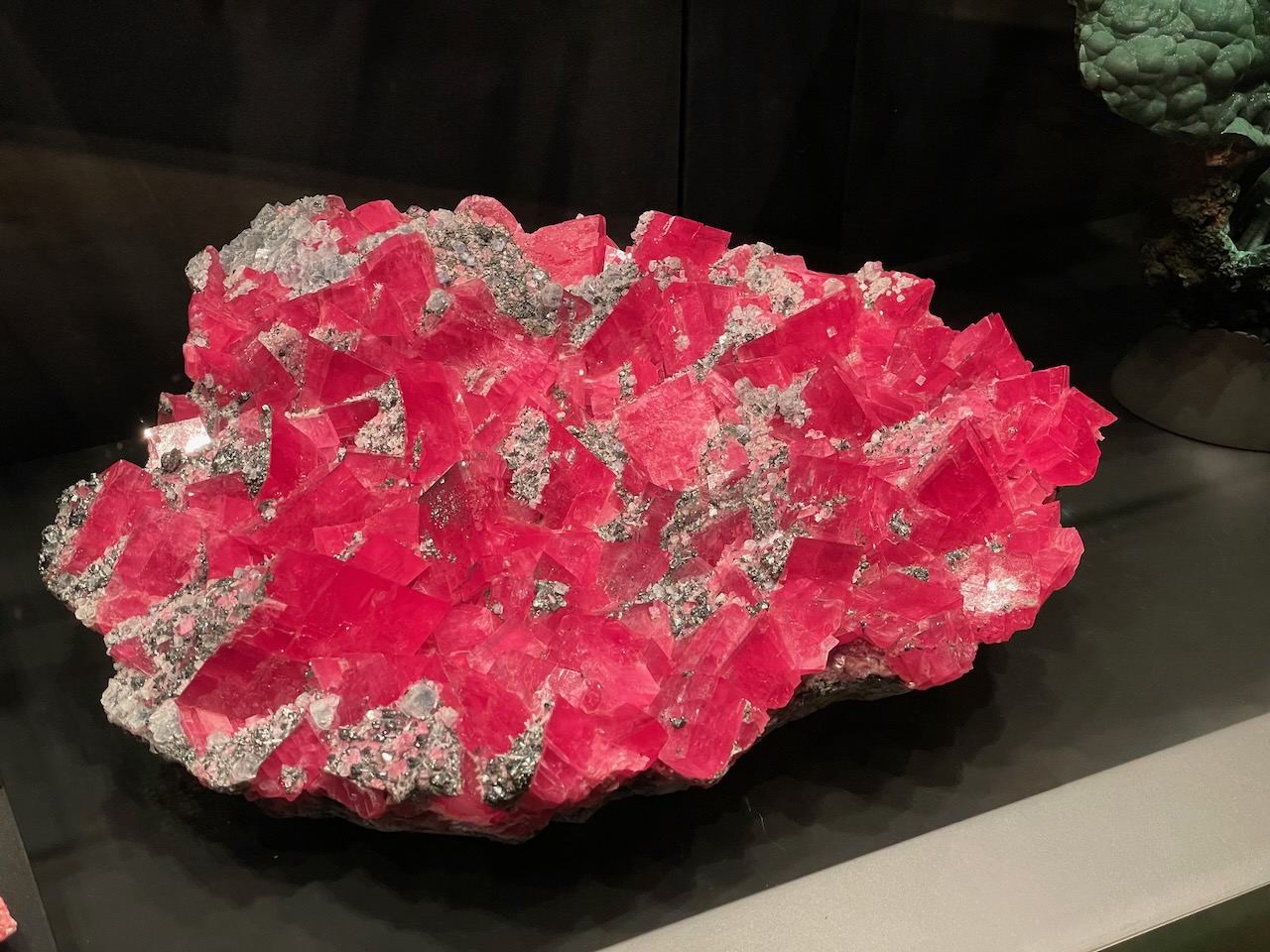
Watermelon? Strawberry gelatin? Sevag and
I puzzled over this one at the Mineral
Museum. (1 Aug. 2023 - Mathaf, Beirut)

            The impact of all of this upon the Armenian community in Syria and Lebanon is what troubles me the most. As the Dons of this kleptocracy look for new ways to fill their stomachs – most recently by a farcical “helicopter tour” of the new oil-drilling rig off the Lebanese coast –small and “unimportant” groups such as the Armenian community are left to fend for themselves. It is interesting to see how a country can continue to appear as a functioning entity while running on “autopilot”. A bit of electricity here, some trash collection there, fixing a water main when it breaks, leaving NGOs to install street lighting and traffic lights, and repair the worst potholes as highways steadily deteriorate, while many, many employees in the public sector come to work but once every one or two weeks, as their monthly salaries hardly cover the cost of transportation – this is today’s Lebanon.

When gas prices rise too high, there are
still great ways to make use of your auto!
(3 June 2023 - Ainjar)

            We’ve been noticing one of the semi-comical expressions of that while driving around various parts of the country with Sevag. It’s the “LPO mode” that auto owners have entered: “License Plate Optional”. Earlier this year I began to notice an absence of license plates of some cars on the road. Now it is probably up to 5 to 10 percent of cars. The office that processes car registrations is clearly not functioning. But in classic Lebanese manner the population is facing the situation with humor. It’s considered a badge of honor to drive an LPO car, even to the point, some say, that people will remove their license plates just to be seen as part of the LPO club!

            This summer I walked into a store in Ainjar, the mostly-Armenian village in the Bekaa valley. Whenever we’re going to be there for a few days I’ll stop in to pick a thing or two, and often times, since this is Ainjar, and since, due to my position, I can’t remain anonymous, I’ll run into people I know including people who know me since the 1990s, or the 2000s, or current times. The lady behind the counter, who does not belong to one of the aforementioned groups, asked me, in Armenian of course, “Are you Ainjartsi (her intent: “originally from Ainjar, but visiting from overseas”)? My interest piqued, I said, “No, I’m not. Why do you ask?” With no hint of malice or sarcasm, just puzzlement, she said, “Well, lots of people are very happy when they see you.”

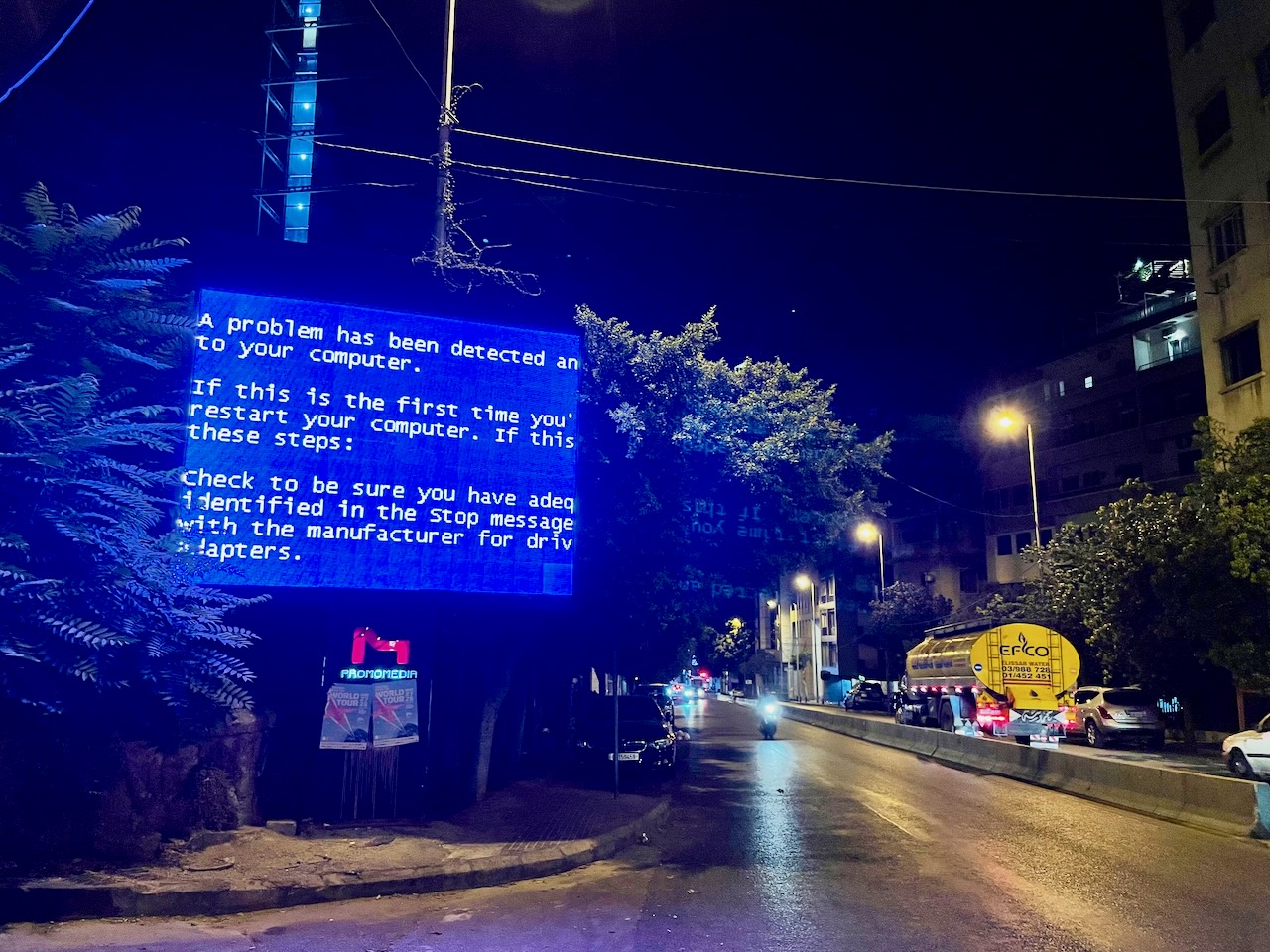
Providing an unintentional glimpse into
the dysfunction of the country.
(4 Aug. 2023 - Tabaris, Beirut)


            Amid such a negative environment I’m glad we can have positive encounters with those we meet, and grateful that our casual interactions can be uplifting. Certainly, this is not something we can automatically produce: without God’s encouragement in our times of frustration and discouragement we would have little to share with others. As well, without organizations backing us up it would be a challenge to remain positive in the enforced misery people are subjected to each day. So, I don’t mind being mistaken for an “Ainjartsi”, and I don’t mind that (most) people are happy to see me!

            During the summer a small group of young Lebanese-Armenians in their twenties, on their own initiative, approached Haigazian University in order to present a film series, seven items in all, ranging the gamut from practically “home-made” to professionally produced. Their emphasis was on increasing the public’s knowledge of Western Armenia and elevating the use of the Western Armenian language. They delivered their introductions each evening in flawless Western Armenian as well as English, and it was clear that they cared deeply about the entire project, and plan to expand their efforts to develop other materials that would interest young Armenians in their heritage, using modern pedagogical methods in a technologically accessible way. The name with which they christened their platform is “Hnarti” /Հնարդի, combining the Armenian words for “old” and “contemporary”. Despite the hemorrhaging of young blood from the Middle East, vision and vitality can still emerge from this community.

LebCat 60: Every pharmacy should have a
watchcat at the door.
(14 Aug. 2023 - Hamra, Beirut)

            In eight weeks I’m hoping to bring the Armiss Choir back on stage to sing one or two numbers. Hopefully a couple other Lebanese choral groups will also perform. A colleague and dear friend has just published a book on a century of Lebanese-Armenian choirs (1920-2020). The dedication of the new book will happen in October, and part of the dedication program will be vocal selections. From real choirs singing in harmony. Live – which is how music is best done. So, it’s time to get things organized and underway, and to invest a bit more in the health of the country and in a couple of its modest but essential components, that is, the arts, the Lebanese-Armenian community and the Armenian Evangelical Church.

            Finally, something to talk about besides currency rates!   [LNB]

Monday, October 31, 2022

How about Them Apples?

54.How about Them Apples? (31 October 2022)

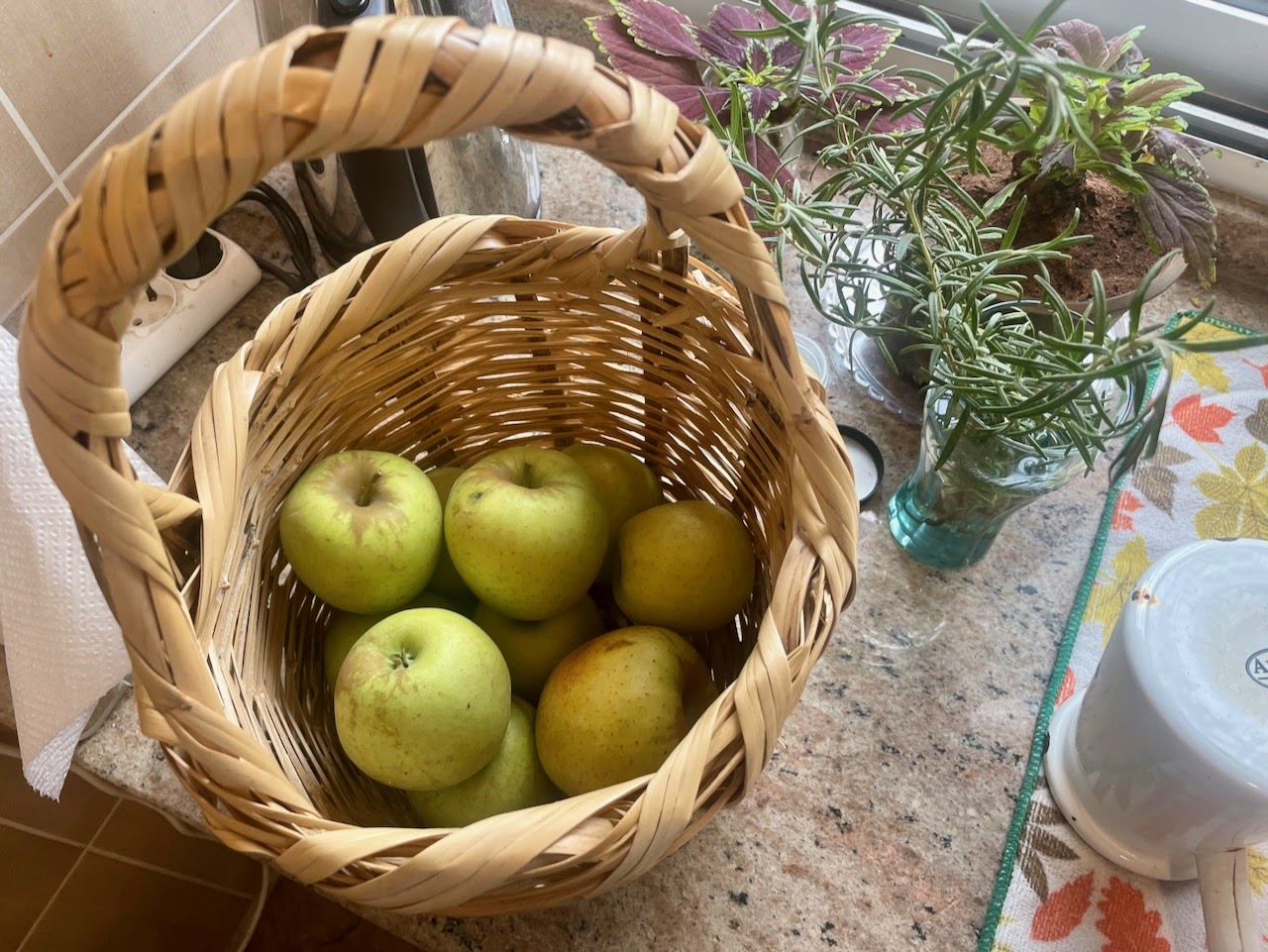
The last few apples from a half-crate
bequeathed to us (5 Oct. 2022 - Geitawi)

As the people await the outcome of deliberations to select yet another paragon of mediocrity, ineffectiveness and corruption to lead the country, and as Lebanese, young and old, meanwhile engage in their mindless mimicry of that most worthless and idiotic of American holidays, Halloween, my mind goes to things of slightly greater value in this autumnal season. That, of course, includes the beauty of the changing colors of deciduous trees, visible elsewhere in the country, but hard to find in Beirut, where any sort of tree is happily sacrificed for the sake of building empty concrete-and-steel structures (if you know the right people). In our previous home in the east coast of the U.S., we reveled in that yearly shift from greens to warm tones, deep reds and bright oranges and shimmering yellows that heralded the cooling weather. When we come across the smallest evidence of those colors in the countryside, we experience a moment of joy and wonder at God’s handiwork refreshing our eyes and spirits.

Clouds on the horizon, and the sun
illuminating the illegal landfill on the coast
(13 Oct. 2022 - towards Bourj Hammoud)
            Another aspect of this season, also connected to our previous life in the U.S., has to do with one of the quintessential gifts of the land in the fall, namely apples. They are plentiful in Lebanon, and are available in several varieties, from sweet to tart. Sadly, apple cider hasn’t really caught on, but apple vinegar is prepared in great quantities for a variety of uses. For whatever reason this year (I leave that to your deduction), the market for apples is glutted, and domestic apple production is a losing proposition. When visiting Ainjar recently, friends there said that they are leaving their apples on the trees – and the ground – because they cannot sell them, and therefore it is meaningless to harvest them. And then they gave us a huge bag of apples, just gathered that morning, to take back to Beirut to enjoy. Fresh. No chemicals. Delicious. And unsaleable.

The neighborhood transformed into a street
in Egypt for a movie filming
(30 Sept. 2022 - Geitawi)

            Last week, on one of my shopping trips (which I do by foot, since I can get some exercise that way), as I entered a nearby fruit stand, I noticed that a middle-aged woman was talking with the grocer about apples, their price, the varieties and so forth. Probably just another interested shopper, I assumed. Until I was leaving the shop and saw that she and the shopkeeper had walked over to her car, where the open trunk revealed crates and crates of apples… And she was continuing to talk about apples and negotiate a price for them. It bothered me, not just because of the reason for the glut of apples in Lebanon today, but also about the state of the “middle class” here, which has taken to driving around to neighborhood fruit stands to sell a bit of their homegrown produce. And to add to the inscrutability of the situation, the cost to the consumer is not dropping as it should, but rather continually increases. It’s not just the poor who are bearing the brunt of the self-serving “leaders” running this drama, but all strata of society. As my mother used to say when astonished at something, “How about them apples?”

The odor of burning garbage can't hide the
beauty of wedding flowers and the joy of
a wedding! (15 Oct. 2022 - Khalil Badawi)
            The irregularities of life here have become something of a routine. Strangely, the near-complete lack of municipal electricity – a total of about 10 hours for the entire month of October – has made life more predictable. We know that whatever the schedule is for our supplemental power (“ishtirak”), that is when we have power, amounting to a little under 12 hours per day. Since we live in the same building as my office, that adds another 4 hours on weekdays. So, sitting in the dark, or shaving in the dark, or doing my online Arabic lesson while I wait for the lights to come on, is just another feature of life in Lebanon. Add to that the irregularity of the office internet, which the provider cuts for anywhere from a half-hour to 3-1/2 hours during work hours, and one becomes inured to things that would cause major emotional upheaval anywhere in the “developed” world. Except perhaps with looming energy shortages this winter, the developed world will know how the other 90% of the world lives (statistic courtesy of me making it up).

It's a bit of a drive to get there, but
at last I've found some equipment
to start my exercise program
(2 Oct. 2022 - Sawfar)

            I have a human Arabic teacher who has an amazing command of the language, and an amazing amount of patience with me and my esoteric interests. Fortunately, as a schoolteacher she is aware of all of the classroom tricks that someone in his 60s tries to pull off and keeps me moving forward. It will soon be six years since we began our lives here, and although I have accumulated a fair amount of exposure to the language, gaining facility in Arabic for daily interactions remains a hill I need to climb. Doesn’t help that my job is conducted mostly in Armenian with some English. We’ve begun to focus exclusively on spoken “Lebanese”, which I expect will propel me up that hill.

            I also have a mechanical Arabic teacher. It’s an “app” on my devices, and it has more than a few quirks. Those quirks help me maintain my interest (292 days in a row and counting). I particularly like the mispronunciations that the developers haven’t bothered fixing. Things like “tabibbouleh” for “tabbouleh”, and “shishai” for “shai”, and the American city “Safanennah” instead of “Savannah”. I’ve even taken to pronouncing those words the same way!

LebCat 54: Keep walking and mind your own
business. I'm working for the security
company (3 Oct. 2022 - Geitawi)
           
And I continue to invoke my mother, especially when I see the insanity around us and the barbarity inflicted on Armenia and Artsakh while everyone is looking somewhere else, and the self- and other-inflicted miseries overtaking so many. Things like this may no longer amaze me, yet I can’t help but say, “How ’bout them apples...”   [LNB]

Sunday, July 31, 2022

The Land That Honor Forgot

51.The Land That Honor Forgot (31 July 2022)

Kindergarten graduation is a big deal here!
(17 June 2022 - Nor Marash)


A couple of weeks ago, as I was leading the washing-machine repairman up the steps in complete darkness, the tiny lights of our cell phones revealing the steps before us, I apologized that, after a long day of work, I had to make him walk the steps and not take the elevator. Deflecting my apology, in Arabic (and some broken Armenian, as he used to work in Bourj Hammoud) he said, “Haram, Beirut, haram that such a beautiful city as you is like this, haram!”

            “Haram” means “shame”. And supposedly the Middle East is one of the many regions throughout the world that operates around an “honor/shame” culture, something the West has great trouble grasping. Not that the West doesn’t use the term “shame”; it does, but only when attempting to shame others, and no longer as a means of self-examination or personal reform. Here, shame is part and parcel of each day, and especially in today's Lebanon, with the abundance of shameful situations. Yet although so much is shameful, those responsible for engineering this state of affairs over the years have no sense of shame… and therefore no honor.

The "Cine Vendome" steps have been
upgraded to include a playground!
(24 June 2022 - Mar Mikhael)

            As Maria, Sevag and I were driving on a “highway” through an agricultural region last week, we happened upon a two-vehicle accident, possibly a head-on collision or a side-swipe. Scattered across the road were bits of produce and wooden crates, and sprawled on the shoulder were women and men in their colorful garb, being attended to by paramedics next to a Red Cross ambulance. Men standing around were not helping traffic to get past the scene, as car after car slowed down to see what was going on, and even to chat with those on both sides of the road. What a shame to see these agricultural workers – not Lebanese, of course – who had a short while earlier been crammed into these vehicles to take them back to their camp after a day’s work. Who feels compassion for these injured women and men, even though there would be no produce in the markets if they weren’t out in the sun each day tending the fields?

Traffic jam on the Stepanavan-Vanatzor
roadway. (8 July 2022 - Armenia)

            Earlier, when driving in the other direction on this same road, we happened upon another traffic jam. There seemed to be no reason for it in such a small town, until we saw a bakery outlet with a couple hundred people in front and across the road from it, anxiously waiting for a delivery of Arabic bread. Why was there a “bread crisis”? Because the legislature was discussing the terms of international funding to enable Lebanon to buy wheat, and how much it should cost, and whether wheat subsidies should be lifted. While these men (only a handful of hardy women dare to serve in the parliament) were debating, the people were panicking, experiencing the shame of having to wait in line for bread, when their leaders have absolutely no food worries.

"Mer Shougan" (Our Market) on Arax Street,
to promote the home-based products of
Lebanese-Armenians
(10 July 2022 - Bourj Hammoud)

            And to add more shame to this scene, the army and police had to intervene to keep the order at this and so many other bakeries. Men on this side, women on that. Lebanese in this line, Syrians stand over there. Accusations intensify about who is buying up the stocks of subsidized bread to sell at twice the legal price to people who have no choice but to pay that amount, about who is smuggling bread out of the country to sell elsewhere, just as subsidized medicines are hoarded and sold in countries far from Lebanon.

            These God-given sensitivities – shame and honor – have often been misused when they are detached from personal conscience and used as weapons for controlling others. But in our current situation they are merely a veneer of words used by the powerful, devoid of meaning or effect, papering over the corruption within. John the Baptist (Matt. 3.7-12) and later Jesus Christ (Matt. 12.34-37), when confronting the corruption of their day, challenged the powerful to change direction or else face relentless justice from the God they no longer feared. Honor needs to be seen in honorable actions, not just in long-winded speeches or televised soundbites.

Facing the explosion site, memorials to
those killed in the Beirut Port blast
of 2020 (photo by SAB - 30 July 2022)
   As if fatigued from the hypocrisy and mendacity swirling around the abortive investigation of the Beirut Port Explosion of August 4, 2020, today part of the damaged grain silos collapsed in a plume of dust, debris and fungus from the fermenting grain within. These fifty-year-old silos, which held nearly the entire grain reserves of the country, are among the heroes of that unforgettable day. Their structural integrity shielded half of the city from destruction. Though inanimate, they hold a place of honor alongside the heroic first responders who were cut down on that summer evening; a level of honor that those who were sworn to protect and lead the country will never achieve – save for their total, systemic and true repentance.

            We’re finding ourselves approaching our refrigerator with trepidation, since the power (from all three sources) is off more than it is on in these hot and humid days. It used to be that stocking up the freezer and putting leftovers in the fridge put our minds at ease for coming busy days. Now we play the game “What’s That Smell?” when we open the fridge. Good smell? Thumbs up. Bad smell? To quote my college roommate’s slogan, “When in doubt, throw it out.”

            Maria and I had our first bout of CoVID-19 last month, as we were preparing to receive our son Sevag and then travel to Armenia together. See plans, apply wrench. After the readjusted Armenia trip concluded and we returned to Lebanon, Sevag had his first bout of the disease. We were grateful that we didn’t have any loss of smell or taste (refer to preceding paragraph). And grateful that we were able to provide him with at-home care.

LebCat 51: "It's simple: you climb up this
grapevine, push one of those switches down,
and then someone comes out to his balcony
and starts yelling. You meow and he throws
you a treat when he comes down to switch it
back on." (24 June 2022 - Geitawi)

            Sadly, I am getting less exercise, after realizing that the circuit breaker for our supplemental electricity could be relocated right outside our apartment door (refer to my Jan. 2022 blog) and not down a bunch of stairs and out at the end of the street. Now they easiest thing in the world is to make a mistake by turning on the hot water tank or flushing the toilet, and then saying, with a smile, “Oh well, no problem!” and just open the front door and flip the switch back on. Talk about living in the lap of luxury!

            What concerns me the most is that those among whom I work – Armenians and Lebanese – will lose their sensitivity to the tools God gives to keep their consciences alive. The poisonous examples are so very prevalent, and only with divine help and concerted mutual support will we avoid this plague, this collective degradation – whether in Armenia, in the Diaspora, or here.   [LNB]

Tuesday, August 31, 2021

45.Another World (31 August 2021)

Children's Conference restarted with two one-
day events (KCHAG, Monteverde - 24 July 2021)
It has been two-and-a-half weeks since we left Lebanon for our 5-month “Home Assignment”. The question that dogged us when we told people in Lebanon of our trip (“Are you going to come back?”) is still dogging us here in the U.S., but inverted: “Are you going to go back?” Because things are terrible in Lebanon, and even worse than they were when we flew out, people assume that our (unwise in their estimation) answer must be based only on conditions on the ground. We tell them, “Yes, Lord willing, that is our plan,” since our move there four years ago was also based on the Lord’s guidance above all else. But to those living in this world, we must be unaware of what the situation is on the ground – or in the news.

Enjoying a scavenger hunt at the conference
(KCHAG, Monteverde - 20 July 2021)
            When we think of Lebanon, we do not first of all think of the rampant corruption, the hoarding of resources, those seeking a profit from peoples’ misfortune, the long hours without electricity, the lack of sleep in the hot summer nights, the anxiety over finding food and medicine, the terrible banking system, the destruction of last year’s explosion and much, much more… We think of the people, the friends and loved ones we have, the children and young people, our colleagues, the small businesses we frequent, the churches, schools and institutions where we serve, the Armenian community we are a part of, and so much more. We also look to the coming years, to “what’s next”, the challenges ahead, the opportunity to add our strength and experience to the efforts of others, working with God to sustain life in a place and among a people whose muffled cry is: “We want to live!” The misery that their leaders are spawning all over the land must not determine our steps, but rather the One who placed this on our hearts. It won’t convince everyone questioning our planned return, but that’s the way it is.

A prickly-pear (cactus) seller finds a whole
row of customers, waiting to fill their gas
(25 July 2021 - Beirut)
            As the memory fades of the hardships we faced each day and each moment in Lebanon, it seems like we are currently living in another world. We remember that people continue to suffer even more humiliation there, but it has started to disappear from our consciousness, as we experience the luxuries of life in the U.S. Luxuries such as 24-hour electricity, uninterrupted water supply, filling a tank of gas without waiting in a long line, stable prices and currency, banks that allow you full access to your savings, fully-stocked pharmacies, the ability to plan a work day or a vacation day, heating and cooling of homes and businesses as needed, schools and universities happily planning to receive children and youth for the new school year, continuous internet at fast speeds, and on and on. We are inhabiting a parallel world from the one we left; a world where, strangely enough, things function as they were intended. Much like the world of privilege Lebanon’s leaders inhabit while they perpetuate a world of misery and humiliation for their people.

Socially-relevant graffiti, quoting
prophecy from Isaiah 6
(30 July 2021 - Beirut)
            Although it may seem so to anyone who has to endure daily deprivations, everything is not perfect in this parallel world we inhabit today. As time passes the dark side of life in the U.S. gradually reveals itself to us more starkly. One thing that has begun to creep into my consciousness is the “irrelevance” of being Armenian in this “far” Diaspora (far from the lands we were dispossessed of). With so much to do, buy, see, download, play, watch, consume, fix, replace, who has time to think about existential issues? Questions that keep some of us awake through the night are so irrelevant; questions such as, “Who am I? To whom do I belong? Do we Armenians have a collective future? What are the internal and external threats facing us? Are we our worst enemies, or are the criminal regimes surrounding Armenia? Can we work toward a coordinated Diaspora that neither ignores its own needs nor discounts those of Armenia?” One by one these concerns fade from view as I get wrapped up in the busy-ness of each day, and the many things that insist I pay attention.

            I also consider how “irrelevant” these questions now seem to many enduring great deprivations in Syria, Lebanon, and elsewhere in the “near” Diaspora, where the very visceral struggle just to subsist overtakes any considerations of national identity, of strategic planning for the future, of battling “red” or “white” genocides, of challenging globalization’s threats to us and other small nations… Each of these parallel worlds, one shiny and bright, the other dark and dreary, imposes itself on me, and on us, and makes us push aside any considerations of what truly matters, what keeps us human, what gives us meaning and identity, what can help us endure and flourish as a nation.

From every walk of life, walking to the city
center to remember those lost on August 4,
2020, and demand accountability
(4 Aug 2021 - Geitawi, Beirut)
           Even issues of faith are affected by the powers at play in these worlds. When you have every thing (emphasis on “thing”) available to you, God can become just another add-on to your life, and faith can be a pleasant – and optional – diversion. One that you meld and adjust to fit the values and standards of society. On the other hand, when you have nothing, faith can turn into a mere lifeline that you use to survive each day. Lifting your head up from the misery of each day in order to seek and do God’s will where you are right now can appear as an impossible luxury. How easily the immediate and urgent can supplant the important and foundational, and how often the temporal overwhelms the eternal. How hard it is to live in God’s world no matter what “real world” you occupy.

Portraits of the fallen in the 2020 port blast
(6 Aug 2021 - Saifi, Beirut)
            We had a full summer before we left Lebanon, including an extended stay (again) by our son Sevag, and preparation for our absence. Despite the steady decline in living conditions, we enjoyed being at home together. He had time to serve, time with friends, and time to eat bouza arabi (natural Arabic ice cream, home-made with goat’s milk). When people in his “usual” world ask him, “How was it in Lebanon? Wasn’t it dangerous? Wasn’t it difficult for you?” he simply answers them, “It was very good to be with my parents.” He, too, realizes that it is difficult for people in one world to grasp the reality of another world.

LebCat 45: Dreaming of donuts and other
easy handouts from the AUB crowd
(28 July 2021 - Bliss St., Beirut)
            Having experienced the Port Explosion of 2020 together with Sevag, we also experienced its first anniversary together. Sevag participated in a service of remembrance and prayer at Ashrafieh’s Armenian Evangelical Church, whose church and school buildings were hard hit by the blast. It was also a day for us to express our gratitude to God that we emerged safely from that maelstrom. A Christian artist from the U.S. honored the over-200 dead from the blast by preparing their portraits and pasting them around the perimeter of one of the big, empty buildings being built in downtown Beirut, a few steps away from the Martyrs’ Statue. As we walked past those portraits, gazing into their eyes brought home the pain and the reality of the loss – to their families, their communities, and their country. It’s a temporary exhibit, as those panels will be removed once the construction is completed. Hopefully their memory will not be temporary, and a new generation of those who love the truth will emerge and prevail, to pursue what is right, true and merciful in the world God so loves.    [LNB]


Wednesday, September 23, 2020

Walking on Diamonds

38.Walking on Diamonds (23 September 2020)
A ruined building not far from the destroyed grain silos
at the Beirut port (31 Aug. 2020 - Karantina, Beirut)

When walking around the nearby streets in our still sunny weather of the past weeks, glints and glimmers from the ground invariably would catch my eye, and prompt me to go over to investigate the reason for the unusual reflection of sunlight. Might it be something valuable? Some lost treasure? The sensation, especially when the sun is at a low angle, is that I am walking on cut diamonds, treading on treasure. And my reflexes would tell me to stop and pick them up. 

Broken glass gathered together to state clearly,
"We are still here" (31 Aug. 2020 - Mar Mikhael)
            Yet nowadays, in post-post-blast Beirut, the phenomenon of glittering asphalt and pavement has become so common that I hardly notice it. So much broken glass, so many tiny shards have been scattered everywhere that I no longer have that same reaction of walking on jewels, as in the days immediately following August 4. The glass has not decreased (because the winter rains have not yet washed them away); rather, my perception has adjusted to this reality, and I tune it out.

Flying glass daggers - now there's a gaming
challenge (8 Sept. 2020 - Geitawi, Beirut)

             Much as the windowpanes of some 300,000 homes in a 2 km radius were shattered that Tuesday evening, something else very important was shattered and scattered on the ground: the ability for people to see far, to envision, to dream, and to trust. They have eyes, but struggle to see; minds, but only partially perceive; hearts, but are afraid to hope. But unlike those glass shards in every crack and crevice of these streets, those battered thoughts and dreams are still diamonds, still of immense worth. And unless all of us move carefully, we will continue to treat those diamonds within peoples’ hearts as merely collateral damage, and carelessly tread them into the dirt of despair.

The view from our balcony after (another)
huge post-blast fire broke out at the port
(10 Sept. 2020 - Geitawi, Beirut)

            My outlook may not be a majority view. In fact, as the vehicle called “the Lebanese State” continues to happily barrel off the roadway toward ditches and cliffs, my outlook may well have sunk yet farther into the minority. Nonetheless, I consider the people of Lebanon, as well as the Armenian population here and across the Middle East, as diamonds. There is little regard for what has fallen to the ground. We hear energetic defenses of this or that community, for the ultimate good of their politico-religious or religio-political followings, and not for the reviving of the country as a whole.

             The Bible urges believers in God to pray for their leaders regardless of what country in which they reside (I Timothy 2.1-2). Interestingly, the prayers are not supposed to be for long life or extended terms for the ruling class, but for a peaceful, dignified and godly life for the people. With a thick wall insulating leaders of every land from the people in that land, I am not sure how easily those in authority can grasp that sacred task of serving their people. It’s what we prayed for two days ago (Republic of Armenia’s 29th Independence Day), and it most definitely is what we continually pray for Lebanon.

A sidewalk prayer station outreach from a
nearby church (4 Sept. 2020 - Mar Mikhael)

            The true diamonds of Lebanon, the people you love to meet and talk to, in villages and cities, have simple needs, needs that those in authority find hard to grasp: the simple desire to live in some semblance of dignity and peace. That sort of environment would reawaken a drive to create and flourish in this land. It would remove the desire to flee halfway across the world to find some soil, somewhere, in which to place undisturbed roots and yield fruits.

Homeowners and shopkeepers are determined not to
be driven out (14 Aug. 2020 - Mar Mikhael, Beirut)

            But the drive to create and flourish has not vanished, as others (some inside, some outside Lebanon) have pointed out to me. It has helped me clear some of the funk enveloping my brain. There are some who are using their media platforms to share individual stories of hope and despair, showcasing the determination of some to rebuild and the needs of others for loving hands to support them. The beautifully-restored Sursock Museum with its delicate stained glass and hand-crafted interior, which was turned into splinters and glass powder, hosted a fund-raising concert in its gardens as an act of defiance, declaring, “I’ll be back!” The innovative Armenian band Garabala, which has been losing its members to emigration, one by one, prepared a most tender and even rejuvenating music video for the “For You, Beirut” online event. Friends who left Lebanon early in the year recently chose to return, knowing full well that they would be facing formidable challenges in their everyday lives. The middle-aged owner of what is arguably the best Arabic ice cream in Beirut, leaving his blast-damaged store of 71 years (it was his father’s before he took over) in an

Our living room/dining room, almost ready to move
back into (23 Sept. 2020 - Geitawi, Beirut)

already crumbling house, has decided to open at a new location and keep innovating. A young couple realized that if they wait for the “right time” to have their wedding, set for 2021, it might never happen, so they held a simple and elegant church service and reception this month. So many diamonds, here and there, and I’m training myself to see them, hold them up to the light, and rejoice in the hope that each one represents. This does not minimize the pain of saying goodbyes on a regular basis to people we treasure. Nor will it necessarily alter the plans of those who have decided to seek their fortunes elsewhere. But it reminds us of our calling to care for those right around us.

            For the past three weeks we’ve been living/eating/working in a single room, the bedroom Sevag occupies when he’s here with us. We’ve been sleeping in our own bed, or at least we will until its time to repair the bedrooms. Renovations to our apartment are ongoing, and with any luck it will be completed in a week or two, along with the renovation of the Union offices (including mine) and the entire building.

LebCat 38: Is it safe to come out yet?
(9 Sept. 2020 - Geitawi, Beirut)

            Walking around the city one notices not only the proliferation of scaffolding and the constant activity of construction workers, but a fair amount of homes and businesses that have been left undisturbed since the explosion. We know it will be years before they are touched, if ever. Yet we have chosen to focus on that which is changing, and to harken to the voices of those who openly declare, “Lebanon belongs to me, and not to the criminals who allowed this to happen.” There is still a long road ahead. Rebuilding will not fix all that needs fixing here. But it’s a start.  [LNB]

Monday, January 6, 2020

Stormy Weather


31.Stormy Weather (5 Jan. 2020)
Stalled construction – for now – in the downtown area, center
of the protests that began on Oct. 17. (27 Dec. 2019 – Martyrs’
Square, Beirut)
It’s Christmas Eve. And it’s raining fairly steadily, as it has been for the past several weeks. Youth groups from the various Armenian Evangelical (and other Armenian) churches are preparing to spread out over the metropolitan region to visit homes and sing the good news of Christ’s revelation to mankind. Throughout the night until the early hours of the morning they will be climbing in and out of cars and vans, cramming into elevators or traipsing up flights of stairs to carol and share scripture, as well as to distribute a custom-made gift to each household. And they will enjoy the chocolates, candies and other goodies prepared by each household they visit. And get drenched to the bone. And create memories that will stay with them until their old age.
Our neighbors and we prepared snacks for the carolers to
recharge themselves before going on with their caroling.
(5 Jan. 2020 – Qobaiyat - Beirut)
            Today I found out from my son Sevag (in the U.S.) that in Aleppo this year the churches there will also be sending their youth out to carol and herald Christ’s birth. If this good news is sorely needed here in Lebanon (and it is very much needed), it is needed at least as much there. No surprise that the news went from the Middle East to the US back to the Middle East; it’s simply how the Armenian grapevine works.
Capitalizing on the tire-burning protest
movement. (21 Dec. 2019 – Nahr el Mawt)
            The season’s stormy weather seems to be the perfect analogy of what people are going through, and not just in Lebanon, but also in the region. People are teetering on the edge of a very deep cliff, and it seems certain that the country will be in freefall before too long. The dividing line between a liveable income and poverty is steadily rising, engulfing more and more people each week, and I expect that in a short while we will be seeing people focused on little else but how to get a some food on the table – if they haven’t sold the table by then. Banks are still limiting withdrawals of more than the equivalent of $300 per week, and they, as well as the exchange booths (an officially condoned, albeit black market, feature of the Lebanese economy for decades upon decades) continue to profit from the headlong fall of the Lebanese pound. Paper money (pounds, that is) is getting harder and harder to come by, and billions in local currency have steadily been relocated under the mattresses and in the coffee cans of homes throughout the country.
Some irony to chew on: poking fun at the
revolution with 22 karat gold gum.
(27 Dec. 2019 – Burj al Ghazal, Beirut)
            The other, uglier side of all of this is that for decades, politicians and businesspeople have embezzled and stolen and transferred billions in US currency out of the country, while the Central Bank has run banking affairs like an Amway franchise. Even after the uprising, when the writing was on the wall that this thievery was going to be stopped, those transfers to foreign banks did not stop. There is a reason why Lebanon has remained a “third-world” country for so long instead of developing into the jewel it has the potential to be: it’s called “greed”, described “to a T” in I Timothy 6.10.
            These unrelenting rainstorms (or snowstorms in the higher elevations) are laying bare the unkempt infrastructure of the country. Roads are being washed out, foundations are collapsing, more garbage is falling into the sea. The tourism and service industries (restaurants, etc.), which form such a great part of the (honest) income of Lebanese, have stopped dead due to the complete lack of foreign tourists and cautious spending of locals. These are not pleasant times for the country.
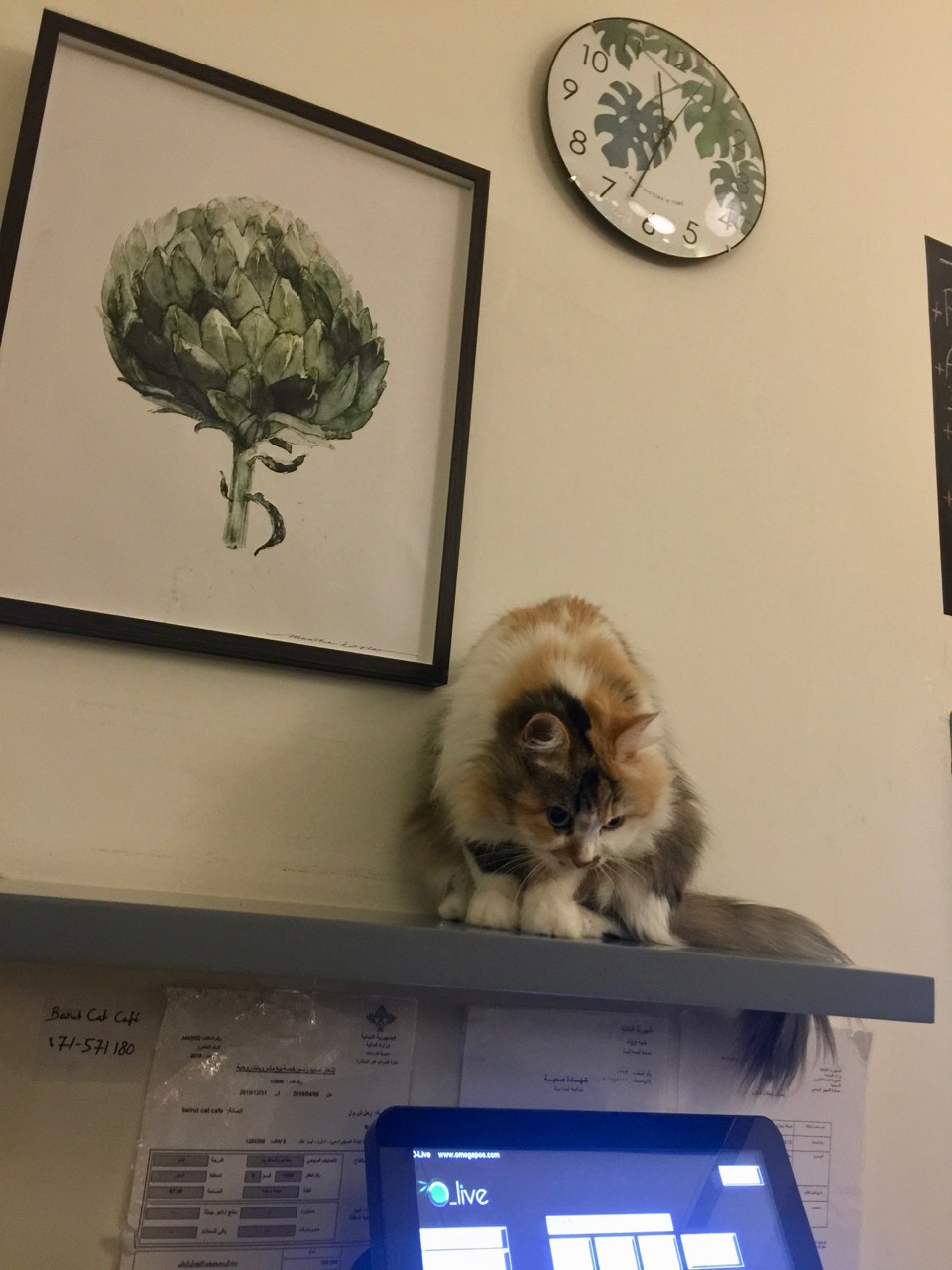
LebCat 30: On its usual perch, but appearing
more than a bit anxious. Cats can have
premonitions, right? (3 Jan. 2020 – Beirut Cat
Café, Mar Mikhael - Beirut)
            Last week a cemetery wall collapsed due to the hyper-saturation of the soil, toppling the deteriorating stone-and-cement construction onto the Damascus highway sidewalk in the Sodeco section of the city. The sadly ironic part is that it belonged to the old Beirut Jewish cemetery in a country that has almost no Jews left. Who will dare to take it upon himself to build a better retaining wall for that cemetery, I wonder? But if these storms continue, the outer wall of either the Anglo/Evangelical, French or Syriac cemeteries, all in a row, will be the next to fall. And then, maybe, the city will do a general reconstruction of all the walls – if there is any money left in their coffers.
            As business after business closes its doors, one in particular stands out for me: the Beirut Cat Café, in the Mar Mikhael area not far from us. I think of it as a “rent-a-cat” place, where for the price of a drink you can associate with willing felines for an hour or so and then leave; and if you are so inclined, you can apply to adopt one of them. Because of the impossibility of meeting their expenses in the declining Lebanese economy they are closing at the end of this month. What touches me the most about this particular place is that it represented a better side of humanity, where animals that are considered vermin can be seen in a different light. And that can have its positive effect on the way that people relate to the natural world as well as to each other. With its closing I feel that we are losing a part of our humanity, as ironic as that sounds. (Or a part of our felinity?) I hope it will open again some day soon, once these cruel storms have finished their destructive journey across the Middle East. 
LebCat 31: Blissfully unaware and uncaring at what is coming.
Probably better off that way. (3 Jan. 2020 – Beirut Cat Café,
Mar Mikhael - Beirut)
            No matter what, we will greet the coming day as we (Armenians) have always done: "Christ is born and revealed; great good news to us all!" (Krisdos dzenav yev haidnetsav; tzezi, mezi medz avedis!)    [LNB]