Showing posts with label music. Show all posts

Wednesday, August 23, 2023

Oh Wow Fives

60. Oh Wow, Fives! (23 August 2023)

Faces of loved ones sacrificed in the 2020
Port explosion – a pain and an injustice
continually ignored by authorities.
(4 Aug. 2023 - Beirut Port)

I went into a store here in Beirut to buy something, and as I prepared to pay in Lebanon’s official currency – the U.S. dollar – the cashier saw I had taken out $5 bills and exclaimed  (in English), “Oh wow, fives!” Her delight was due to the fact that as businesses, great and small, abandon the use of the Lebanese Pound, they are always in need of small denominations of U.S. currency to return change to their customers. I provided a much-needed resource to a small business, as people struggle to make their way through daily life unassisted by any authorities, swimming in that morass of disinterest and disconnection that is the country’s ruling elite. Courtesy of our son Sevag’s annual visit to us here in Lebanon, we enjoy the privilege of having small denominations of U.S. currency. Here I was, the hero of the moment, with my crumpled and discolored images of Abraham Lincoln, bringing a moment of joy in the middle of the hot, muggy summer.

But seriously, can't you tell that the
infrastructure has improved?
(11 June 2023 - Bourj Hammoud)

            One of the most distasteful aspects of my life today in Lebanon (though by no means the only one) is the necessity to focus or fixate on monetary issues. Lebanese, especially Beirutis, have always made currency exchange rates, values of precious metals, gasoline prices and more their daily small talk. Though there is so much more to life, though much greater depth is possible in conversation, but this is what one hears from each passerby, from men gathered at curbsides, from women catching their breath over a cup of coffee: the never-ending stream of analysis and “expertise” that has supplanted hopes, dreams and ideals – the very things that young and old should be actively investing in their country in order to push it toward a brighter future. Instead, materialism, reinforced by circumstances created by those in power and their cooperative external powers, is pushing the brightness out of the country just to dissolve in diasporas around the world.

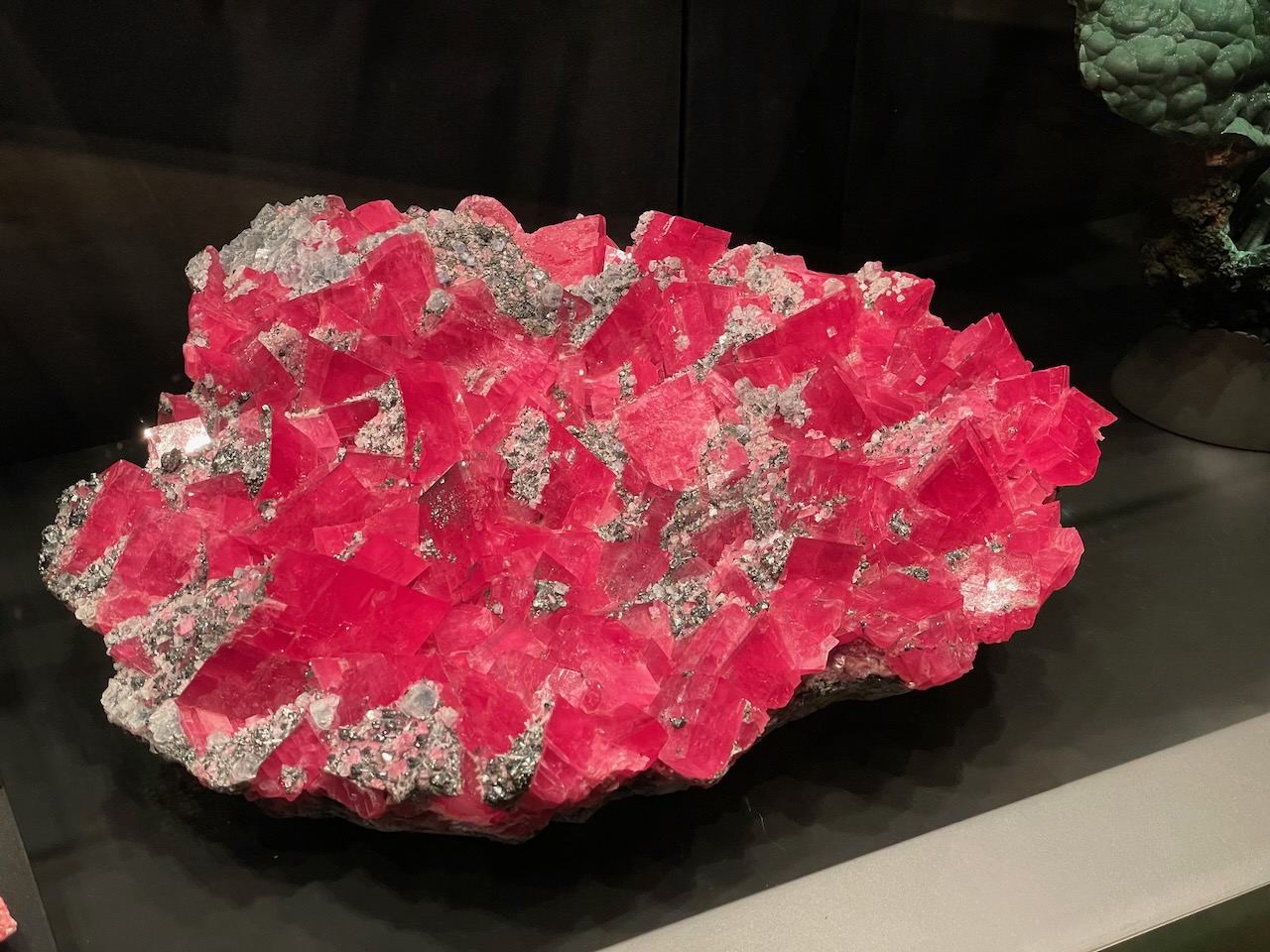
Watermelon? Strawberry gelatin? Sevag and
I puzzled over this one at the Mineral
Museum. (1 Aug. 2023 - Mathaf, Beirut)

            The impact of all of this upon the Armenian community in Syria and Lebanon is what troubles me the most. As the Dons of this kleptocracy look for new ways to fill their stomachs – most recently by a farcical “helicopter tour” of the new oil-drilling rig off the Lebanese coast –small and “unimportant” groups such as the Armenian community are left to fend for themselves. It is interesting to see how a country can continue to appear as a functioning entity while running on “autopilot”. A bit of electricity here, some trash collection there, fixing a water main when it breaks, leaving NGOs to install street lighting and traffic lights, and repair the worst potholes as highways steadily deteriorate, while many, many employees in the public sector come to work but once every one or two weeks, as their monthly salaries hardly cover the cost of transportation – this is today’s Lebanon.

When gas prices rise too high, there are
still great ways to make use of your auto!
(3 June 2023 - Ainjar)

            We’ve been noticing one of the semi-comical expressions of that while driving around various parts of the country with Sevag. It’s the “LPO mode” that auto owners have entered: “License Plate Optional”. Earlier this year I began to notice an absence of license plates of some cars on the road. Now it is probably up to 5 to 10 percent of cars. The office that processes car registrations is clearly not functioning. But in classic Lebanese manner the population is facing the situation with humor. It’s considered a badge of honor to drive an LPO car, even to the point, some say, that people will remove their license plates just to be seen as part of the LPO club!

            This summer I walked into a store in Ainjar, the mostly-Armenian village in the Bekaa valley. Whenever we’re going to be there for a few days I’ll stop in to pick a thing or two, and often times, since this is Ainjar, and since, due to my position, I can’t remain anonymous, I’ll run into people I know including people who know me since the 1990s, or the 2000s, or current times. The lady behind the counter, who does not belong to one of the aforementioned groups, asked me, in Armenian of course, “Are you Ainjartsi (her intent: “originally from Ainjar, but visiting from overseas”)? My interest piqued, I said, “No, I’m not. Why do you ask?” With no hint of malice or sarcasm, just puzzlement, she said, “Well, lots of people are very happy when they see you.”

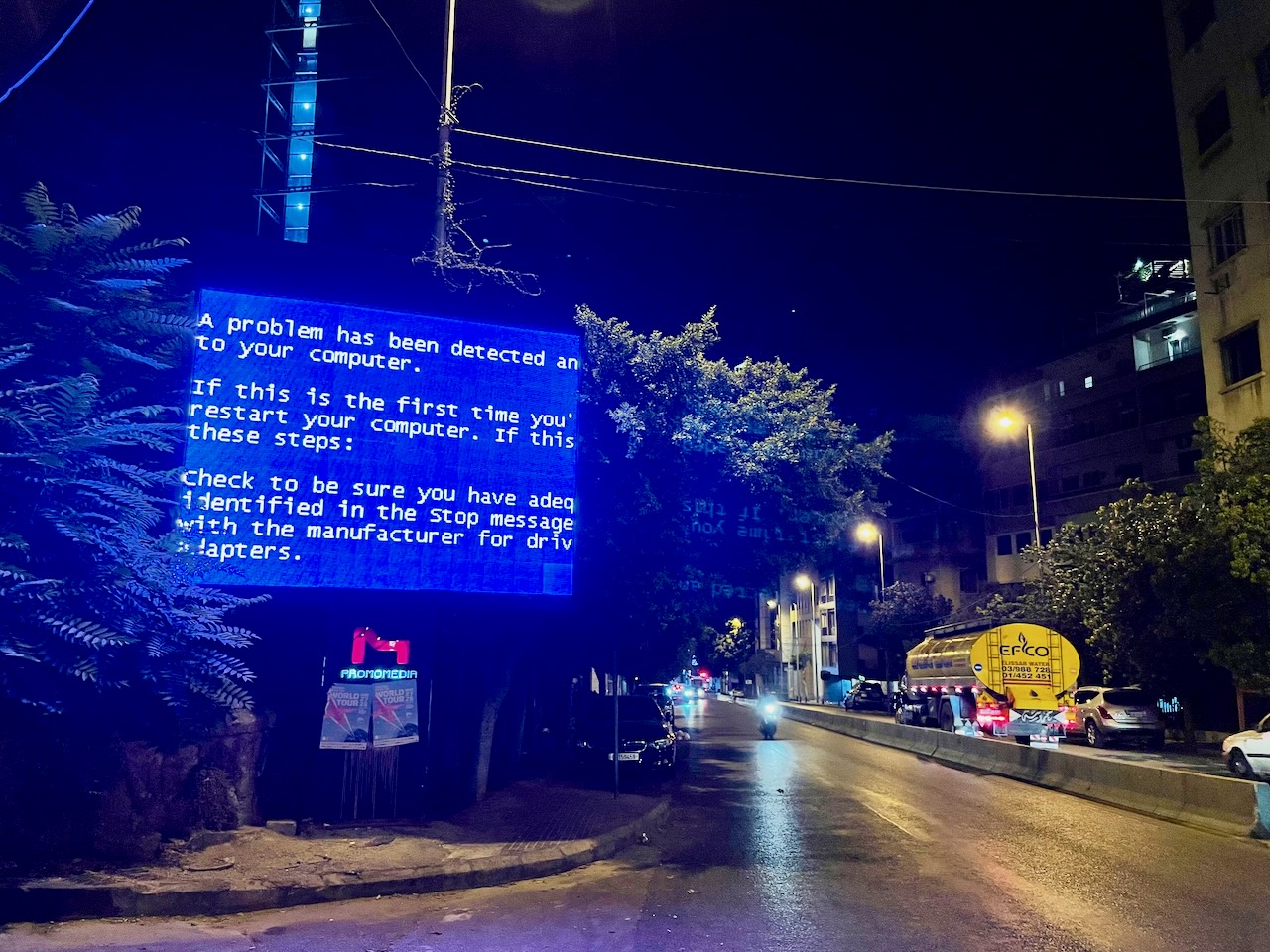
Providing an unintentional glimpse into
the dysfunction of the country.
(4 Aug. 2023 - Tabaris, Beirut)


            Amid such a negative environment I’m glad we can have positive encounters with those we meet, and grateful that our casual interactions can be uplifting. Certainly, this is not something we can automatically produce: without God’s encouragement in our times of frustration and discouragement we would have little to share with others. As well, without organizations backing us up it would be a challenge to remain positive in the enforced misery people are subjected to each day. So, I don’t mind being mistaken for an “Ainjartsi”, and I don’t mind that (most) people are happy to see me!

            During the summer a small group of young Lebanese-Armenians in their twenties, on their own initiative, approached Haigazian University in order to present a film series, seven items in all, ranging the gamut from practically “home-made” to professionally produced. Their emphasis was on increasing the public’s knowledge of Western Armenia and elevating the use of the Western Armenian language. They delivered their introductions each evening in flawless Western Armenian as well as English, and it was clear that they cared deeply about the entire project, and plan to expand their efforts to develop other materials that would interest young Armenians in their heritage, using modern pedagogical methods in a technologically accessible way. The name with which they christened their platform is “Hnarti” /Հնարդի, combining the Armenian words for “old” and “contemporary”. Despite the hemorrhaging of young blood from the Middle East, vision and vitality can still emerge from this community.

LebCat 60: Every pharmacy should have a
watchcat at the door.
(14 Aug. 2023 - Hamra, Beirut)

            In eight weeks I’m hoping to bring the Armiss Choir back on stage to sing one or two numbers. Hopefully a couple other Lebanese choral groups will also perform. A colleague and dear friend has just published a book on a century of Lebanese-Armenian choirs (1920-2020). The dedication of the new book will happen in October, and part of the dedication program will be vocal selections. From real choirs singing in harmony. Live – which is how music is best done. So, it’s time to get things organized and underway, and to invest a bit more in the health of the country and in a couple of its modest but essential components, that is, the arts, the Lebanese-Armenian community and the Armenian Evangelical Church.

            Finally, something to talk about besides currency rates!   [LNB]

Friday, September 30, 2022

A Time for Discomfort

 53.A Time for Discomfort (30 September 2022)

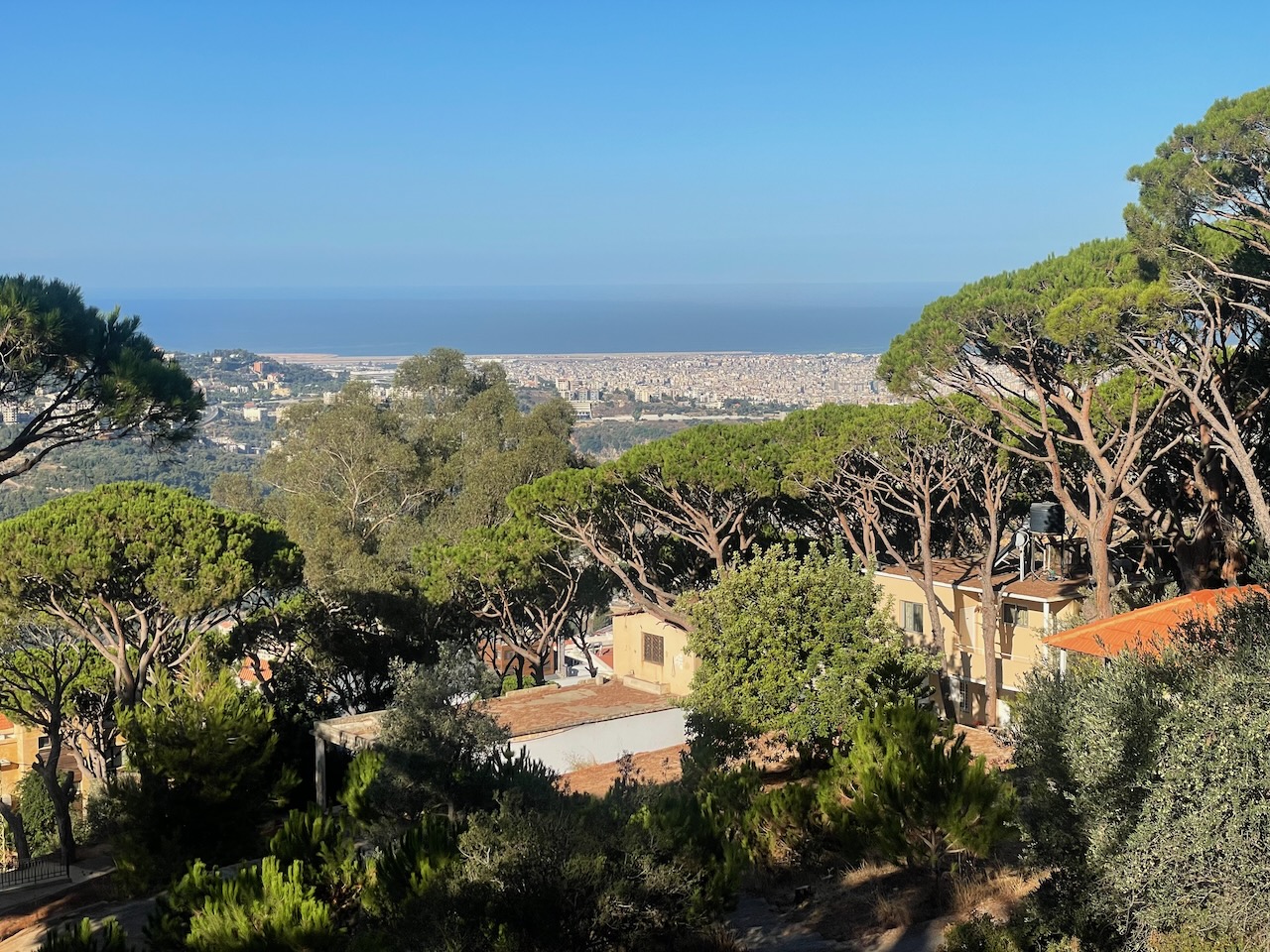
A rare day of low humidity, with a crystal-
clear view of Beirut from KCHAG.
(24 Sept. 2022 - Monteverde)

How much more surreal can things get? Yesterday the parliament met to make its first attempt at electing a president of the Republic. Hearing all the laughter and good-natured ribbing happening in the chamber, one might easily have concluded that there is little to worry about in the country, and that Lebanon is back to its glory days of the 1960s. Yet the upbeat mood in the room served only to highlight the deep disconnect between the people and their daily suffering and uncertainty on the one hand, and on the other hand those who are ensconced in the halls of power. Although this disconnect is arguably true in practically every country in the world, here it is as if a house is burning down, but the residents themselves must battle the fire alone, unassisted, running to and fro to find water to fill their basins and toss a few drops on the ever-heightening flames.

The building (at rear) where Armenian
orphan girls wove carpets after the Genocide
(17 Sept. 2022 - Ghazir)

            When people take up arms, even toy guns, and desperately enter the banks that hold their savings hostage, demanding their own money to be able to pay their own medical or business debts, it shows a deeply troubled society. They are depicted by news outlets as committing “bank heists”, as if readers were only capable of understanding Hollywood terminology. These are people struggling against the injustice and humiliation they have been fed continually for these past few years. The obliviousness of those who comfortably led Lebanon to this state, in local or international halls of power, only serves to increase our discomfort.

Reflecting on a day off, with the
help of a sculpture by local artists
(17 Sept. 2022 - Jbeil/Byblos)

            As we view the continued terror inflicted on Armenia by its un-neighborly “neighbors”, our discomfort multiplies all the more. The world today is witness to Azerbaijan’s push to impose military solutions on a weak and defeated country while the peacekeepers’ country is otherwise preoccupied. Yet once again, Armenians are demonstrating their political naïveté by rejoicing every time some Western government issues a condemnation of Azerbaijan, or a statement in support of the territorial integrity of Armenia. This same reasoning justified the international community’s lack of support for Artsakh’s Armenians during the war that began two years ago this week. Yet many Armenians the world over, in their self-imposed amnesia, continue to imagine that those statements will actually affect the reality on the ground. The reality is that this aggressor will take as much land as it can from Armenia, disrupting and destroying as many lives as it can, while big sister Turkey watches admiringly.

The streets around the Ashrafieh church &
school transformed into an Egyptian street
for a movie (30 Sept. 2022 - Geitawi)

            Meanwhile, despite the discomfort caused by events near and far, we are comforted in some measure by the beginning of a new school year. Armenian schools in both Lebanon and Syria welcomed their students back this month, providing much more than an Armenian education, as crucial as that is for the health and strength of Armenians everywhere. They are also providing a point of stability in the unstable world these children and adolescents inhabit. The daily conversations of adults around them, centering most often on continual worries about finances and the crashing currency, is being offset to a degree by the rhythm of the school day and the school week. Yes, the schools face deep financial challenges, especially if they have not yet installed a solar electric system on their grounds, and have to pour large amounts of currency into fueling their generators. Yes, this is aside from the inevitable school closures resulting from unexpected events, likely to increase as the current President’s term comes to an end. But it is an act of love and hope, based not on circumstances, but on vision and convictions.

Guitarist Ayman Jarjour transfixes the
audience with classical, Spanish and
"Oriental"-flavored pieces
(27 Sept. 2022 - Minet el Hosn)

            A moment of beauty I recently enjoyed was a guitar recital by the brother of a former student from my Haigazian teaching days. Aside from being a fundraiser for a rehabilitation center in Lebanon, the event provided a feast of musical delights, filling the church’s sanctuary for one hour with the sound of that one guitar (and the regular dings of someone unable to detach from Whatsapp). It was a gift that the guitarist gave to an audience hungry for something that would lift them up, if only for a brief time. As Fred Rogers’ mother told him when he was young and afraid, “Always look for the helpers. There’s always someone who is trying to help.”

LebCat 53: An exquisitely striped "McCat",
frequenting the location where it's most
likely to be fed - just not by me
(11 Sept. 2022 - Ain el Mreisseh)

            This is the way of the world. There are those in challenging places doing their best to help others, even at the cost of their own comfort. And there are others who seek only their own comfort, no matter how many others must suffer as a result. This is a “scalable” truth, applicable to societies as well as world powers. Though countries only occasionally enjoy peace, they are often oblivious to the role they themselves play in the natural, political or human disorder around them. More likely, though, they lack the moral grounding needed to admit their role in the hardship they cultivate.

            Yet this is the very same world into which Christ Jesus entered, into which today he leads his disciples to share words and works of comfort and hope to those truly in need of it, and to engage in the struggle for what is right, true and beautiful.   [LNB]

Wednesday, April 29, 2020

Privilege


34.Privilege (29 Apr. 2020)
The neighborhood getting disinfected…  every now and then.
(28 Apr. 2020 – Geitawi - Beirut)
I’m going to miss these crystal clear mountain vistas.
            Now that the country is pushing itself to get back to work, the stillness we (who can afford it) have enjoyed is starting to recede into the mist – or the smog – of resumed auto traffic and factory output. The occasional whiffs of rotting garbage will be overtaken by a continual stench of dumps and slaughterhouse aromas. The big fish that a few weeks ago were sighted swimming in the Beirut River will go far, far away, as that waterway resumes its obligatory burden of carrying away toxic and untreated waste into the Mediterranean Sea from small and large riverside operations. The nighttime quiet, interrupted by the occasional passing car or motorcyclist flouting the curfew, and the darkness undisturbed by the garish glare of electronic billboards, all thankfully switched off to minimize advertising expenditures, will likely end all too soon. I will miss hearing the variety of birdsong that heralded the sunrise and celebrated the sunset, creatures praising their Creator, without the din of steel-belted radials on asphalt. It has been a privilege to experience, even for a moment – a fantasy suggestive of how Lebanon once was, or might have been, and could be, only if…
A crisp view looking southeast toward the high-rise hotels in
Sin el Fil. You can actually see the contour of the hills.
(22 Mar. 2020 – Qobaiyat - Beirut)
            But the bane of too many cars and too much construction, of appropriation of public land for personal use, of noise and air and sight pollution will make its all-too-soon return, of that we can be sure, as Lebanon struggles back to its feet. And as warmer weather continues its steady encroachment on the cool, pleasant spring air of Lebanon, the heaviness and seriousness of a nation in crisis will present itself once again to a country much worse off due to this compulsory quarantine. Now, we will get back to an awareness of the hunger and the despair and the crashing and burning economy, and the protests that never really went away. A “post-corona” world for this and other second- and third-tier nations across the globe will reveal itself as a yet-deeper and ongoing nightmare, a dark and fearful status quo. Yet for wealthy nations who are able to bounce back from the current economic crash of this year’s corona-life, it will eventually become just a fading memory from which they will want to “learn lessons”.
A “socially-distant” visit is nearly as enjoyable as a video
conference for people who need to hug when they see
each other. (25 Mar. 2020 – Geitawi - Beirut)
            Lebanon has been showing up in some international news outlets recently. It has been highlighted as a country that has managed the pandemic quite well, despite being in a disastrous economic state. The Prime Minister recently noted that the effort expended to slow the pace of this virus has diverted the cabinet from dealing with the very real, immediate and long-term perils of the country. Nearly half of the population is currently facing hunger, over half is unemployed, education is in a shambles, and the anger of the people, simmering since the curfew was imposed, has boiled back up. Rock-throwing, burning banks, blocking roads – albeit with masks and gloves – has resumed. The pound is now worth about a third of its previous value, and with each new day its worth is even less. As an Armenian community we wonder what the fate of our schools and institutions will be, with no money to operate them, no ability to generate income, and no easy way to utilize monetary gifts from abroad. All of this concerns basic needs, not privileges: food, employment, education, health care, and cultural identity.
A candle of remembrance on our balcony, on the eve of
Armenian Martyrs’ Day. (23 Apr. 2020 – Geitawi - Beirut)
            The “Centennial+5” of the Armenian Genocide was commemorated amid the unusual restrictions of these days. All the massive gatherings that characterize April 24 the world over were transformed into an evocative silence. Absent were the massive crowds ascending the hill to the monument in Yerevan, Armenia, “Dzidzernagapert” (which translates to “Fortress of Swallows”), and it practically became once more the haunt of birds. The creativity of Armenia’s organizers came out, though, as a series of musicians and singers took to a stage on the walkway leading to the eternal flame and performed throughout the night – for eight hours – while people throughout the world watched from their homes. Here in Beirut, as in many Middle Eastern cities, the observance was markedly different than other years. In the windy night air we lit candles at our balconies and listened as church bells were rung for 10 minutes, honoring the lives lost and the lives rebuilt. Somehow, with all of these obstacles and circumstances, or perhaps because of them, this year’s Armenian Martyrs’ Day seemed to matter more. It was a privilege to stand outside in the cold and see flickering candles of other Armenians, children and grandchildren of survivors, on windowsills in Khalil Badawi and Nor Marash.
This mannequin will be safe from the virus.
(20 Apr. 2020 – Nor Marash - Bourj Hammoud)
            “Privilege” is a fairly sensitive term these days, especially in a country like the U.S., which continues to struggle with the issue of racial and economic disparity, starkly visible to those on the lower edge and nearly invisible to others inhabiting higher levels. I’d rather not call it “white privilege”, but rather “inherited privilege”. And it makes me wonder if those in Turkey realize they are the beneficiaries of the Turkish form of “inherited privilege”. So much of what they enjoy is as a result of those who were branded enemies of the nation, expelled from their homes and towns, driven to their deaths, and their properties and goods appropriated by those eager to enjoy what they perceived as “Armenian privilege” (can you say, “Incirlik”?). The words of politicians ring so very hollow, when they attempt to commemorate the Whatever-you-want-to-call-it Day, merely in order to avoid having to hold the feet of the privileged to the fire, so as to avoid offending an erstwhile “ally” and lose their privileges. Such a strange effect this “privilege” thing has on people.
            Too much ruminating for one post, of course.
LebCat 34: This creature actually looks quite accustomed
to the whole social distancing thing. (8 Apr. 2020 –
Khalil Badawi - Beirut)
            But something wonderful has emerged from being forced to minister to Armenian Evangelical Churches via the Internet – we came to the preparation of Sunday morning broadcasts, with songs, scriptures and sermons. This has happily drawn our churches, pastors and people together as a single audience, spanning seven Middle Eastern countries, plus Armenia, plus France, plus the U.S. and Canada, to enjoy the message of hope in their mother tongue, Armenian. I am grateful to God to be here in Beirut, playing a part in all of this, and to hear testimonies of people who have been (for a number of reasons) far from the worshiping community now being drawn into Christian fellowship. It’s almost as if God knew something like this was going to happen, no?   [LNB]

Saturday, July 20, 2019

Not Bad for Your Age


27.Not Bad for Your Age (20 July 2019)
Just some old guy doing climbing for the first time
in his life. (25 June 2019 – Guthrie, Oklahoma)
So, how old are you?
            I was asked this question by children and youth at summer conferences in June, when we spent a month in the U.S., traveling around various cities in the southeastern quarter of the country. It was a new world for both Maria and me, and eye-opening in terms of the differences – as well as similarities – between our “Northern” (in the U.S. sense) outlook and that of the region in which we traveled.
            The first time was by a child in Alabama, at a Disciples (CC/DOC, for those interested) camp. We were giving a presentation about Lebanon the country, and where we live, and why we are there. We showed them a map, held up the flag, talked about Lebanon in the Bible, the cedars, and so on. The 4th and 5th graders before us were listening with rapt attention. “Any questions?” I asked. You have to be a fool or very quick on your feet to open the floor to questions from children. Clearly, I was the former, not the latter. First question: “How old are you?” Ahem. This needs a clever rejoinder. “How old do you think I am?” And they started guessing. I thought I should put them out of our misery, so I picked one answer and said, “We’re in our 60s. That’s pretty old, right?” Bless them, they moved on to other questions. These children included us in their program and their hearts, even filling our “warm fuzzies” bag with notes of appreciation and gifts (of candy and chocolate!) during the week.
When it rains on your summer camp… make your own fun!
Just make sure you’re sufficiently young before the belly-flops
in the mud. (18 June 2019 – Wetumpka, Alabama)
            Maria and I were serving as counselors to junior and senior high campers during most of our time in America. Their concerns and questions were similar in some ways to those of the youth here in Lebanon, but they seemed to be facing so much more social disintegration. The family situations they described expressed a deep longing for significant relationships not just with their peers (though that was very apparent in the way they bonded with each other), but also with caring adults. This was one of the fringe benefits of being with them: to experience their warmth even with us, coming from such a distance.
Bringing insights from the Middle East to the parable of the
Good Samaritan during high school camp.
(27 June 2019 – Guthrie, Oklahoma)
            Our role was that of “mission visitors”, so we had varying amounts of time to speak directly to these youth (and adults in North Carolina, Alabama and Oklahoma) about our work and our friends and partners in the Middle East, and to challenge them to consider taking one year or many years for “overseas” ministry. In one of the camps I told the youth, “Please consider spending some time serving others elsewhere in the world. You will learn humility and grace as you go in Jesus’ name. And you will also have the opportunity to view your country (the U.S.) from a vantage point outside your usual world. You might see this country in a different light, and see yourselves as others see you.”
The message is clear: “developers” are not developing for others’
sake, but instead hoping to catch the wave of climbing
property values. (24 May 2019 – Mar Mikhael - Beirut)
            The guys in my cabin in Oklahoma were high school juniors and seniors, and many of them had known each other for years from attending this camp. A lot of them at the camp, boys and girls, were preparing to enter the military. One afternoon during cabin time (how happy I was for those rest times!) one of them asked me, “How old are you?” Not having learned my lesson from the 4th & 5th graders, I said, “Guess.” The guys said numbers which were all over the place, and that made me smile. When I finally helped them figure out the right number, the original questioner said, “Don’t take this the wrong way, but you look really good for 63. I would have thought early 50s. I mean that as a compliment.” And he was totally sincere.
            I’m not sure what to think about compliments like this, or about all those clichés about aging, or about only being as old as you feel. Good health, mobility and flexibility are important to a happy life, but sometimes I feel as if the line is being crossed over to the glorification of youthfulness. Life becomes a matter of feeling good (or young), just like churches often communicate, and not a matter of doing something that matters with your life.
Greening the concrete jungle: flowering plants after they got
their heads plucked off by passersby. (19 July 2019 –
Geitawi - Beirut)
            Again, the contrast these questions were drawing in my head was stark: we live in a place of the world where the signs of old age, the wrinkles, grey hair and bent back are still command respect in many families, even if official programs in this region do not always reflect that. Not surprisingly, it is the religious bodies here that strive to pick up the slack and care for elders – and children. It is why we have institutions like CAHL in Beirut and the Aleppo Armenian Home for the elderly, and why churches here run 5- to 8-week Vacation Bible Schools in the summer. It is why the church has its two KCHAG retreat centers, and why it operates Armenian Evangelical schools, imparting knowledge as well as Christian character with a biblical foundation. This is God’s vision for the church: to be a multi-generational family, a “home”, where respect and care is evident towards all.
Faith, beauty and hope through song at the “Armiss” choir
concert. (2 June 2019 – Beirut)
            I love old things, too. And it’s not just because I’m steadily becoming an old thing. The character that is expressed by things artistic or architectural, things that have stood the test of time, enriches my character and that of the environment. Yet I wonder if these old things can stand the test of money. As I (and others) have often lamented, the ongoing destruction of Beirut’s architectural heritage is most disconcerting. People (who knows who they are, or whether they are even local?) see land as something to profit from, and they aim to create the biggest (and often ugliest) structures they can, in order to gain the most from each square meter. In reaction to this, graffiti artists are creating pieces that express the urgency: “Old Beirut Matters”. Although those with bulldozers rule the day, perhaps sanity, and respect for heritage, will endure these times.
            A couple of days ago a woman entered the mini market I often frequent, brandishing clippers and a broken bloom, complaining to the proprietor, her neighbor, that people walking by her ground floor window boxes snap off blooms as they pass. She was frustrated at all the work she was doing to beautify this world of concrete. After she left, the proprietor turned to me, again in frustration, and said, “Am I supposed to look after her flowers?” Yet today he saw me admiring the plantings and said, “Do you like our garden?” The building across the street, where he lives, had window boxes at every window. I said, “Yes, it’s great! We need to see more green around us!”
LebCat 26: All that a cat could want – fresh garbage and
cardboard boxes! A slice of feline heaven on earth, as
Lebanon's trash crisis looms. (14 July 2019 – Geitawi - Beirut)
            The “Armiss” concert on June 2 went quite well, and had a full house. Afterwards I received many, many words of appreciation for it. The program did not include any new music, but rather traditional works, some new presentations of old music, and some old music that had not been heard for many, many years. I’m currently working on the video footage to create a DVD of the event. I hope that these sorts of events can continue bringing together what is both young and old, fresh and seasoned. Because it matters. It really does.   [LNB]

Thursday, January 24, 2019

Drip Drip Drip


22.Drip, Drip, Drip (23 January 2019)
A brief respite from the rain, the city, the daily grind… at the
Pastors’ Retreat at KCHAG. (11 Jan. 2019 – Monteverde)
            For the past two weeks, for more days than not, all we had been hearing was the sound of rain. Morning and daytime and evening and morning. Sometimes we had breaks from the wet, but we accepted the steady “drip, drip, drip” as a necessary part of the winter season. Each dark and dismal morning I would get up and look out the window to see if it were really morning, and if it were raining… again. Once we had ascertained the day had started, and once the haze had cleared for a brief respite, we would look out the other window to see a brighter, whiter quilting over Mount Sannine. What we experienced as drip, drip, drip, they received silently, in the form of heavy snowfalls.


Norma paying a visit to our balcony/rooftop.
(23 Jan. 2019 – Geitawi, Beirut)
            Our “early warning device” in our bathroom is the best indicator of the precipitation. When a single drop of rain falls, it pings on the “tarbouche” or “fez”, the cover on top of the vent pipe, giving us a more accurate weather picture than the TV or our phone apps. But it doesn’t show us the damage caused by the heavy rains, in a country whose infrastructure is not in optimal condition, and which won’t see improvement any time soon. All of this rain brought landslides to a number of areas, closing highways and causing traffic delays at every turn.
            Not only were the roads, drains and rivers unable to handle all of this, but the refugee camps, most of which are in the central portion of the country, were turned into swamp-like conditions. In some situations, the water flowing through them resembled whitewater rapids, which would not have been a problem for that farmland-turned-tent-city in “normal” days, but where in today’s world does “normal” exist?
            Schools, which closed for several days because of the storms, are now adding makeup “rain days” to the end of the school calendar. We in the city are awaiting the next deluge, and whose name will be heard over and over in the news. The big storm was “Norma”, followed by one with another Western name (which the Arab media changed to “Maryam”). Some are guessing that next, Norma’s husband, or boyfriend, or maybe even her “ex-” will show up…
The “tarbouche” on our roof. Actually looks more like a
Japanese-style wicker “kasa” hat. Which sounds pretty European
to me. But then the Japanese call Euro-style hats “boushi”.
Go figure. (10 Mar. 2018 – Geitawi, Beirut)
            Over last weekend, “drip, drip, drip” was replaced by “thump, thump, thump” – the familiar sounds of the Huey helicopters, audible from miles and miles away. Lebanon hosted an economic summit of Arab leaders earlier this month. Considering the ever-worsening economic state of Lebanon, this was probably a good thing to host, to give visibility to the problems the country and immediate region is facing. Most of those leaders said they were coming, but then after some locals tore down and burned one of the flags near the venue (and posted a video of themselves doing it, of course) to express a decades-old grievance, they canceled and sent lower-level ministers to represent them.
Graffiti that blesses and challenges passersby, long after the
artist’s death (Samuel Pashgian’s home,
22 Jan. 2019 – Geitawi, Beirut)
            But the summit went on, and again roads were closed (for security purposes), and people stayed home. So, instead of traffic jams on the ground, there was the incessant “thump, thump, thump” of the Hueys overhead. For soldiers in Vietnam in the 1960s, this meant that help was on the way. For us here in Lebanon, I’m not sure what it means.
            But the dripping sound is more analogous of things that we face, such as the steady closure of small businesses in favor of “outlet”-style stores in western-style shopping malls, and the emigration of their owners to Armenia. Like a slow leak under the kitchen sink, you don’t notice it until it’s already damaged the floor. This is just one of the indicators of how a sub-group of Lebanese society, such as the Armenian community, is being stressed. The society overall will be the worse if these small, industrious communities disintegrate.
A pointed message on an electrical post
(6 Jan. 2019 – Geitawi, Beirut)
            The slow attrition of church members, something seen around the world, can be seen here as well. People, for whatever reason, tend to leave very silently, such that only the very alert notice, and then have a window of opportunity to reach out to them. Fortunately, there is an active and committed group of church members, including many young people, who are taking note and trying to think of ways of keeping people connected and integrated to their churches and communities. They’re even thinking of ways to keep young people who find work in other regions of the Middle East to stay involved in the life of their local church, possibly making use of new technologies to bridge the physical distance. It’s exciting, and I’m looking forward to ideas that will emerge.
            I’ve resumed rehearsals for the Armiss choir, and we’re preparing to give a full concert in June. It will be hard work, especially to build their cohesion. Drop by drop (not drip by drip) we’re gathering singers, young and young-ish (my peers) to be a part of this, and hopefully for all four voices. Notice I did not liken the choir to a bucket. That was on purpose.
LebCat 21: A fat-cat, similar to the non-feline
variety so prevalent in the country, waiting for
a burger to fall to the ground.
(17 Jan. 2019 – Mar Mikhael, Beirut)
            There’s some very interesting graffiti around the city, and I don’t pretend to understand all of it. Some is ominous. Some is humorous. Some is objectionable. Some is a nuisance. And some is thought-provoking, like the wall in Hamra on which is scrawled “Free your mind – Kill your television”.
            It has been two years since we moved to Lebanon, and the excitement, the challenges and the rewards continue. It’s exciting that I am resuming my Arabic studies, after a 20-month “break”. It’s challenging to focus on just a few things, work- and personal-related, and to say “no” to a bunch of other things that legitimately need someone’s attention. (Something about praying to the Lord of the harvest…) Meanwhile, it’s rewarding to be part of a network of friends and colleagues who do their best to support each other. Early in the month I was part of our semi-annual Armenian Evangelical pastor’s retreat, in which colleagues from Syria and Lebanon came together for a 48-hour experience. It’s things like this that keep me grateful for God opening up the way for us to be here.   [LNB]