Showing posts with label Beirut. Show all posts

Wednesday, August 5, 2026

Same But Different

69. Same But Different (4 August 2026)

A memorial walkway, with one olive tree for
each one who died, and their name engraved 
on a plaque (4 Aug. 2026 - Port of Beirut)
For the past six years the same scene on the coastal highway of Beirut plays like a rerun. Crowds gather on the “autostrade”, vehicle traffic is diverted from the protion astride the Port of Beirut, speeches are made and tears are shed for the hundreds killed or maimed in the 2020 disaster, for which not a single person has been held accountable. It’s always the same: crisis, death, tragedy, and no accountability.

            Maria, Sevag and I were visiting friends that day six years ago, enjoying some properly-masked, outdoor, Covid-era socialization, when in an instant the world changed. It was a day very different than the five anniversaries since: part summer beauty, part horror movie. And subsequent August fourths have been different, yet mired in the numbing sameness of impunity that blankets not just Lebanon, but all the countries of the region. How easy and how natural it is to conclude that nothing will ever change, particularly in the Middle East?

We were wondering, "What will open next to 
the Starbucks coffeeshop?" We returned to 
find that a "Latte Art" coffeeshop opened.
(18 July 2026 - Mar Mikhael-Beirut)
            After a 130-day stay in Armenia we returned home to Lebanon over two weeks ago. The reason I know that number is because each night my computer reminded me how long it had been since its last backup. So, arriving home and reconnecting the backup drive was particularly satisfying, and not the usual same-old same-old.

            Reconnecting with daily life in Beirut brought a strange sensation of being the same as any other day, like we had never left; yet something was different. Nothing seemed out of place, and we had no sense of disconnection. Everything appeared the same, save that it was cold then and stiflingly hot and humid now. Things we were following in the news since March, such as displaced families along the seaside and tent cities on open lots, were nowhere to be seen. Before our return they had been moved to other locations set up by the government, it seems. The construction of huge, meaningless structures has continued. Weddings, graduations and social activities went on without hiatus. The dollarization of the economy continued, as has emigration from Lebanon to the ostensibly “secure” West. Everything was just as it has always been. Or perhaps not.

The latest archaeological dig, right behind us;
and another dig to the left of the tall white
building. (21 July 2026 - Geitawi-Beirut)
            On the street directly behind our residence (and the church headquarters) two lots have been temporarily spared from having new apartment buildings erected on them, because Roman-era structures were found just under the surface of the soil. Archaeologists have expressed surprise at these findings, as they had no evidence that the city limits of Berytus (as it was called 2,000 years ago) extended this far east. Additionally, in these past months a Roman necropolis (cemetery) was unearthed nearby. I am sure that there is much more that could be found if there is a willingness – and funding – to do so. And the accepted history of the city will change!

One last coffee before our departure!
Smile! (15 July 2026 - Yerevan)
            One can be numbed by sameness, or near-sameness, and miss seeing the changes and developments that occur all the time. I try to take note of variations, whether in music or speech or ideas, differences that help me to maintain interest in things that seem deathly stable. Even when dealing with people who “will never change”, there, too, I can see changes, though it might be for the worse.

            “So, how was Armenia?” – I am excitedly asked by people who are tired of the daily challenges of life in Lebanon, expecting me to praise every detail of Armenia (by which they mean the Yerevan that they know from their 10-day vacations there) and do the usual, point-by-point comparisons, putting Lebanon down. When I try to point out both pros and cons, striving to present a more nuanced picture, they are often not interested, certain that the “Armenia-good/Lebanon-bad” formula is the unchanging standard. Our extended stay there enriched our appreciation both for what Armenia has, as well as what it doesn’t have. We understood more deeply that Armenia is more than a political entity; what is “Armenia” and “of Armenia” is also present in people and places outside those borders, not the least of which include Lebanon and Syria.

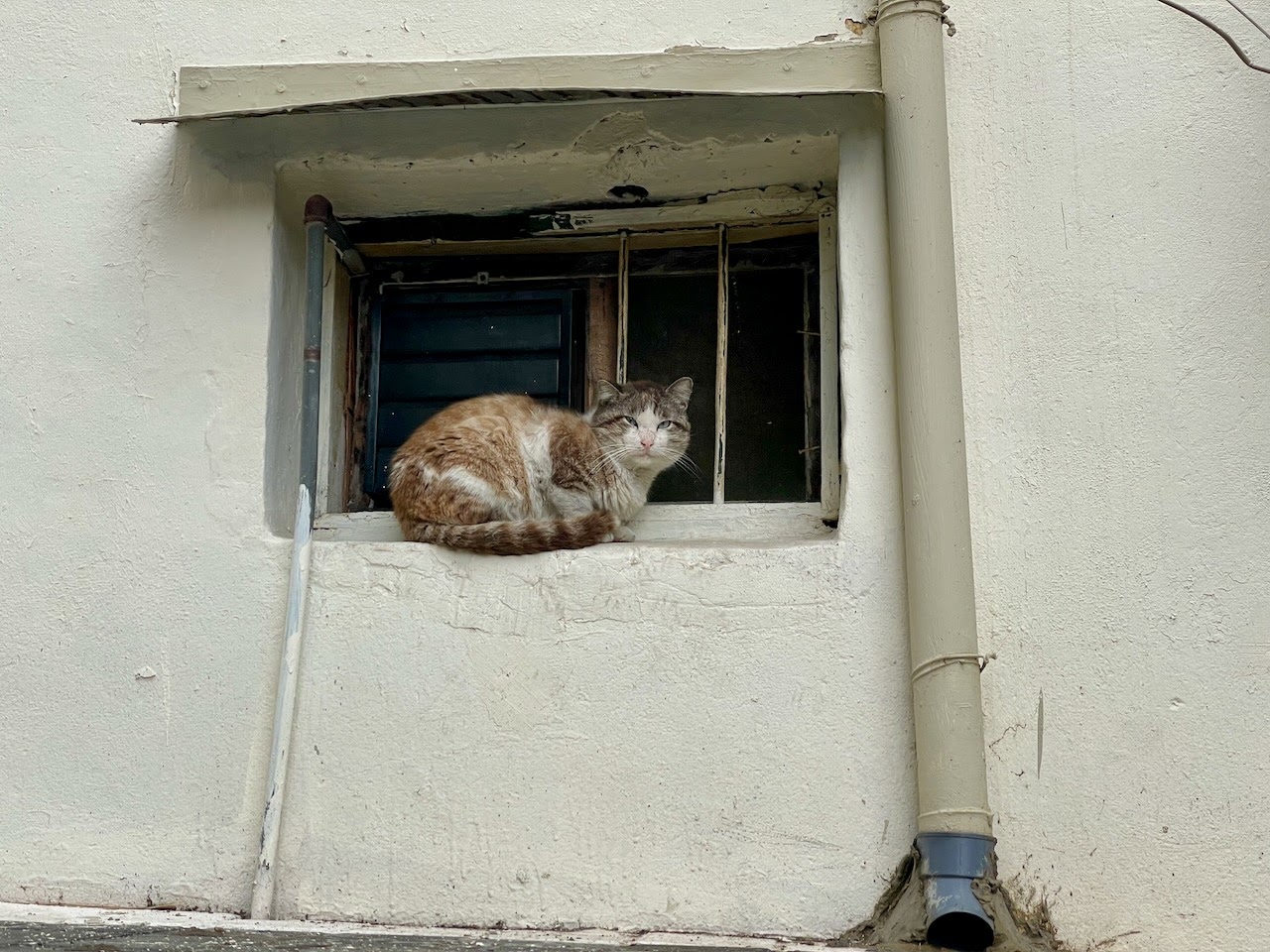
LebCat 69: "Oh, hello. Since you weren't
using your balcony for the 
past 4-1/2 months,
I kept all the 
strangers away, OK?" 
(26 July 2026 - Geitawi-Beirut)
            “So, what’s it like in Lebanon?” – I am also asked by those who assume it is better than life in Armenia. Their question is often tinged with regrets over the war, which may be thwarting their hopes for leaving Armenia. Others will ask how safe it is to be living in a non-Christian country and are surprised when I reveal that Arabs can also be Christian. My telling them, “It’s the same in many ways, but also different” does not convince them to appreciate the layers of understanding demanded by such questions, sure as they are that my answers will be the same as the conclusions they’ve already drawn.

            Definitely, it can be disconcerting to continually have to deal with what is familiar but not exactly what you expected. My guess is that the “same but different” principle not only keeps learning about things fresh and active, but it keeps human relationships that way, too!   [LNB]

Wednesday, May 31, 2023

Messiness

59. Messiness (31 May 2023)

Even the utility poles are puzzled.
(9 May 2023 - Geitawi, Beirut)

It’s not unusual to hear someone comment that “life is messy”. Relationships are messy. Theory applied to real life is messy. Faith in action is messy. International relations are messy. So much messiness. So frustrating.

            Local messiness – that is, life in your own neighborhood – aside from potentially being frustrating and somewhat infuriating, can also be intriguing, and even sometimes beguiling. The month of May being the “Marian” month, we often heard recorded Maronite chants loudly filling the neighborhood, both from stationary (the small church behind our building) sound systems as well as mobile ones (huge speakers sitting on a car roof, as it led a mini motorcade snaking around all of the area’s streets). Although I have all but discontinued listening to recorded music, these melodies fascinate me, even when they are Arabic words set to familiar Western hymn or orchestral tunes.

A beauty of a building in beastly
condition (16 May 2023 -
Ashrafieh, Beirut)

            The street in front of our building is the main artery connecting our neighborhood, with its two major hospitals, to the neighborhood of Mar Mikhael, the dollarized drinker’s Shangri-la. Which means in addition to the late night, loud conversations as people walk between their apartments and the bars, we also get ambulance traffic, complete with sirens. And so, yesterday the ecclesiastical chants boomed from speakers behind us while sirens wailed from the street in front of us. It was a strange effect, the messy “music” of our neighborhood, both off-putting as well as fascinating, both alarming and strangely comfortable. A moment of eternity and human fragility. In an audible way it epitomized our neighborhood as well as our lives.

            Maria occasionally says, “Everybody around here knows you, don’t they?” We, too, have become part of the backdrop of this neighborhood, sought out by producers for their movies and soap operas. When I pass through these streets seated in the back of a taxi, shopkeepers will occasionally wave to me as I go by, just proving my wife’s point. I find that being part of the local messiness allows me to wave a greeting to shopkeepers and continue on my way without feeling obligated to submit to their entreaties. No offense intended, nor taken.

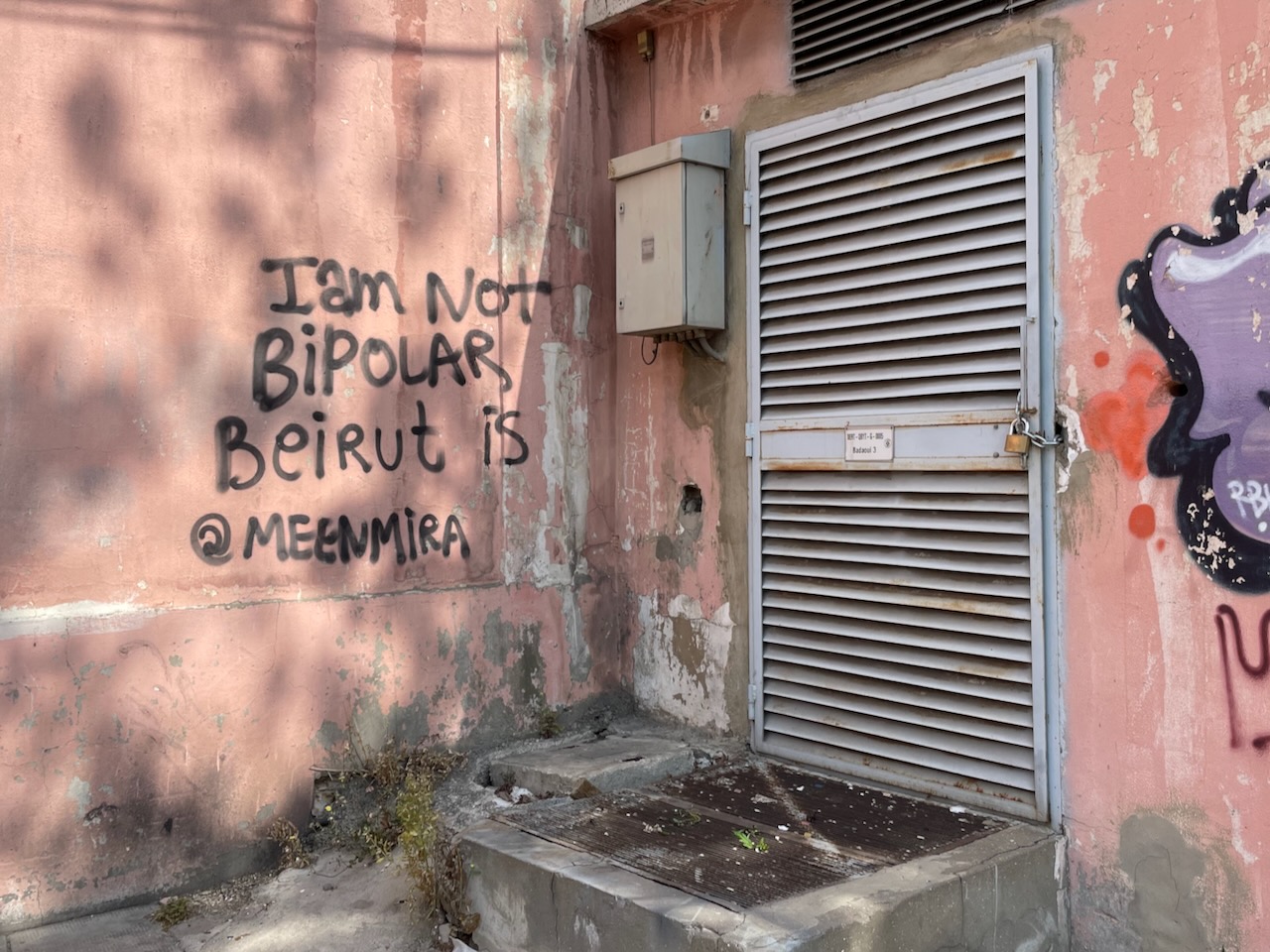
When walls talk...
(23 May 2023 - Khalil Badawi)

            A nearby bakery is run by a fellow who was formerly chef at a fancy restaurant, along with his wife and son. The menu at any local bakery throughout Beirut is very predictable: small pizza-sized manouché, with either zaatar (thyme) or cheese on top. Plus lahmbajiin (lahmajun for us Armenians), mini pizzas (with the inescapable canned corn topping) and spinach pies. Occasional variants are out there, but this is mostly it – the typical Lebanese breakfast food. This baker, however, features his wife’s home-cooked dinner entrees for lunch. Each morning I receive a photo of the whiteboard on the easel out front with the plat du jour written on it.

            One day recently I went to get two portions of this “slow food served in a hurry” – something made with flat beans, a few cubes of beef, swimming in lots of its juices. You have to understand, whenever I stop there to get the plat du jour, or even just to inquire about it, Tony (name not changed to expose the guilty) nonetheless insists on feeding me a soup spoon full of whatever the main course is. Although I’m going to be eating that exact dish in a few minutes, I am required to sample it right then and there in his shop! Well, that’s where my American logic kicks in – not pure logic, but suburban American logic, which considers this kind of behavior as unnecessary, unhygienic and imposing. You know – the logic that prohibits all the things that help people feel they are part of a community. Until now I was able to emerge from these force-feedings unscathed. But last week the plat du jour did me in. Tony placed almost the entire spoonful into my mouth, but a bit of the juice ended up running down my shirt. Not a problem, he handed me a tissue to wipe it off… So, the rest of the day I wore that badge of honor on my shirt, a tribute to our messy/friendly/business relationship. Each time he feeds me a spoonful of the plat du jour (even if I don’t buy it that day) is followed by “Good, no?” in his borderline English. To I invariably answer in my borderline Arabic: “Akeed!” (“Of course!”) or “Tayyib!” (“Tasty!). And it is! Messy and tasty!

How many languages do you need to get the
message? (30 May 2023 - Bourj Hammoud)


            I’ve experienced similar encounters all around the neighborhood, each one deepening the connection. At the falafel place up the street I am called “Abouna” (“Father”) by the owner, who also invariably hands me a piece of falafel to munch on while he makes the falafel sandwiches. A bonus! At another bakery the baker knows my usual order and rather than me ordering my usual “cocktail” (round flat bread, thin and a bit crispy, with half zaatar and half cheese), when I enter he says, “Cocktail?” and all I need to do is smile and nod. At the mini-markets around here I am also a known quantity, but I enjoy seeing the puzzled look on the shopkeepers’ faces when I show up in clergy garb, knowing I have messed up the category I have been inhabiting. The next time I enter the store they are clearly unsure about how to address me…

A mini-marathon to celebrate 80 years of
Armenian Evangelical Education!
(20 May 2023 - Ainjar)

            None of this is an excuse for the mess that passes for a government here, or the absence of public utilities that brings ever more electric wires to the mess of wires overhead to make up for that absence, or the lack of desire to pursue the common good, only the advantage of your own group's “boss” (witness the recent elections in Turkey). And I haven’t even begun to speak of the state of Armenian communities, organizations and institutions the world over, including Armenia, swimming in money and expertise (and, in the case of Armenia, tourists), but lacking the clarity that comes from a well-studied and broadly accepted national direction.

            We Armenians caught a brief glimpse of unity 105 years ago when, despite the shortcomings of officialdom, Armenian leaders organized troops and volunteers to put a stop to the genocidal enemy’s plan to overrun and annihilate Eastern Armenia along with its Western Armenian refugees. The battles in May 1918 at Bash-Abaran, Kara-Kilise and Sardarabad are a paradigm of wise strategy and unity in the midst of disarray and discouragement in the wake of the “ethnic cleansing” perpetrated by Ottoman Turkey. Today, as the same enemy continues the same genocidal efforts from Artsakh to Armenia, we are amazed at the country’s indifference towards these existential threats, and its inability to find, foster, or choose leadership with these qualities and this far-sightedness. What a mess our people are in!

LebCat 59: "This is Tony's bakery, right?
He uses cheese, right?"
(19 May 2023 - Mar Mikhael, Beirut)

            Messiness is how life is. But being a mess is simply irresponsible.

            As we do our daily adjusting to the messiness of existence and all the predictable unpredictability of life in Lebanon, we of course keep in mind the training we dutifully took as part of our appointment here, which instructed us to avoid having the same daily routine, to change our commuting routes each day, to have contingency plans at the ready, to be on the lookout for threats, and so forth. And we scratch our heads. And we trust God.   [LNB]

Sunday, July 31, 2022

The Land That Honor Forgot

51.The Land That Honor Forgot (31 July 2022)

Kindergarten graduation is a big deal here!
(17 June 2022 - Nor Marash)


A couple of weeks ago, as I was leading the washing-machine repairman up the steps in complete darkness, the tiny lights of our cell phones revealing the steps before us, I apologized that, after a long day of work, I had to make him walk the steps and not take the elevator. Deflecting my apology, in Arabic (and some broken Armenian, as he used to work in Bourj Hammoud) he said, “Haram, Beirut, haram that such a beautiful city as you is like this, haram!”

            “Haram” means “shame”. And supposedly the Middle East is one of the many regions throughout the world that operates around an “honor/shame” culture, something the West has great trouble grasping. Not that the West doesn’t use the term “shame”; it does, but only when attempting to shame others, and no longer as a means of self-examination or personal reform. Here, shame is part and parcel of each day, and especially in today's Lebanon, with the abundance of shameful situations. Yet although so much is shameful, those responsible for engineering this state of affairs over the years have no sense of shame… and therefore no honor.

The "Cine Vendome" steps have been
upgraded to include a playground!
(24 June 2022 - Mar Mikhael)

            As Maria, Sevag and I were driving on a “highway” through an agricultural region last week, we happened upon a two-vehicle accident, possibly a head-on collision or a side-swipe. Scattered across the road were bits of produce and wooden crates, and sprawled on the shoulder were women and men in their colorful garb, being attended to by paramedics next to a Red Cross ambulance. Men standing around were not helping traffic to get past the scene, as car after car slowed down to see what was going on, and even to chat with those on both sides of the road. What a shame to see these agricultural workers – not Lebanese, of course – who had a short while earlier been crammed into these vehicles to take them back to their camp after a day’s work. Who feels compassion for these injured women and men, even though there would be no produce in the markets if they weren’t out in the sun each day tending the fields?

Traffic jam on the Stepanavan-Vanatzor
roadway. (8 July 2022 - Armenia)

            Earlier, when driving in the other direction on this same road, we happened upon another traffic jam. There seemed to be no reason for it in such a small town, until we saw a bakery outlet with a couple hundred people in front and across the road from it, anxiously waiting for a delivery of Arabic bread. Why was there a “bread crisis”? Because the legislature was discussing the terms of international funding to enable Lebanon to buy wheat, and how much it should cost, and whether wheat subsidies should be lifted. While these men (only a handful of hardy women dare to serve in the parliament) were debating, the people were panicking, experiencing the shame of having to wait in line for bread, when their leaders have absolutely no food worries.

"Mer Shougan" (Our Market) on Arax Street,
to promote the home-based products of
Lebanese-Armenians
(10 July 2022 - Bourj Hammoud)

            And to add more shame to this scene, the army and police had to intervene to keep the order at this and so many other bakeries. Men on this side, women on that. Lebanese in this line, Syrians stand over there. Accusations intensify about who is buying up the stocks of subsidized bread to sell at twice the legal price to people who have no choice but to pay that amount, about who is smuggling bread out of the country to sell elsewhere, just as subsidized medicines are hoarded and sold in countries far from Lebanon.

            These God-given sensitivities – shame and honor – have often been misused when they are detached from personal conscience and used as weapons for controlling others. But in our current situation they are merely a veneer of words used by the powerful, devoid of meaning or effect, papering over the corruption within. John the Baptist (Matt. 3.7-12) and later Jesus Christ (Matt. 12.34-37), when confronting the corruption of their day, challenged the powerful to change direction or else face relentless justice from the God they no longer feared. Honor needs to be seen in honorable actions, not just in long-winded speeches or televised soundbites.

Facing the explosion site, memorials to
those killed in the Beirut Port blast
of 2020 (photo by SAB - 30 July 2022)
   As if fatigued from the hypocrisy and mendacity swirling around the abortive investigation of the Beirut Port Explosion of August 4, 2020, today part of the damaged grain silos collapsed in a plume of dust, debris and fungus from the fermenting grain within. These fifty-year-old silos, which held nearly the entire grain reserves of the country, are among the heroes of that unforgettable day. Their structural integrity shielded half of the city from destruction. Though inanimate, they hold a place of honor alongside the heroic first responders who were cut down on that summer evening; a level of honor that those who were sworn to protect and lead the country will never achieve – save for their total, systemic and true repentance.

            We’re finding ourselves approaching our refrigerator with trepidation, since the power (from all three sources) is off more than it is on in these hot and humid days. It used to be that stocking up the freezer and putting leftovers in the fridge put our minds at ease for coming busy days. Now we play the game “What’s That Smell?” when we open the fridge. Good smell? Thumbs up. Bad smell? To quote my college roommate’s slogan, “When in doubt, throw it out.”

            Maria and I had our first bout of CoVID-19 last month, as we were preparing to receive our son Sevag and then travel to Armenia together. See plans, apply wrench. After the readjusted Armenia trip concluded and we returned to Lebanon, Sevag had his first bout of the disease. We were grateful that we didn’t have any loss of smell or taste (refer to preceding paragraph). And grateful that we were able to provide him with at-home care.

LebCat 51: "It's simple: you climb up this
grapevine, push one of those switches down,
and then someone comes out to his balcony
and starts yelling. You meow and he throws
you a treat when he comes down to switch it
back on." (24 June 2022 - Geitawi)

            Sadly, I am getting less exercise, after realizing that the circuit breaker for our supplemental electricity could be relocated right outside our apartment door (refer to my Jan. 2022 blog) and not down a bunch of stairs and out at the end of the street. Now they easiest thing in the world is to make a mistake by turning on the hot water tank or flushing the toilet, and then saying, with a smile, “Oh well, no problem!” and just open the front door and flip the switch back on. Talk about living in the lap of luxury!

            What concerns me the most is that those among whom I work – Armenians and Lebanese – will lose their sensitivity to the tools God gives to keep their consciences alive. The poisonous examples are so very prevalent, and only with divine help and concerted mutual support will we avoid this plague, this collective degradation – whether in Armenia, in the Diaspora, or here.   [LNB]

Saturday, April 30, 2022

The Same Playbook

49.The Same Playbook (30 April 2022)

Facing the electric company and registering
his opinion with no ambiguity
(28 March 2022 - Gemmayzeh, Beirut)


One of the most distressing feelings one might have is when it seems like someone, near or far to your heart, has obtained a copy of the script of your life and is reenacting the worst scenes in it, sometimes with only slight variations. There is nothing you can do to affect the outcome except to watch helplessly (or avert your eyes) and hope for the best. You know the story line, because you went through it once – or perhaps copied from someone else’s playbook before you, and at that time you didn’t listen to anyone’s advice to take a different direction. The saying in Armenian (and other languages) is true: a person learns from his own purse. Rare is the one who learns from another’s hard lessons.

The children showing the people how to
worship (10 April 2022 - Geitawi, Beirut)

            It seems that this is also true on a larger scale, with entities such as organizations and even entire nations following a preset script. The Armenian nation presents an interesting example of this, as it takes up its old playbook and reenacts the worst days of its own history. In general, its behavior is fueled by a strange bit of amnesia as to the reasons for it suffering what it did in the past, combined with an inability or unwillingness to chart a different course for the future. The country of Armenia, ever at the mercy of greater powers, is struggling to continue its existence, while it suffers setback after setback following its disastrous defeat in 2020. The Armenian people, part of the larger entity called “the nation”, are sometimes filled with concern over what is happening, and sometimes are profoundly disinterested over what seems (to them) will not really affect them. An acquaintance from Armenia recently said that these days are probably more dangerous than the post-Genocide days. I concur, because the post-Genocide generation knew that they needed to forge an identity and pursue that in all aspects of their life; we of today’s generation are so fragmented and individualistic that we cannot be bothered to see where our indifference and disunity will lead us.

Easter morning, the pied piper of... KCHAG?
(17 April 2022 - Monteverde)

            I had the good fortune of never having been a serious participant in any sports activity. Always one of the last to be chosen when picking teams in or out of school, I early on put aside any delusion that I possessed sports-related skills. I focused on the arts and music (but not on studying). But, whether you use the playbook or the script image, this is a helpful way to view today’s disastrous world, and to see important connections between seemingly disparate events. The “who-cares-we’re-a-failed-state” playbook had been in use by local leaders long before the economy crashed, though it was never publicized. It is still the primary one driving current events and directing local actors to perform well for their masters. The population has picked up the well-worn copy of the “vote-for-your-party-not your-country” as it nears parliamentary elections in May, following which those elected will be using the “it’s-their-fault” playbook when daily life fails to improve. Those outside Lebanon use the “benevolent-state” playbook, announcing their full support for local reforms while maintaining policies that undermine any possibility of improvement in any area.

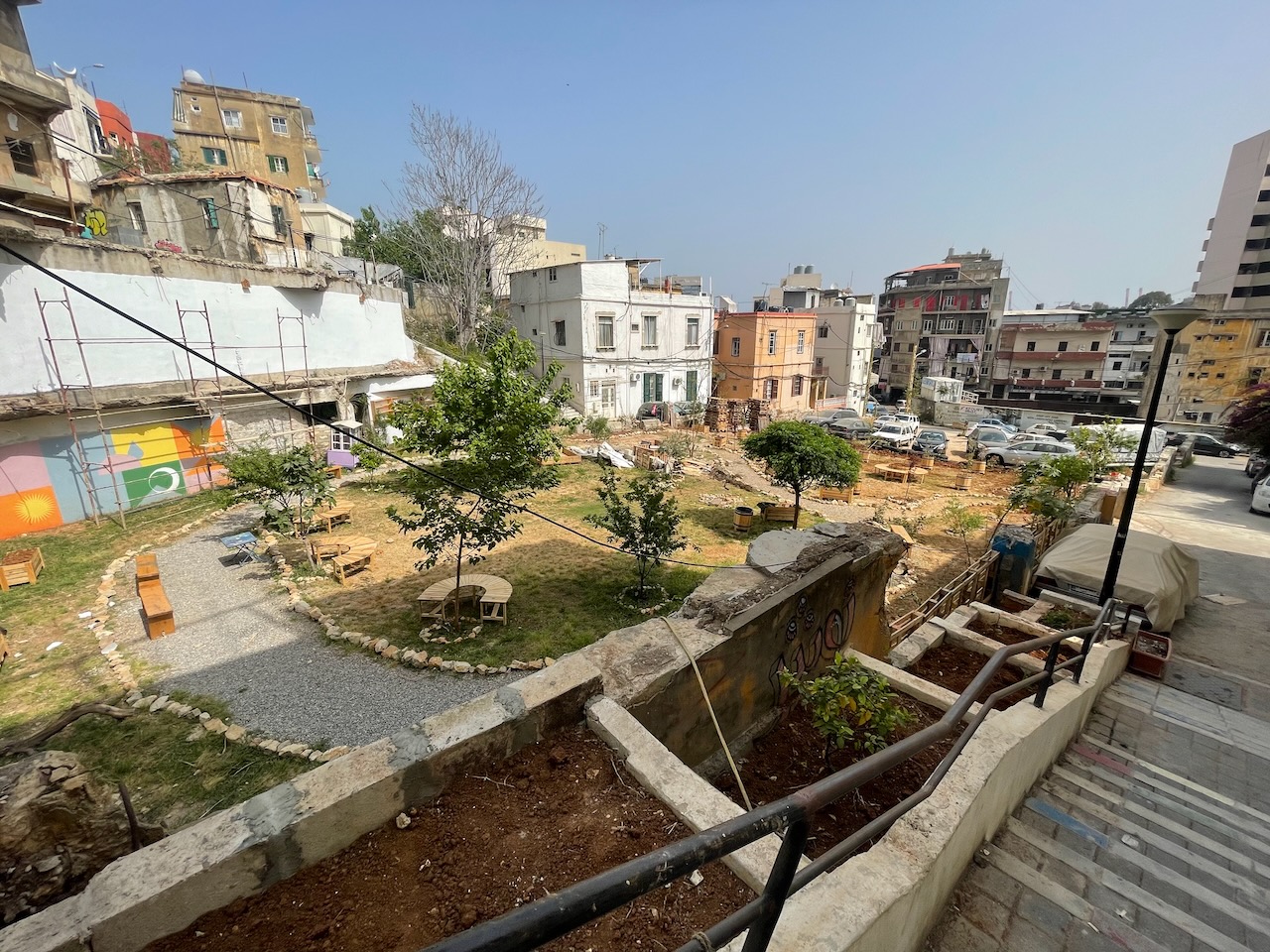
An "illegal" green space developing on the
grounds of the former Laziza brewery.
Greenery appears to be illegal in Beirut
(28 April 2022 - Geitawi, Beirut)

            During the current European war the “bomb-into-submission” and “everyone-is-our-enemy” playbook is the one in use, connecting today’s aggressors to the aggressors in the Artsakh war of 2020, and so many other wars, including the Ottomans’ war against its Armenian citizens a century ago. The “territorial-integrity” playbook is in heavy use in Ukraine, just as it was by Azerbaijan (and by the sympathetic but impotent friends of Armenia) when Artsakh was being attacked. The “black-and-white” playbook is opened frequently in the West (and for the West), in order to explain the intricacies of wars and security actions to those with limited interest or ability to discern grayscale shades. And the “your-oil-is-more-important-than-you” playbook is probably the only one shared by every single major power, no matter in which direction their guns are pointed or shipped. The “ideological-high-ground” playbook is also frequently read from, though the actors never take the stage. It is a grand drama and a high-stakes game that we are witnessing, based on a series of playbooks that will make the world the same as it has ever been, or ever will be.

Naming the evil that allows
disasters, destroying people and
their heritage (30 April 2022 -
Mar Nicola, Beirut)

            Fortunately – and I say this sincerely – there are weak and unimportant people in the world. These are the ones who I consider to be able to make real and lasting change. They are the ones who interface with their neighbors each day and look into their eyes with perception and compassion. This is not to praise interpersonal relations in general. The other day a small shopkeeper spoke of how some homemade food distributors in Lebanese villages easily take advantage of people like her by following the fluctuations in local currency against the dollar, then collecting payment well above the day’s street value, saying, “If you don’t want to pay, then I’ll find someone else to sell to.” Despite my insistence that I pay the current value of my purchase, she refused to take more from me than the outdated prices listed on her shelves.

God hears, but do we?
(8 April 2022 - Mar Mikhael, Beirut)

            My guess is that the difference lies in whether people have an actual, human relationship with each other, and not a transactional one. It’s the same with the church. Do I share a gospel message with someone because it’s expected of me, because it’s a requirement, because I consider my religion superior and his inferior or completely wrong? Or do I truly care for the other person as someone created in God’s image, whom God loves as much as he loves me? That person-to-person playbook is the one that brings true hope and opens hearts to receive the actual good news. It may be crass to characterize Jesus’ ministry in this way, but the gospel is so full of these kinds of interpersonal “detours” that Jesus took as he shared the gospel of God’s kingdom and the promised new life in that kingdom, that it must be an integral part of the message. My conclusion is that God has put his playbook into our hands and sent us from the church to the world. One who plays according to this script stands little chance of preventing the “rulers of this age” to seize the day; but in God’s timing, living this way will undermine every earthly power.

LebCat 49: Go find your own ledge!
(24 March 2022 - Geitawi, Beirut)

            We have been encouraged in recent weeks by young people in the Armenian community who, despite the discouragement and fear so prevalent in the country, have chosen life. Some have made engagement pledges to one another, others have brought newborns into the world and surrounded them with love, and all of them have taken these risky steps relying on God’s provision. God’s hand is certainly guiding them, and as they grow as families, the joy of the Lord is giving them – and us – strength.

            Once upon a time in Lebanon, when paying for groceries, if there were a few piastres (or liras) left to round up the total, the cashier would toss a pack of 2 pieces of chewing gum into your order. In recent years it became the whole box of gum, and then progressed to a sachet of instant coffee. Today as I was buying fruit from my friendly fruit-cart pusher, “Abou Mawz”, he announced 8,000 lira for a half-kilo of bananas. Then he winked and said he would make it 10,000, as I nodded and he tossed another banana on the scale. Imagine… fruit as small change. But that’s the playbook regular Lebanese people have long used. And it’s the playbook that even those most desperate to leave the country will be searching for, and not finding, in their newly-adopted homelands.   [LNB]

Monday, February 28, 2022

Relatively Speaking


48.Relatively Speaking (28 February 2022)

Covering up the damage to buildings, while in the
distance Mt. Sannine shines with winter snow.
(13 Feb. 2022 - Marfa'-Beirut)


The world is quite busy with the current war in Ukraine, with pundits making statements and analyses and so forth. Aside from all the tragedy, a war can be very helpful to bring focus to people’s lives, and it helps news outlets to know how to fill their pages. Officialdom is also busy with making an assortment of punishments, which will then turn into reality. The story told in the “West” is that they are making the world safe for democracy. Why do I feel like I’m reading a superhero comic book? The story in the “East” is probably being told in a similar way, with the protagonists and the antagonists being swapped. Although details may seem crystal clear to partisans on one side or the other (especially to those touting the significance of cell phones to record and disseminate “information” about the war in “real time”), the only clear and indisputable facts are that armies are fighting and people are dying and being displaced.

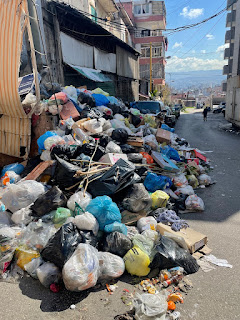
One of the ever-present, never-
resolved crises.
(11 Feb. 2022 - Geitawi-Beirut)

            And this arouses a raft of thoughts and questions and “what-if”s in me. Especially, as an Armenian, I can’t help but make comparisons and contrasts between what is happening today and the punishing war on Artsakh by Turkey & Azerbaijan 16 months ago. The war on Artsakh is not a thing of the past, but is continuing in various forms to this day. Now that a similar (but only relatively) operation has broken out nearby, these musings have asserted themselves more forcefully. Musings about the role that Ukraine played in assisting Azerbaijan’s and Turkey’s armies in their onslaught against Artsakh. Or the call to foreigners to fight alongside Ukraine, only slightly similar to Diasporan Armenians wishing to travel to Armenia fight Artsakh’s aggressors. Or the complicated web of business, military and energy connections between ostensible adversaries, such as what we see between Russia and Turkey, relative to their actual mutual dependencies and co-dependencies. And not least of all, the diffidence exhibited by Russia and the West towards Armenia’s desperate struggle to not be overwhelmed by overwhelming force, contrasted with the intense engagement by those same players in the current crisis to prevent overwhelming force to be used.

When asked what makes the Lebanese keep on going,
refer them to this picture.
(12 Feb. 2022 - Mar Mikhael-Beirut)


            It is telling how Europeans express their shock at such barbarity and brutality in “their” Europe, while accepting that same barbarity as an unfortunate given in “uncivilized” places like the Caucasus and the Middle East. It is also telling to see the speed with which Europeans opened their doors and borders, contrasting sharply with the begrudging and reluctant acceptance policies for those knocking on the door who are black, brown or other than “European-looking”. Welcoming the stranger is easy when the stranger looks, speaks and worships like you, but not so much when the only thing you have in common is the stranger’s humanity. Imposing an economic and military barrage on your opponent may seem noble, until you take into account the financial dependencies that exist between Ukraine (that are almost totally absent in Armenia’s case) and its defenders and offenders; then the nobility of the actions begins to appear tarnished. Additionally, the two countries (Armenia and Ukraine) are probably on relatively equal footing in the “who is more corrupt” game; but that corruption is overlooked when those leaders lean in the direction you want and have the goods you want. The next thing you know, the posse comes riding over the hill to save the day.

Out of barren soil, spring somehow emerges!
(28 Feb. 2022 - Geitawi, Beirut)


            One of the things that saddens me the most is to hear the same vainglory from Ukraine as what we heard from Armenia and Artsakh in 2020: “We will win because we are committed. We will win because we are Ukrainians/Armenians. We will win because we are fighting for self-determination,” and other such foolish expressions. Armenians were defeated because they enjoyed living in the past far more than they loved preparing for the future. This will always be the fatal flaw Armenians must realize they have if they want to continue existing above ground, and not six feet under. Ukraine’s fatal flaws and its future trajectory have yet to be seen – as of this writing, anyway.

Hearts appear here and there in the neighborhood. Also
kindness, here and there.
(25 Jan. 2022 - Mar Mikhael-Beirut)


            For comic relief (although it is tragicomedy), Turkey’s boss has been quite bellicose about NATO needing to act more decisively against Russia, its best frenemy. “The West needs to do more than give advice,” he said, though that advice-and-no-action approach of the West served him quite well in his war against Armenia, and in the current “normalization” talks happening between the two countries. He speaks these tough-guy words against Russia while also keeping his country’s military drone business with Ukraine humming along. Not to forget Ukraine’s white phosphorus sales to Azerbaijan, used against Artsakh in 2020. There’s enough hypocrisy to go around, so that every single country in the world can have a nice, big slice of the pie!


A local Armenian shopkeeper, keeping more than just
his own shop clean. (22 Feb. 2022 - Qobayiat-Beirut)


            Relatively speaking, what appears to be very similar in these two acts of aggression can be both relatively similar and completely dissimilar, all at the same time. Maybe when books are written about this in 20 or 30 years we’ll be able to figure it out better – that is, if people can still think or read (or write) in 20 or 30 years…

            Spring is trying mightily to make a difference in the cold, rainy days we’ve been living through. Meanwhile, I’m getting a lot less exercise than I did last month. That’s because we’re getting a lot better at assessing our power use and not overloading the supplementary power line, resulting in throwing the circuit breaker down a ways away (cf. Blog 48: “Power-Hungry”). We had a meter installed that shows our consumption, so now we know when we are near the 10A borderline and when we have enough room to turn on a second heater. It’s quite a luxurious feeling not having to run up and down all those steps; so now I’m at a loss as to what to do to stay in shape. But living in a building without an elevator (most of the time) will at the least help my fitness plan a bit.

LebCat 48: You may kiss my paw if you wish.
But just once. (5 Feb. 2022 - Geitawi-Beirut)
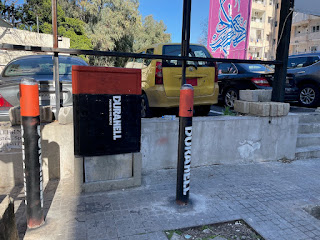

           
At the joint Vartanants commemoration here in Beirut last week the irony of it occurred to many of us: the same day we were commemorating a war Armenians fought (and lost) in A.D. 451, a new war had broken out. Well, to be fair, the war in Ukraine did not just break out in a single day – it had plenty of time to fester. And the Vartanants battle did not last just one day, nor did it end in defeat, as those with only a partial knowledge of history like to say. It was the opening battle in a 33-year war that ended in Persia granting Armenia the freedom to worship Christ. As we continue to ride the bumpy road to who-knows-where in Lebanon, I think the key idea is to trust God and persevere. There’s relatively little else that we can do than that, and that may actually be the best thing that we can do.   [LNB]