Showing posts with label Artsakh. Show all posts

Friday, April 24, 2026

Letters from Exile

 68. Letters from Exile (24 April 2026)

Year upon year this awareness is inculcated
in the hearts of the next generation
(24 April 2026 - Yerevan)
It has been 52 days since our “exit” from Beirut at the outbreak of the latest war on Lebanon, at the behest of our mission board. We have settled into a somewhat regular existence here in Yerevan, Armenia, contributing what we can online to the churches and institutions we were called to serve, while also offering occasional support in person to the Armenian Evangelical church union here. There are quite a few around us, clergy and others, whom we know from time they have spent in Beirut. There are also those who have sought refuge here in Armenia, sort-of “exiles” from their homelands.

Though in the distance, Ararat is an integral 
part of the Genocide Memorial
(24 April 2026 - Yerevan)
            “Homeland” is a contested concept for Armenians. The expectation of many non-Armenians is that Armenians the world over, without exception, consider today’s Republic of Armenia as their “homeland”. True, it is the only political entity that can be found on a modern map that provides that particular identity. Yet it also can be seen in the equivalency held by many Armenians as well, insisting that Armenians everywhere must think and feel that Armenia is their only homeland. However, many others, and possibly a majority of Armenians, carry a dual loyalty. They hold today’s Armenia in a special place in their self-understanding, while also remaining deeply rooted in their Diaspora homelands. Additionally, they often bear yet a third, precious “homeland” in their hearts, one that is rooted in the soil of Western Armenia. So, an Armenian who was born and raised in the Middle East can be deeply connected to the Republic of Armenia, visiting it often and caring about its present and future; and said person may also feel a strange magnetic pull when visiting various sites in today’s Turkey and seeing the people and places from which their parents, grandparents and even great-grandparents were driven. They are – that is, we are – ever children of exile, the descendants of those whose roots were pulled from their native soil, whose roots have been repeatedly replanted: belonging to more than one homeland, yet not fully belonging to any of them.

The ECA/AMAA delegation presenting their 
floral wreaths (24 April 2026 - Yerevan)
            Today, Armenian Martyrs’ Day, as we recall for the 111th time national displacement and loss, and inhabit the collective trauma that is yet a further, possibly universal, “homeland” for Armenians, I cannot help but experience regret. I regret all of the fragile root tendrils my elders carried, tendrils that I could have cared for in my childhood and adolescence, but did not, or was not encouraged to. Because collective amnesia (not just by the perpetrators, but also by those who suffered) is sometimes the only way to deal with a history too ugly to recall. Still, those tender roots that I did cultivate over the years have nevertheless sustained me and helped me to bear days like today, in such a situation in which we find ourselves. One thing that this extended stay in Armenia has shown me (the longest stretch we have ever had in Armenia), is that with God’s help my heart can stretch such that I can call this place “homeland”, while also calling Lebanon “home,” and the United States, too. Each has its own flavor and its own pull. Each has its own frustrations and disappointments. I do not have to close my heart towards two of them in order to embrace the third. This is not a revelation, of course; it is what it means to be a “third-culture” kid. (Look it up.)
Assyrian-Armenians preparing to ascend to 
the Genocide memorial; a shared struggle 
(24 April 2026 - Yerevan)

            Today I joined my Armenian Evangelical colleagues and friends, and mixed together with many Armenians, Armenian-Assyrians, Armenian-Yezdis, along with a smattering of Europeans and Americans (aside from me, that is), to make the long climb to the Genocide Memorial, the “Fortress of Swallows”, and remember, and reconnect, and rededicate ourselves to our rightful place among the living, and refuse to be a relic or an oddity in this world. I pray my descendants, whether by blood or by choice, will honor their ancestors by carrying forward a legacy of wisdom, sacrifice, service, creativity and faith. Easier said than done.

A symbol of what is, can, and should be 
Lebanon: Lent and Ramadan fasting 
on the same days this year 
(21 Feb. 2026 - Port of Beirut)
            Last week we ran into friends from Artsakh, friends we hadn’t seen since before the Armenian population was blockaded in 2023 and then “allowed” by Azerbaijan to abandon their centuries-old homeland. Seeing them and hearing about their children and grandchildren was heartwarming and hopeful, and they seemed to be adjusting, bit by bit, to their new homeland, Armenia. We weren’t completely lost as we conversed, since they spoke to us in Yerevan Armenian rather than their Artsakh dialect. That is, until a friend of theirs from Stepanakert approached, and they immediately switched to the language of their homeland!

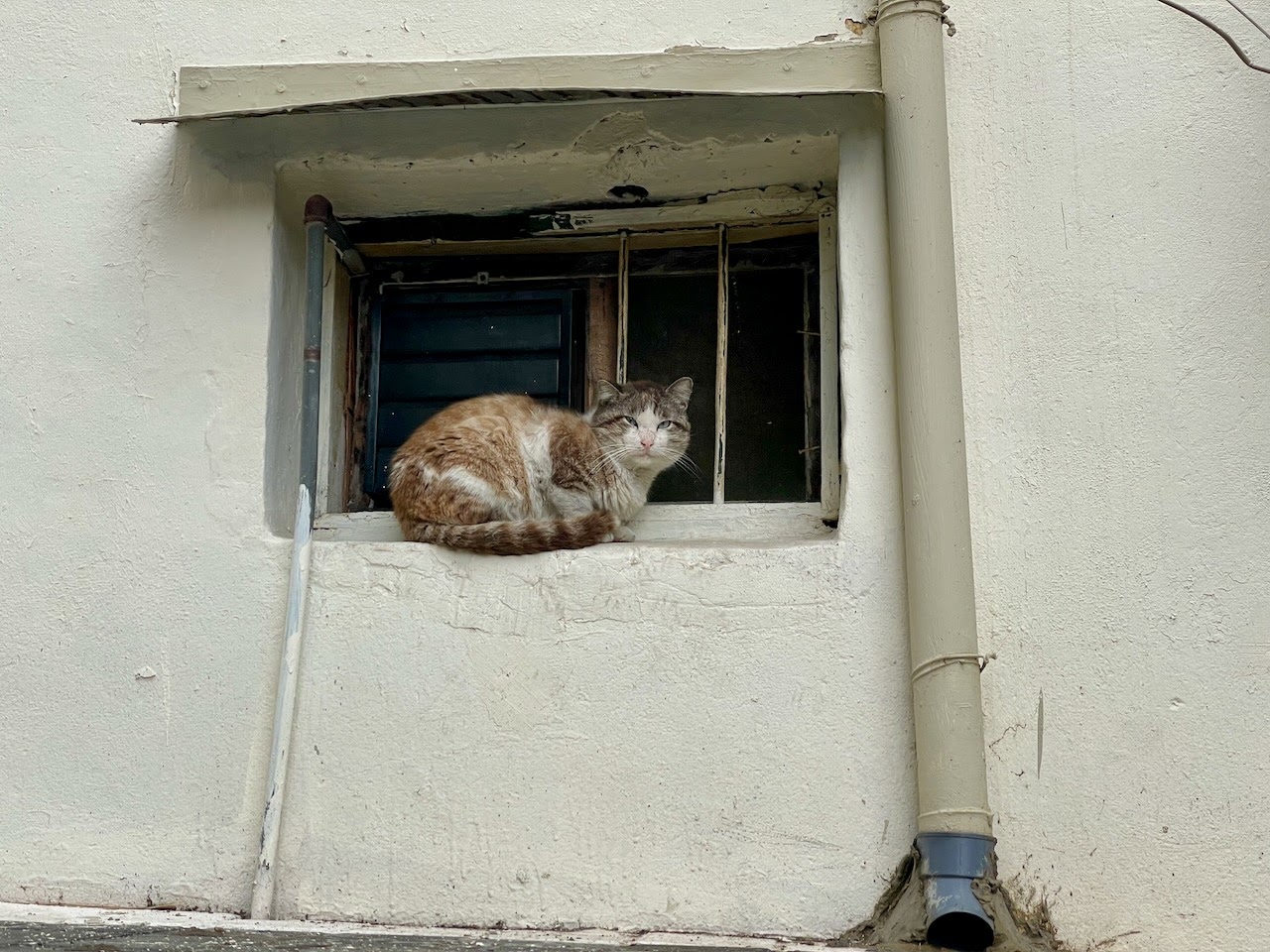
LebCat(s) 68 - The butcher's window; 
better than watching CatTV 
(27 Feb. 2026 - Mar Mikhael, Beirut)
            This friend said to me, “I am sad for our lost homeland, but you know what makes me sadder? Seeing the way things are today in Armenia.” I asked him to say a little more, and he obliquely hinted at the divisions that are making Armenians intolerant of one another, dividing into factions and thinking the worst of others. Being that there are parliamentary elections in 44 days, this atmosphere will likely only intensify and will be unlikely to recede following that day.

            As our exile from Lebanon grows longer, we are also concerned about that which is dividing the people in our Lebanese homeland, and the increasing intolerance we are catching wind of. Certainly, nobody wants the country’s misery to continue, misery that has only grown in the thirty-five or so years since the end of the Civil War. But not tolerating unrest and war cannot be at the cost of the intolerance of others, people who also call Lebanon their homeland.

            And as God teaches in such times of exile, we are learning to seek the peace of the cities of our repeated displacements (Jerem. 29.7) and to hold each place in our hearts as a beloved homeland.   [LNB]

Wednesday, May 31, 2023

Messiness

59. Messiness (31 May 2023)

Even the utility poles are puzzled.
(9 May 2023 - Geitawi, Beirut)

It’s not unusual to hear someone comment that “life is messy”. Relationships are messy. Theory applied to real life is messy. Faith in action is messy. International relations are messy. So much messiness. So frustrating.

            Local messiness – that is, life in your own neighborhood – aside from potentially being frustrating and somewhat infuriating, can also be intriguing, and even sometimes beguiling. The month of May being the “Marian” month, we often heard recorded Maronite chants loudly filling the neighborhood, both from stationary (the small church behind our building) sound systems as well as mobile ones (huge speakers sitting on a car roof, as it led a mini motorcade snaking around all of the area’s streets). Although I have all but discontinued listening to recorded music, these melodies fascinate me, even when they are Arabic words set to familiar Western hymn or orchestral tunes.

A beauty of a building in beastly
condition (16 May 2023 -
Ashrafieh, Beirut)

            The street in front of our building is the main artery connecting our neighborhood, with its two major hospitals, to the neighborhood of Mar Mikhael, the dollarized drinker’s Shangri-la. Which means in addition to the late night, loud conversations as people walk between their apartments and the bars, we also get ambulance traffic, complete with sirens. And so, yesterday the ecclesiastical chants boomed from speakers behind us while sirens wailed from the street in front of us. It was a strange effect, the messy “music” of our neighborhood, both off-putting as well as fascinating, both alarming and strangely comfortable. A moment of eternity and human fragility. In an audible way it epitomized our neighborhood as well as our lives.

            Maria occasionally says, “Everybody around here knows you, don’t they?” We, too, have become part of the backdrop of this neighborhood, sought out by producers for their movies and soap operas. When I pass through these streets seated in the back of a taxi, shopkeepers will occasionally wave to me as I go by, just proving my wife’s point. I find that being part of the local messiness allows me to wave a greeting to shopkeepers and continue on my way without feeling obligated to submit to their entreaties. No offense intended, nor taken.

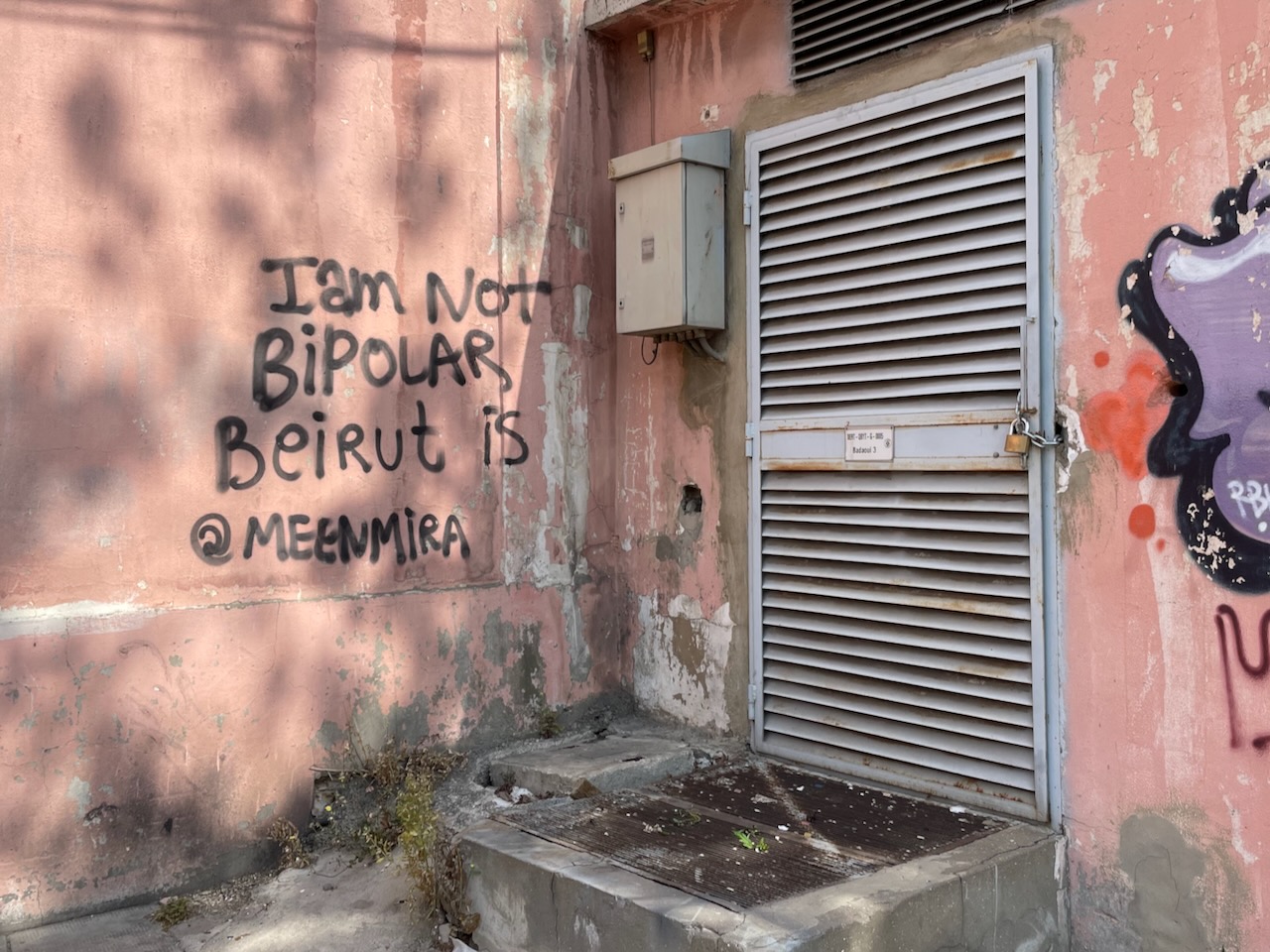
When walls talk...
(23 May 2023 - Khalil Badawi)

            A nearby bakery is run by a fellow who was formerly chef at a fancy restaurant, along with his wife and son. The menu at any local bakery throughout Beirut is very predictable: small pizza-sized manouché, with either zaatar (thyme) or cheese on top. Plus lahmbajiin (lahmajun for us Armenians), mini pizzas (with the inescapable canned corn topping) and spinach pies. Occasional variants are out there, but this is mostly it – the typical Lebanese breakfast food. This baker, however, features his wife’s home-cooked dinner entrees for lunch. Each morning I receive a photo of the whiteboard on the easel out front with the plat du jour written on it.

            One day recently I went to get two portions of this “slow food served in a hurry” – something made with flat beans, a few cubes of beef, swimming in lots of its juices. You have to understand, whenever I stop there to get the plat du jour, or even just to inquire about it, Tony (name not changed to expose the guilty) nonetheless insists on feeding me a soup spoon full of whatever the main course is. Although I’m going to be eating that exact dish in a few minutes, I am required to sample it right then and there in his shop! Well, that’s where my American logic kicks in – not pure logic, but suburban American logic, which considers this kind of behavior as unnecessary, unhygienic and imposing. You know – the logic that prohibits all the things that help people feel they are part of a community. Until now I was able to emerge from these force-feedings unscathed. But last week the plat du jour did me in. Tony placed almost the entire spoonful into my mouth, but a bit of the juice ended up running down my shirt. Not a problem, he handed me a tissue to wipe it off… So, the rest of the day I wore that badge of honor on my shirt, a tribute to our messy/friendly/business relationship. Each time he feeds me a spoonful of the plat du jour (even if I don’t buy it that day) is followed by “Good, no?” in his borderline English. To I invariably answer in my borderline Arabic: “Akeed!” (“Of course!”) or “Tayyib!” (“Tasty!). And it is! Messy and tasty!

How many languages do you need to get the
message? (30 May 2023 - Bourj Hammoud)


            I’ve experienced similar encounters all around the neighborhood, each one deepening the connection. At the falafel place up the street I am called “Abouna” (“Father”) by the owner, who also invariably hands me a piece of falafel to munch on while he makes the falafel sandwiches. A bonus! At another bakery the baker knows my usual order and rather than me ordering my usual “cocktail” (round flat bread, thin and a bit crispy, with half zaatar and half cheese), when I enter he says, “Cocktail?” and all I need to do is smile and nod. At the mini-markets around here I am also a known quantity, but I enjoy seeing the puzzled look on the shopkeepers’ faces when I show up in clergy garb, knowing I have messed up the category I have been inhabiting. The next time I enter the store they are clearly unsure about how to address me…

A mini-marathon to celebrate 80 years of
Armenian Evangelical Education!
(20 May 2023 - Ainjar)

            None of this is an excuse for the mess that passes for a government here, or the absence of public utilities that brings ever more electric wires to the mess of wires overhead to make up for that absence, or the lack of desire to pursue the common good, only the advantage of your own group's “boss” (witness the recent elections in Turkey). And I haven’t even begun to speak of the state of Armenian communities, organizations and institutions the world over, including Armenia, swimming in money and expertise (and, in the case of Armenia, tourists), but lacking the clarity that comes from a well-studied and broadly accepted national direction.

            We Armenians caught a brief glimpse of unity 105 years ago when, despite the shortcomings of officialdom, Armenian leaders organized troops and volunteers to put a stop to the genocidal enemy’s plan to overrun and annihilate Eastern Armenia along with its Western Armenian refugees. The battles in May 1918 at Bash-Abaran, Kara-Kilise and Sardarabad are a paradigm of wise strategy and unity in the midst of disarray and discouragement in the wake of the “ethnic cleansing” perpetrated by Ottoman Turkey. Today, as the same enemy continues the same genocidal efforts from Artsakh to Armenia, we are amazed at the country’s indifference towards these existential threats, and its inability to find, foster, or choose leadership with these qualities and this far-sightedness. What a mess our people are in!

LebCat 59: "This is Tony's bakery, right?
He uses cheese, right?"
(19 May 2023 - Mar Mikhael, Beirut)

            Messiness is how life is. But being a mess is simply irresponsible.

            As we do our daily adjusting to the messiness of existence and all the predictable unpredictability of life in Lebanon, we of course keep in mind the training we dutifully took as part of our appointment here, which instructed us to avoid having the same daily routine, to change our commuting routes each day, to have contingency plans at the ready, to be on the lookout for threats, and so forth. And we scratch our heads. And we trust God.   [LNB]
Tuesday, February 28, 2023

Dead Foxes

57. Dead Foxes (28 February 2023)

Commemorating 35 years since Azerbaijan
began targeting Armenians for
extermination. (26 Feb. 2023 - Beirut)

Earlier this month, while driving along the coastal highway, I slowed down behind a line of cars and trucks exiting and noticed an animal lying alongside the roadway, obviously dead. From a distance I could tell it was too large to be a cat, too small to be a dog, and my guess was confirmed as I slowly crept alongside… a red fox. I was happy and sad at the same time; happy that there is still wildlife in this overbuilt metro area, and sad that it met this fate. I realize that those in rural places might not share my dismay, considering the losses they may incur because of foxes. Here this death is sadly poignant. While actual foxes become road kill, human foxes are left alive. And the “fox hunters” trying to pursue this latter kind are systematically eliminated, and the foxes pretending to be humans continue their sadistic rule over the henhouse.

Empty since the port blast, Lebanon's electric
company building - gutted, just like the service
it provides (20 Feb. 2023 - Mar Mikhael-Beirut)

            One of the more insidious of that species is now facing a “natural disaster” of his own making. Over the years he granted waivers for poorly constructed housing in exchange for ballot-box loyalty, so that he could establish full political control. That narcissism transformed the tragedy of this region’s February 6 earthquake into an unmitigated disaster. Will he be held accountable for the crimes he is now heaping upon the corrupt lower-level operatives? Not if the spin doctors around him can do their psyops job well, and transform this fox’s image into, let’s say, that of a pussy-cat. A devout, embattled fighter for the rights of the ordinary citizen. A strong leader his country needs to rebuild it and make it proud. Any of a raft of addictive lies that people in so many lands believe, sad to say.
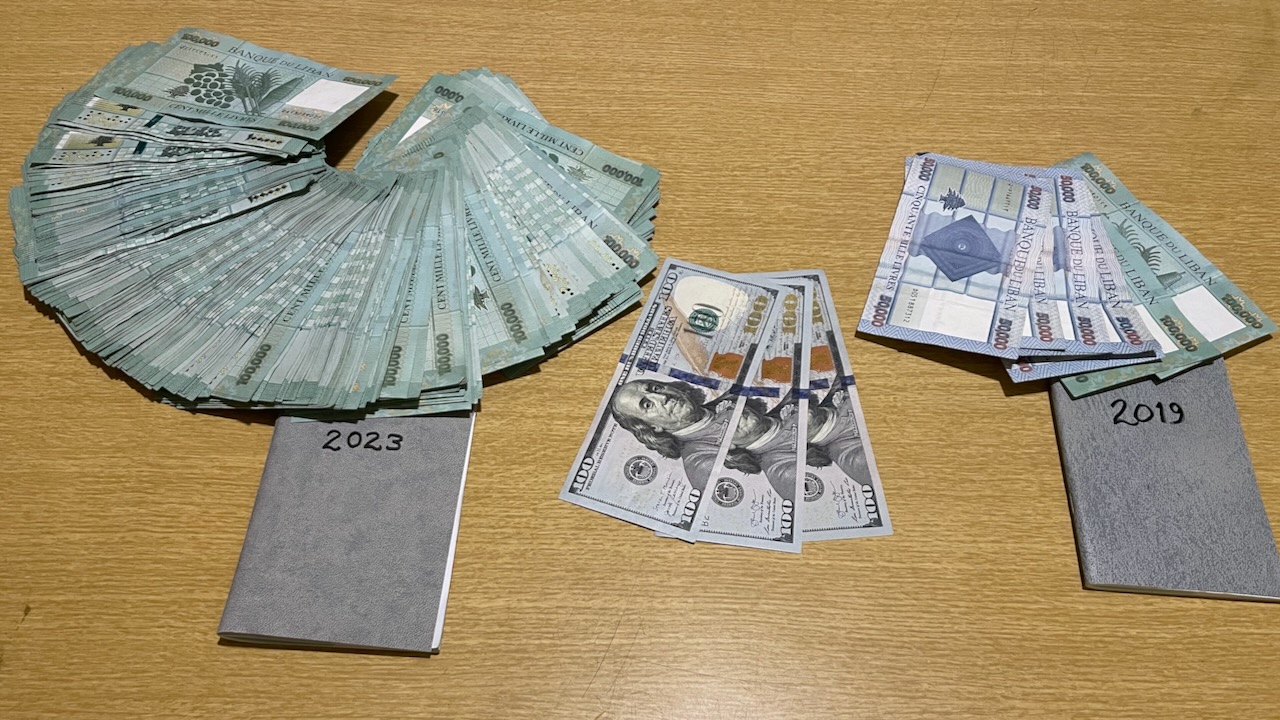
The value of $300 in local currency, in
2019 (right) and 2023 (27 Feb. 2023 - Beirut)


Meanwhile, others try to dodge the traffic that would run them over and put an end to their positive impact. Though contributing to the betterment of society, and though they are not the ones able to cause a fundamental, systemic change in the status quo, yet their activity is nonetheless significant in the long term. Unlike the wealthy foxes who continue to find ways to launder their money or sink it into building more empty buildings in the capital, they are a different sort of investor. They sink their time and effort into human capital; into teaching students to think, into inculcating character and faith into young people, into creating cultural riches to feed the souls of generations yet unborn. The anniversaries of the region’s Armenian institutions (churches, schools and so forth) are reminders of the deep investment our forebears made to rebuild and sustain a broken nation after the Genocide, making the Middle East’s Armenian communities the powerhouse of the Diaspora. And it continues to serve in that capacity, feeding and nurturing Armenian identity but with a frighteningly small number of visionary laborers engaged in this crucial work.

As spring approaches, tree branches and
neighborhood generators begin to
sprout offshoots
(27 Feb. 2023 - Bourj Hammoud)

            Who are they? First of all, they are teachers of all subjects and in all manners. Especially focusing on language, history and culture, they might be using state-of-the-art methods and materials, or they might be solidly stuck in the 19th century in their approach, but at least they are making an effort. Others who develop new, relevant materials for various grade and knowledge levels are also part of that army, along with those who digitize existing materials (a special shout-out to the Armenian National Library in this regard). Then there is anyone making a difference in just one child’s or adult’s awareness or self-awareness of his (or her) identity as an Armenian. I would also include “influencers”, who know how to make effective use of information media and place it or disseminate it in easy-to-find locations. Really, in our world so full of foxes, all Armenians should be engaged in this effort on the micro or macro scale, and spend less time self-absorbed in things that do not satisfy (see Isaiah 55.1-2) or edify, such as self-promotion on social media platforms.

A reminder to continue being visionary,
despite it all
(28 Feb. 2023 - Gemmayzeh-Beirut)

            I’ve noticed that Armenians (myself included) tend to put things in life-or-death terms; maybe it is because Armenians, like nearly all minorities, face life-or-death realities much more frequently than majority populations. Majority populations and those intent on a homogenized, globalized mono-culture, tend to object to this existential angst, seeing it as unnecessary (which it isn’t) or disruptive (which it must be). The angst felt among Armenians here in the Middle East is because they are battered and dishonored, treated as collateral damage by the major foxes and their sub-foxes who play at political and financial war. As it was a century ago, so it is today. Enabled by a disengaged international community, foxes circle around Armenia and Artsakh, drooling over the thought of ruling over an emptied henhouse, expertly using propaganda, lies, threats and a sham “protest” to lay hold of the remainder of the Armenian homeland devoid of Armenians.

LebCat 57: Hard at work receiving phone bill
payments. This may explain a few things about
the system. (28 Feb. 2023 -
Geitawi-Beirut)
            When the Lord Jesus faced off against the oppression his people were bearing, he dared call the ruler of that day a “fox” (Lk. 13.32). It was a calculated, public insult, and a challenge to his duplicitous authority. Despite the deadly actions of all manners of foxes, God will accomplish his purposes, he will bring hope and healing to the downtrodden, and will revitalize life within all who trust in his Son.   [LNB]

Tuesday, January 3, 2023

With Whom Is God Pleased

56. With Whom Is God Pleased? (3 January 2023)

A glimpse of Christmas joy in the
neighborhood, powered by
"ishtirak"
(30 Dec. 2022 - Geitawi, Beirut)

Holidays in Lebanon, especially in the winter, have fallen off my list of favorites, probably in no small part due to the lack of electricity we (and so many other Lebanese) experience at home. The offices where I work close, meaning that our building’s generator stays off. Our subscription for supplemental power covers only about half of the day, anyway, bringing inside temperatures close to what is outside. And municipal power supply continues to emulate Halley’s Comet in its rare appearances. Combining all the national holidays with the ones of various religious denominations, plus Armenian holidays, here in Lebanon we experience close to a month each year of these “off” days.

            But there is another layer of distaste. Holidays are too often turned into platforms for social and political assertiveness, rather than times of rest, reflection, redirection and rededication. Firecrackers (and bullets) fill the air over neighborhoods where a particular holiday is most observed. Not to forget the obligatory firecrackers and fireworks launched at important life events, such as funerals and weddings, or your World Cup football team scoring a goal. We were able to watch three games of this year’s football “Mondial” in early December since we were visiting Armenia for a week. There, games were broadcast on Armenian state television for anyone to view. Here was a different story, as is the case with so many things. The sounds of firecrackers and nearby fans yelling would prompt us to refresh the official website in order to see the latest scores — a somewhat anticlimactic method.

Constructing the "New Year's tree" at the
Yerevan train station
(30 Nov. 2022 - Yerevan, Armenia)

            In this particular season the biblical phrase, “Peace on earth, good will towards men,” is widely touted, or more commonly quoted simply as “Peace on earth”, without involving men (in the generic sense) or good will. The more intricate version of Luke 2.14, “Peace on earth among those with whom God is pleased,” is avoided, likely because it doesn’t fit neatly into 21st century greeting cards (i.e., social media platforms and posts), and likely also because it states that there is a God, also implying that this God makes judgments. About us. Also not fitting popular sensitivities in these oversensitive times.

A garden of Armenian letters seemingly
growing out of stones, hopefully an inspiration,
more than just a tourist attraction.
(29 Nov. 2022 - near Artashavan, Armenia)
            Whether or not it plays well in mass culture, a question sticks in my mind: With whom is God pleased these days? My immediate guess is “no one”, as evidenced by the lack of peace on earth. The lofty goal of peacemaking is left largely untouched, while nations allegedly aim for (but fail to reach) the lower goal of temporary cease-fires. Yet even where cease-fires are attained there are always those who find ways to continue their aggression.

            Since mid-December and continuing into the New Year, Azerbaijan-sponsored phony “environmental activists” have been blocking the only lifeline for food or medicine or transit that Artsakh Armenians have, the “Lachin corridor” linking it to Armenia. Add to this the Azeri government and industries that are driving all of this, entities that blithely cut off energy supplies to Artsakh in the cold of winter. Add to this the inaction of those charged with keeping the road open, allowing the situation to be created. And finally add to this the meaningless verbal bravado (and little more) of world powers, busying themselves with statements and resolutions condemning the blockade, but unwilling to intervene in a sovereign country. If all of this looks and sounds like world powers’ failure to prevent the Genocide in 1915, there’s a good reason for that. Summing it all up, it immolates the dove of peace over the flames of war.

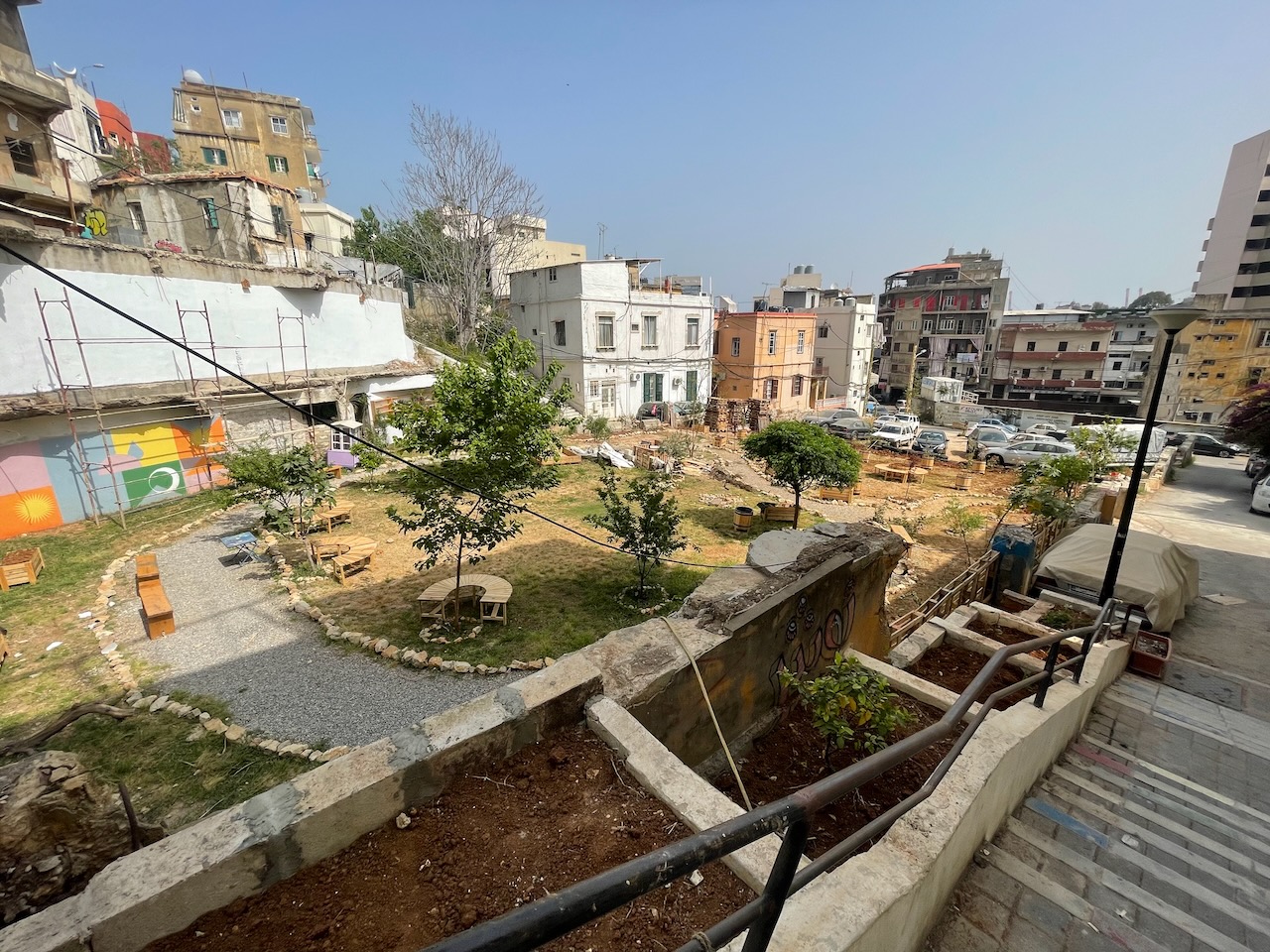
A mural depicting Old Beirut, in a park where
an old Beirut building was torn down.
(8 Dec. 2022 - Geitawi, Beirut)
            Peacemaking can be torn apart in various ways: by individuals, societies, companies, governments, you name it. It does not have to be done in the obtuse ways that Armenia’s rapacious neighbors are so fond of. Sometimes it can be as subtle as tolerating inept (fill in the name of your favorite country) governance, or by making self-centeredness and self-indulgence a societal value, or in disdaining others in order to elevate yourself.

            Yet despite all attempts to kill it, peacemaking is alive, and peacemakers are at work. Whenever we hear about or witness a teacher who goes beyond the lesson plan and above the minimum requirements to help her class learn to relate with care for each other, there peace is being inculcated. Last week I was in a store in Bourj Hammoud when an older fellow in tattered clothes stood at the door with his hand raised in greeting - not for a handout. The Arab worker (who happens to speak Armenian) addressed him affectionately, giving and receiving words of blessing; this, too, is peace-building. When someone in the course of a conversation asks me to pray for him right there on the spot, God’s peace hovers over both of us and enables us to express more grace to others.

Christmas bazaar at the Zvartnots Center,
which brings hope and love to special needs
children.
(22 Dec. 2022 - Nor Sis, Bourj Hammoud)

            That message to the shepherds heralding “peace” at Christ’s birth is more of a challenge to self-absorbed humanity than a statement of present reality. The One whose appearance they announced made it his aim to establish peace through servanthood and a particular act of sacrifice. It grew more intense and pervasive as he grew “in stature and in God and man’s favor” . We might strain to see those around us who join him in this endeavor, but the thread that joins each instance together, shining with the angelic light seen outside ancient Bethlehem, is that of service.

            Serving others, motivated by love, produces peace. And only God himself can fill and refill that love.

LebCat 56: Since the electric company isn't
using these anyway, I'll just settle in.
(30 Dec. 2022 - Mar Mikhael, Beirut)
            Since “Armenian Christmas” is but three days away, an Armenian greeting on the occasion and a wish for God-pleasing peacemaking: Christ is born and revealed; blessed is the revelation of Christ!*   [LNB]

*Քրիստոս ծնաւ եւ յայտնեցաւ. օրհնեա՛լ է յայտնութիւնն Քրիստոսի։

Friday, September 30, 2022

A Time for Discomfort

 53.A Time for Discomfort (30 September 2022)

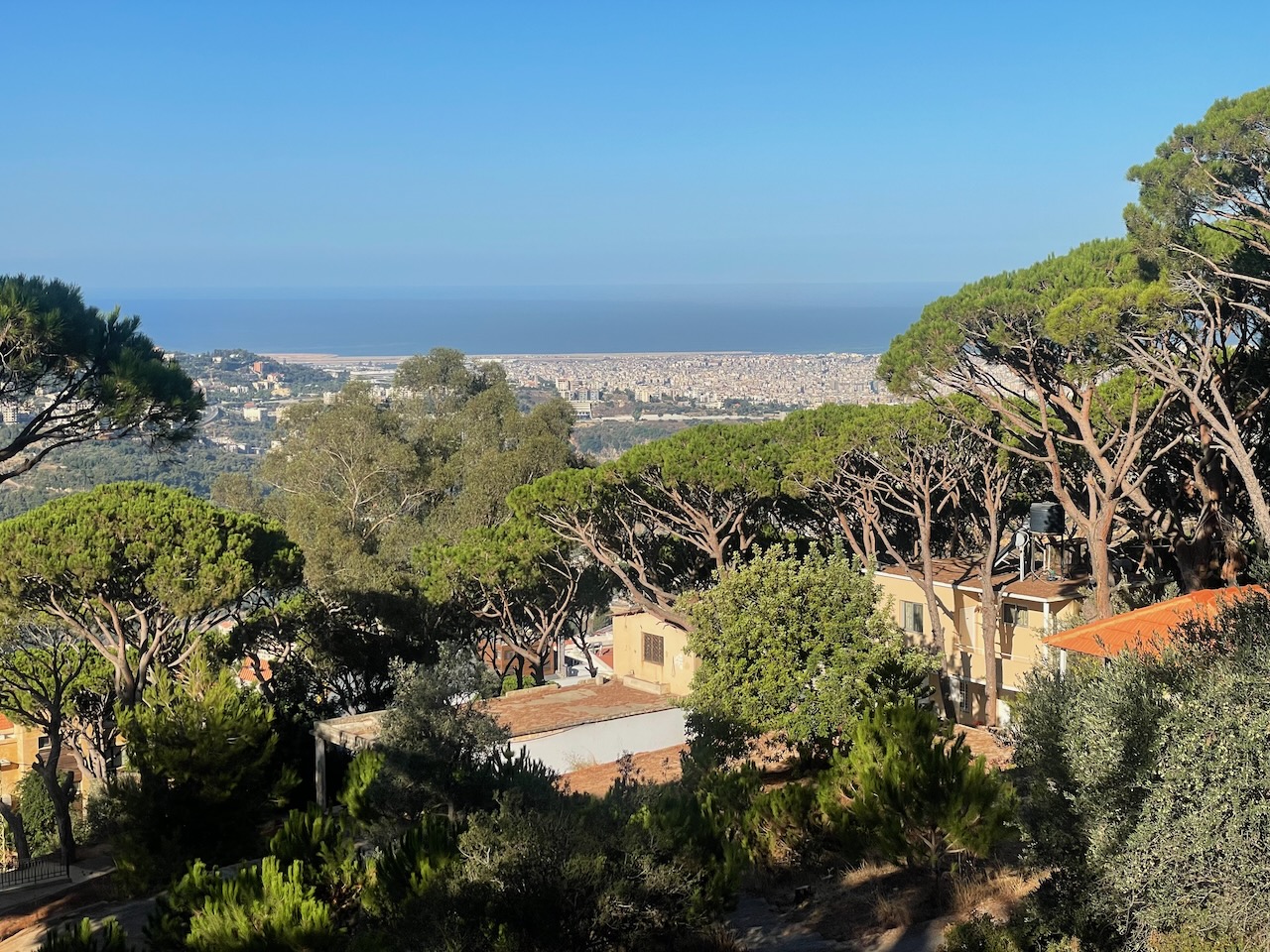
A rare day of low humidity, with a crystal-
clear view of Beirut from KCHAG.
(24 Sept. 2022 - Monteverde)

How much more surreal can things get? Yesterday the parliament met to make its first attempt at electing a president of the Republic. Hearing all the laughter and good-natured ribbing happening in the chamber, one might easily have concluded that there is little to worry about in the country, and that Lebanon is back to its glory days of the 1960s. Yet the upbeat mood in the room served only to highlight the deep disconnect between the people and their daily suffering and uncertainty on the one hand, and on the other hand those who are ensconced in the halls of power. Although this disconnect is arguably true in practically every country in the world, here it is as if a house is burning down, but the residents themselves must battle the fire alone, unassisted, running to and fro to find water to fill their basins and toss a few drops on the ever-heightening flames.

The building (at rear) where Armenian
orphan girls wove carpets after the Genocide
(17 Sept. 2022 - Ghazir)

            When people take up arms, even toy guns, and desperately enter the banks that hold their savings hostage, demanding their own money to be able to pay their own medical or business debts, it shows a deeply troubled society. They are depicted by news outlets as committing “bank heists”, as if readers were only capable of understanding Hollywood terminology. These are people struggling against the injustice and humiliation they have been fed continually for these past few years. The obliviousness of those who comfortably led Lebanon to this state, in local or international halls of power, only serves to increase our discomfort.

Reflecting on a day off, with the
help of a sculpture by local artists
(17 Sept. 2022 - Jbeil/Byblos)

            As we view the continued terror inflicted on Armenia by its un-neighborly “neighbors”, our discomfort multiplies all the more. The world today is witness to Azerbaijan’s push to impose military solutions on a weak and defeated country while the peacekeepers’ country is otherwise preoccupied. Yet once again, Armenians are demonstrating their political naïveté by rejoicing every time some Western government issues a condemnation of Azerbaijan, or a statement in support of the territorial integrity of Armenia. This same reasoning justified the international community’s lack of support for Artsakh’s Armenians during the war that began two years ago this week. Yet many Armenians the world over, in their self-imposed amnesia, continue to imagine that those statements will actually affect the reality on the ground. The reality is that this aggressor will take as much land as it can from Armenia, disrupting and destroying as many lives as it can, while big sister Turkey watches admiringly.

The streets around the Ashrafieh church &
school transformed into an Egyptian street
for a movie (30 Sept. 2022 - Geitawi)

            Meanwhile, despite the discomfort caused by events near and far, we are comforted in some measure by the beginning of a new school year. Armenian schools in both Lebanon and Syria welcomed their students back this month, providing much more than an Armenian education, as crucial as that is for the health and strength of Armenians everywhere. They are also providing a point of stability in the unstable world these children and adolescents inhabit. The daily conversations of adults around them, centering most often on continual worries about finances and the crashing currency, is being offset to a degree by the rhythm of the school day and the school week. Yes, the schools face deep financial challenges, especially if they have not yet installed a solar electric system on their grounds, and have to pour large amounts of currency into fueling their generators. Yes, this is aside from the inevitable school closures resulting from unexpected events, likely to increase as the current President’s term comes to an end. But it is an act of love and hope, based not on circumstances, but on vision and convictions.

Guitarist Ayman Jarjour transfixes the
audience with classical, Spanish and
"Oriental"-flavored pieces
(27 Sept. 2022 - Minet el Hosn)

            A moment of beauty I recently enjoyed was a guitar recital by the brother of a former student from my Haigazian teaching days. Aside from being a fundraiser for a rehabilitation center in Lebanon, the event provided a feast of musical delights, filling the church’s sanctuary for one hour with the sound of that one guitar (and the regular dings of someone unable to detach from Whatsapp). It was a gift that the guitarist gave to an audience hungry for something that would lift them up, if only for a brief time. As Fred Rogers’ mother told him when he was young and afraid, “Always look for the helpers. There’s always someone who is trying to help.”

LebCat 53: An exquisitely striped "McCat",
frequenting the location where it's most
likely to be fed - just not by me
(11 Sept. 2022 - Ain el Mreisseh)

            This is the way of the world. There are those in challenging places doing their best to help others, even at the cost of their own comfort. And there are others who seek only their own comfort, no matter how many others must suffer as a result. This is a “scalable” truth, applicable to societies as well as world powers. Though countries only occasionally enjoy peace, they are often oblivious to the role they themselves play in the natural, political or human disorder around them. More likely, though, they lack the moral grounding needed to admit their role in the hardship they cultivate.

            Yet this is the very same world into which Christ Jesus entered, into which today he leads his disciples to share words and works of comfort and hope to those truly in need of it, and to engage in the struggle for what is right, true and beautiful.   [LNB]

Saturday, April 30, 2022

The Same Playbook

49.The Same Playbook (30 April 2022)

Facing the electric company and registering
his opinion with no ambiguity
(28 March 2022 - Gemmayzeh, Beirut)


One of the most distressing feelings one might have is when it seems like someone, near or far to your heart, has obtained a copy of the script of your life and is reenacting the worst scenes in it, sometimes with only slight variations. There is nothing you can do to affect the outcome except to watch helplessly (or avert your eyes) and hope for the best. You know the story line, because you went through it once – or perhaps copied from someone else’s playbook before you, and at that time you didn’t listen to anyone’s advice to take a different direction. The saying in Armenian (and other languages) is true: a person learns from his own purse. Rare is the one who learns from another’s hard lessons.

The children showing the people how to
worship (10 April 2022 - Geitawi, Beirut)

            It seems that this is also true on a larger scale, with entities such as organizations and even entire nations following a preset script. The Armenian nation presents an interesting example of this, as it takes up its old playbook and reenacts the worst days of its own history. In general, its behavior is fueled by a strange bit of amnesia as to the reasons for it suffering what it did in the past, combined with an inability or unwillingness to chart a different course for the future. The country of Armenia, ever at the mercy of greater powers, is struggling to continue its existence, while it suffers setback after setback following its disastrous defeat in 2020. The Armenian people, part of the larger entity called “the nation”, are sometimes filled with concern over what is happening, and sometimes are profoundly disinterested over what seems (to them) will not really affect them. An acquaintance from Armenia recently said that these days are probably more dangerous than the post-Genocide days. I concur, because the post-Genocide generation knew that they needed to forge an identity and pursue that in all aspects of their life; we of today’s generation are so fragmented and individualistic that we cannot be bothered to see where our indifference and disunity will lead us.

Easter morning, the pied piper of... KCHAG?
(17 April 2022 - Monteverde)

            I had the good fortune of never having been a serious participant in any sports activity. Always one of the last to be chosen when picking teams in or out of school, I early on put aside any delusion that I possessed sports-related skills. I focused on the arts and music (but not on studying). But, whether you use the playbook or the script image, this is a helpful way to view today’s disastrous world, and to see important connections between seemingly disparate events. The “who-cares-we’re-a-failed-state” playbook had been in use by local leaders long before the economy crashed, though it was never publicized. It is still the primary one driving current events and directing local actors to perform well for their masters. The population has picked up the well-worn copy of the “vote-for-your-party-not your-country” as it nears parliamentary elections in May, following which those elected will be using the “it’s-their-fault” playbook when daily life fails to improve. Those outside Lebanon use the “benevolent-state” playbook, announcing their full support for local reforms while maintaining policies that undermine any possibility of improvement in any area.

An "illegal" green space developing on the
grounds of the former Laziza brewery.
Greenery appears to be illegal in Beirut
(28 April 2022 - Geitawi, Beirut)

            During the current European war the “bomb-into-submission” and “everyone-is-our-enemy” playbook is the one in use, connecting today’s aggressors to the aggressors in the Artsakh war of 2020, and so many other wars, including the Ottomans’ war against its Armenian citizens a century ago. The “territorial-integrity” playbook is in heavy use in Ukraine, just as it was by Azerbaijan (and by the sympathetic but impotent friends of Armenia) when Artsakh was being attacked. The “black-and-white” playbook is opened frequently in the West (and for the West), in order to explain the intricacies of wars and security actions to those with limited interest or ability to discern grayscale shades. And the “your-oil-is-more-important-than-you” playbook is probably the only one shared by every single major power, no matter in which direction their guns are pointed or shipped. The “ideological-high-ground” playbook is also frequently read from, though the actors never take the stage. It is a grand drama and a high-stakes game that we are witnessing, based on a series of playbooks that will make the world the same as it has ever been, or ever will be.

Naming the evil that allows
disasters, destroying people and
their heritage (30 April 2022 -
Mar Nicola, Beirut)

            Fortunately – and I say this sincerely – there are weak and unimportant people in the world. These are the ones who I consider to be able to make real and lasting change. They are the ones who interface with their neighbors each day and look into their eyes with perception and compassion. This is not to praise interpersonal relations in general. The other day a small shopkeeper spoke of how some homemade food distributors in Lebanese villages easily take advantage of people like her by following the fluctuations in local currency against the dollar, then collecting payment well above the day’s street value, saying, “If you don’t want to pay, then I’ll find someone else to sell to.” Despite my insistence that I pay the current value of my purchase, she refused to take more from me than the outdated prices listed on her shelves.

God hears, but do we?
(8 April 2022 - Mar Mikhael, Beirut)

            My guess is that the difference lies in whether people have an actual, human relationship with each other, and not a transactional one. It’s the same with the church. Do I share a gospel message with someone because it’s expected of me, because it’s a requirement, because I consider my religion superior and his inferior or completely wrong? Or do I truly care for the other person as someone created in God’s image, whom God loves as much as he loves me? That person-to-person playbook is the one that brings true hope and opens hearts to receive the actual good news. It may be crass to characterize Jesus’ ministry in this way, but the gospel is so full of these kinds of interpersonal “detours” that Jesus took as he shared the gospel of God’s kingdom and the promised new life in that kingdom, that it must be an integral part of the message. My conclusion is that God has put his playbook into our hands and sent us from the church to the world. One who plays according to this script stands little chance of preventing the “rulers of this age” to seize the day; but in God’s timing, living this way will undermine every earthly power.

LebCat 49: Go find your own ledge!
(24 March 2022 - Geitawi, Beirut)

            We have been encouraged in recent weeks by young people in the Armenian community who, despite the discouragement and fear so prevalent in the country, have chosen life. Some have made engagement pledges to one another, others have brought newborns into the world and surrounded them with love, and all of them have taken these risky steps relying on God’s provision. God’s hand is certainly guiding them, and as they grow as families, the joy of the Lord is giving them – and us – strength.

            Once upon a time in Lebanon, when paying for groceries, if there were a few piastres (or liras) left to round up the total, the cashier would toss a pack of 2 pieces of chewing gum into your order. In recent years it became the whole box of gum, and then progressed to a sachet of instant coffee. Today as I was buying fruit from my friendly fruit-cart pusher, “Abou Mawz”, he announced 8,000 lira for a half-kilo of bananas. Then he winked and said he would make it 10,000, as I nodded and he tossed another banana on the scale. Imagine… fruit as small change. But that’s the playbook regular Lebanese people have long used. And it’s the playbook that even those most desperate to leave the country will be searching for, and not finding, in their newly-adopted homelands.   [LNB]